






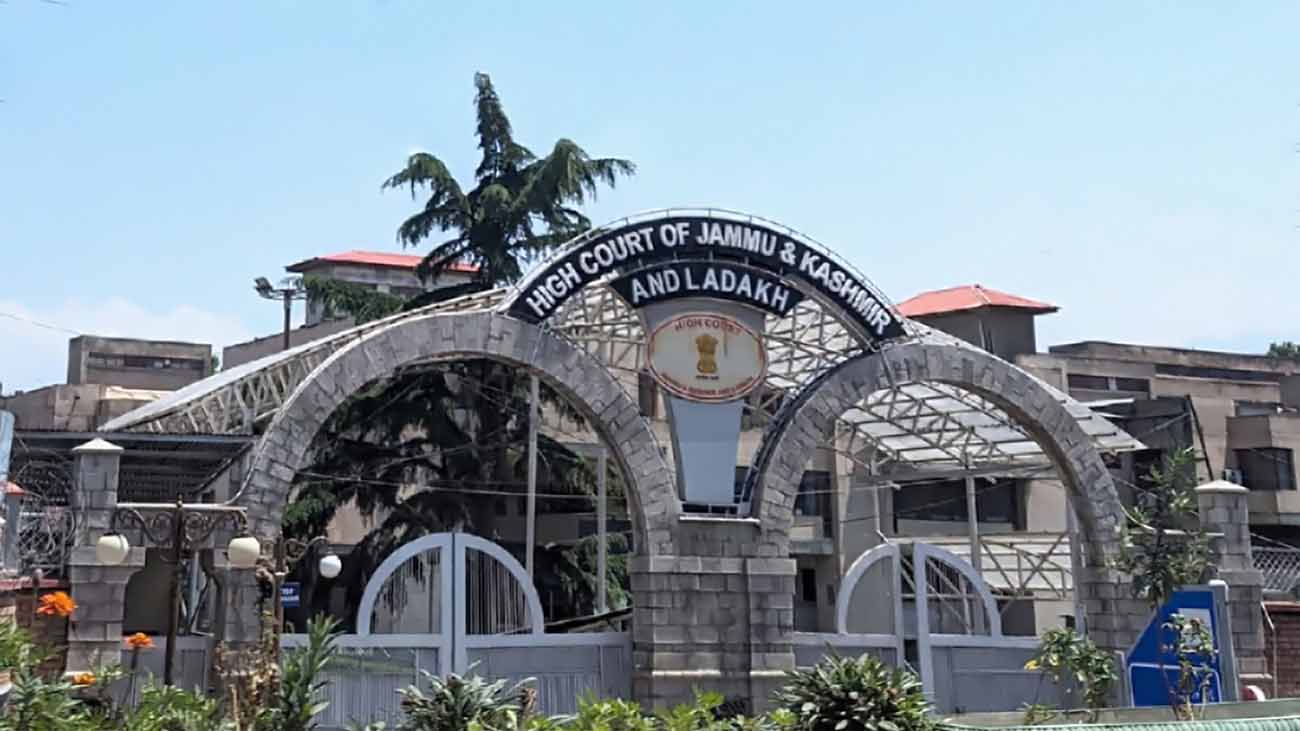
Srinagar: The High Court of Jammu and Kashmir and Ladakh has dismissed a government appeal challenging the acquittal of a man previously tried under the Unlawful Activities (Prevention) Act (UAPA) in south Kashmir.
The appeal was filed against a February 20, 2023, decision by the Special NIA Court in Anantnag, which acquitted Ghulam Mohammad Lone, a resident of Srigufwara village. Lone had been booked under the UAPA on September 8, 2012, in connection with the pasting of posters—allegedly by the banned terror group Hizbul Mujahideen—threatening elected panches and sarpanches to resign or face consequences.
While hearing the Union Territory’s appeal, a division bench comprising Justice Sanjay Parihar and Justice Sanjeev Kumar ruled that for an act to qualify as an “unlawful activity” under Section 2(o) of the UAPA, it must either promote cession or secession of Indian territory, incite such acts, or undermine the sovereignty and territorial integrity of India.
In their eight-page order, passed on July 31, the bench observed that the content of the posters was intended solely to intimidate local elected officials—not to incite secession or disrupt India’s sovereignty.
“The threatening language in the posters does not amount to promoting secession or causing disaffection against India,” the court held. “Therefore, the act attributed to the accused does not fall within the scope of ‘unlawful activity’ under the UAPA.”
The judges further noted that the trial court should have discharged the accused from UAPA charges and instead considered framing charges under the Ranbir Penal Code (RPC). However, given that Lone had already undergone a trial lasting over eight years, the court deemed it inappropriate to send the case back for reframing charges.
“Accordingly, finding no merit in the government’s appeal, it stands dismissed,” the bench stated.
The court also pointed out the lack of substantial evidence against Lone. Apart from one prosecution witness (PW-6) stating that the specimen handwriting collected by police resembled that on the posters, there was no direct link established between Lone and the creation or posting of the materials.
Hence, the High Court concluded that the charges were not proven by any credible evidence.