






New Delhi: India has experienced normal rainfall overall during this monsoon season so far, but the distribution varies widely across different states, according to the latest state-wise data from the India Meteorological Department (IMD).
From June 1 to August 10, the country recorded 539 mm of rainfall, slightly above the normal of 535.6 mm — about 1% higher than the long-term average.
Out of the 36 states and union territories tracked by the IMD, 25 fall under the “normal” category, receiving rainfall within ±19% of the long-period average. Five states are classified as “deficient,” with rainfall 20% to 59% below normal, while another five have seen “excess” rainfall, 20% to 59% above normal. Ladakh stands out in the “large excess” category, recording more than 60% above normal rainfall. No region falls under the “large deficient” category during this period.
States showing significant rainfall shortfalls include Arunachal Pradesh (652.1 mm; 40% below normal), Assam (603.8 mm; 37% below), Meghalaya (978.7 mm; 45% below), Sikkim (837.4 mm; 20% below), and Bihar (438.3 mm; 25% below).
On the other hand, five states have recorded excess rainfall: Jharkhand (853.7 mm; 41% above normal), Delhi (433.5 mm; 37% above), Rajasthan (430.6 mm; 58% above), Madhya Pradesh (745.3 mm; 30% above), and Puducherry (258.2 mm; 32% above). Ladakh recorded an exceptional 31.8 mm of rain, about 115% more than its normal 14.8 mm.
Among the states with near-normal rainfall are Uttar Pradesh (478.0 mm; 11% above normal), Maharashtra (585.2 mm; about 9% below normal but still within the normal range), and Karnataka (587.8 mm; 10% above normal).
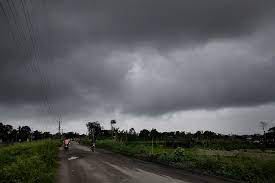
While the overall rainfall across India is close to normal, the season has been marked by considerable spatial and temporal variations. For instance, parts of the western Himalayas—especially Himachal Pradesh and Uttarakhand—have witnessed cloudbursts, flash floods, and widespread landslides during July and early August, causing disruptions to roads and local life. Similarly, the National Capital Region experienced episodes of heavy rainfall and waterlogging in late July and early August.
The IMD has acknowledged this uneven pattern and forecasts a generally wetter second half of the monsoon season (August-September), with rainfall expected to be above normal nationwide. However, some areas, particularly parts of the northeast and adjoining eastern India, are likely to remain relatively dry.
The IMD also highlighted that northeast India has experienced below-normal rainfall for several consecutive years, warning that regional disparities in rainfall patterns are expected to continue.
In May, the IMD had projected that India would receive 106% of the long-period average rainfall of 87 cm during the June-September monsoon. Rainfall between 96% and 104% of this 50-year average is considered “normal.”
The monsoon remains vital for India’s agriculture, which supports the livelihood of roughly 42% of the population and contributes 18.2% to the national GDP. It is equally important for replenishing reservoirs used for drinking water and electricity generation.