





New Delhi: Parliament on Tuesday passed the National Sports Governance Bill, with the Rajya Sabha approving it just 24 hours after the Lok Sabha, marking a landmark moment in India’s sports administration. The new law will establish a national board to regulate sports governance and introduce a dedicated dispute resolution mechanism.
Alongside this, the National Anti-Doping (Amendment) Bill was also approved. This bill strengthens the autonomy of the National Anti-Doping Agency (NADA) in compliance with the requirements of the World Anti-Doping Agency (WADA). Both bills now await the President’s assent before becoming official acts.
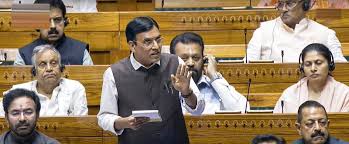
Shortly after Youth Affairs and Sports Minister Mansukh Mandaviya introduced the bills for consideration in the Rajya Sabha at 3 PM, opposition members protested over the issue of electoral roll revisions in Bihar. The opposition, led by Congress President and Leader of Opposition Mallikarjun Kharge, demanded a debate on the matter before staging a walkout.
In his address, Mandaviya highlighted that 20 countries have specific sports laws, urging Rajya Sabha to make India the 21st nation to do so. The ensuing discussion lasted over two hours.
During the debate, BJD MP Subhashish Khuntia voiced concerns about the bill centralizing sports governance and lacking clarity on athlete development at district and block levels. He emphasized that the bill should empower stakeholders rather than control them. Mandaviya responded by assuring that the government’s role is that of a facilitator, introducing transparency without interference or control.
Prominent supporters included former All India Football Federation President and NCP leader Praful Patel and Indian Olympic Association President P T Usha. Patel described the legislation as a long-overdue reform, noting that the existing sports code was weak and legally insufficient. He expressed optimism about India’s 2036 Olympic bid and called the bill crucial to achieving sporting glory beyond cricket.
Usha echoed these sentiments, stating that the bill will promote transparency, accountability, gender equality, and empower athletes while inspiring confidence among sponsors and federations. Mandaviya hailed it as the “single biggest reform in sports since independence.”
Key provisions of the bill include:
- The National Sports Board (NSB) will have strict accountability powers, including the authority to derecognize national bodies that fail to hold Executive Committee elections, commit major election irregularities, neglect publishing audited accounts, or misuse public funds. However, the NSB must consult relevant international bodies before taking action.
- Establishment of a National Sports Tribunal with civil court powers to resolve disputes involving federations and athletes, from selection to elections. Tribunal decisions can only be appealed in the Supreme Court.
- Relaxation of the age cap for sports administrators from 70 to 75 years, aligning with international federation rules.
- Inclusion of all recognized national sports bodies under the Right to Information (RTI) Act, though cricket’s governing body, the BCCI, is exempted if it does not rely on government funding—a concession inserted in the bill after opposition from the cricket board.
- Reduction of the mandatory tenure requirement for contesting National Sports Federation elections from two to one term, enabling leaders like IOA President P T Usha to seek re-election.
The National Anti-Doping (Amendment) Bill 2025 addresses WADA’s concerns over government interference in NADA’s autonomy. The original 2022 act had to be suspended following WADA’s objection to the formation of a National Board for Anti-Doping in Sports with government-appointed members who could oversee and direct NADA’s operations. The amended bill retains the Board but removes its supervisory powers over NADA, reaffirming NADA’s operational independence.