






Jammu: Union Minister Jitendra Singh on Wednesday announced the revival of the Ujh Multipurpose Project in Kathua district, Jammu and Kashmir, noting its potential to curb the surplus flow of water into Pakistan.
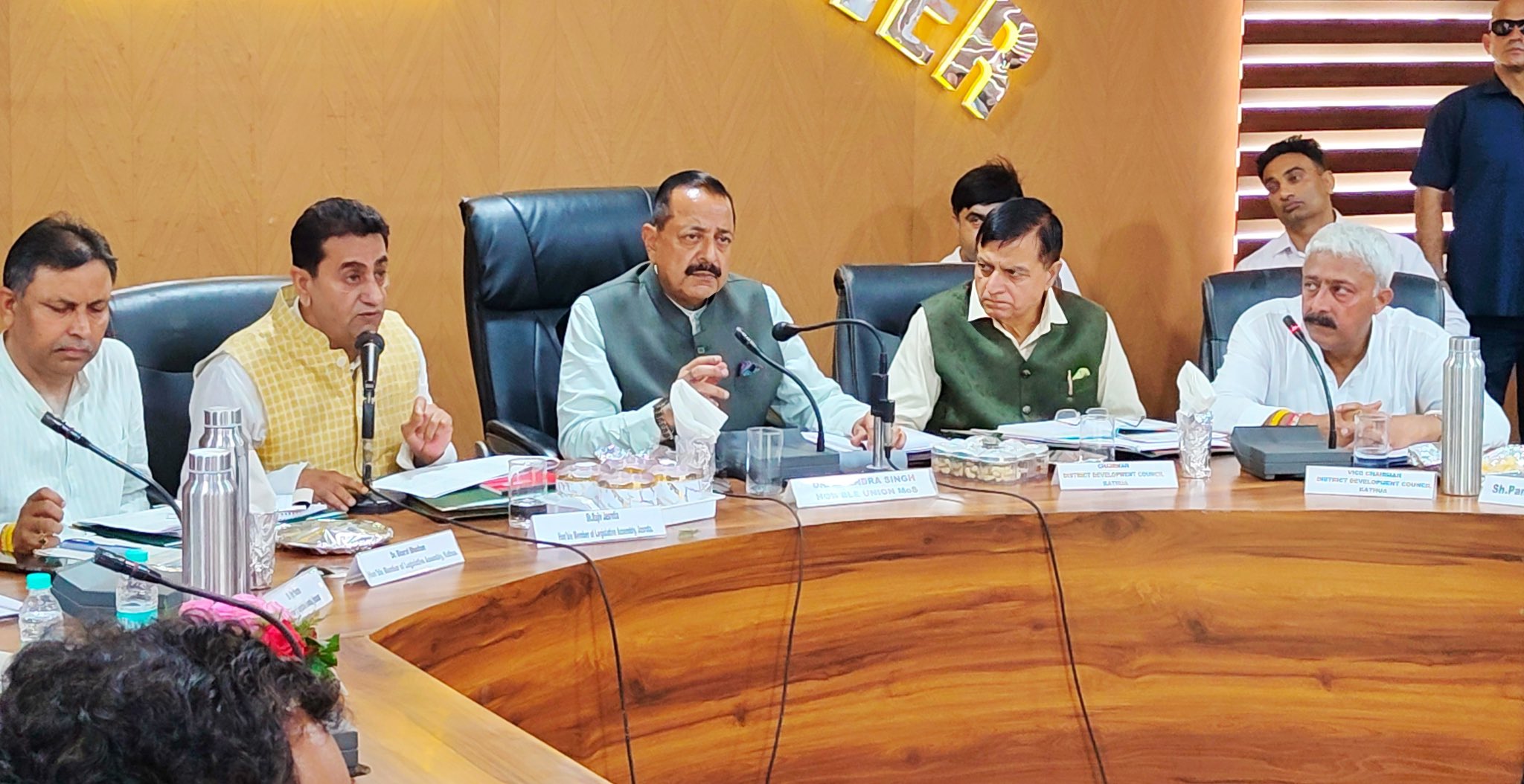
Speaking at the District Development Coordination and Monitoring Committees (DISHA) meeting in Kathua, part of his Udhampur parliamentary constituency, Singh said, “There is good news to share that the Ujh Multipurpose Project, originally conceived in the 1920s by the then Maharaja, has now been revived, and a coordination working group of J&K UT and Central officers has been formed.”
He added that once operational, the project could irrigate up to 90,000 hectares of land. An alternate plan is also being developed to prevent surplus water from flowing into Pakistan. Singh highlighted that the Home and Defense Ministries have actively supported the project to monitor infiltration routes via the Ujh River.
The Ujh project, the first multipurpose river valley scheme in Jammu and Kashmir, will serve hydropower, irrigation, and drinking water needs. It is located on the Ujh River, a key tributary of the Ravi, and aims to enhance India’s utilization of Eastern River waters under the Indus Waters Treaty, which is currently in abeyance following the Pahalgam terror attack.
At the meeting, Singh also confirmed that the final phase of the Shahpur Kandi project will be completed by September 15. The dam, built on the Ravi River, had been stalled for over four decades and resumed after J&K and Punjab ratified an agreement in September 2018. Once complete, the project will irrigate around 32,000 hectares in Samba and Kathua districts and 5,000 hectares in Punjab, while storing excess water and generating 206 MW of electricity for Punjab.
Singh further announced that the industrial biotech park in Barnoti, Kathua—the 11th such park in India and the first in North India—will soon become operational through public-private participation. “This will create jobs and business opportunities in bio-manufacturing and medical instruments for local youth,” he said.
The minister also addressed long-standing infrastructure needs, confirming that the Bala Sundri tunnel and route will be included in the road project from Lakhanpur to Doda via Chattra Gala Tunnel. Additionally, over 1,000 new family bunkers are planned, raising the total in Kathua border areas to nearly 3,000.
Singh added that north India’s first homeopathy college has been approved for Kathua, which will also serve neighboring states Punjab and Himachal Pradesh.
On pressing issues, Singh warned that illegal mining threatens vital infrastructure projects like the Keerian Gadiyal bridge and expressway corridor, and directed officials to submit a report. He also stressed the need to combat rising drug abuse, proposing a joint committee of district administration, police, public representatives, and civil society members to tackle the issue effectively.