






New Delhi: The Congress on Saturday urged the government to release an official discussion paper on GST 2.0 at the earliest to enable a broader and informed debate. The party emphasized that the proposed reforms should focus on creating a “Good and Simple Tax” in letter, spirit, and compliance, rather than the “Growth Suppressing Tax” the current system has become.
The demand comes a day after Prime Minister Narendra Modi announced plans to lower GST rates by Diwali, aiming to reduce prices of everyday items and reform the eight-year-old regime, which has faced challenges of litigation and tax evasion.
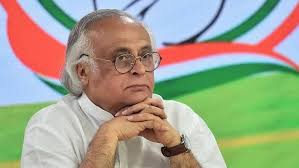
Congress general secretary for communications, Jairam Ramesh, stated that the party has been advocating for a comprehensive GST 2.0 overhaul for over a year and a half. He highlighted that a reformed GST 2.0 was a key commitment in the Congress manifesto for the 2024 Lok Sabha elections. Ramesh observed that the Prime Minister seems to have recognized that economic growth will not accelerate without this transformation, which would boost both private consumption and investment.
“Over the last seven years, the spirit of GST has been undermined by a growing number of rates and multiple exemptions, which have also facilitated evasion. There must be a significant reduction in the number of rates,” he said.
Ramesh stressed that simplifying the rate structure is crucial, but it must be done in a way that minimizes revenue uncertainty for states and resolves the frequent classification disputes. He added, “The GST compensation cess expires on March 31, 2026. It should be extended to offset any revenue uncertainties arising from rate rationalization.”
He further underlined the need to address concerns of MSMEs, the largest employment generators in the economy, by revising procedural aspects of GST and increasing thresholds for interstate supplies. Sector-specific issues in textiles, tourism, exports, handicrafts, and agricultural inputs must also be tackled. Additionally, states should be incentivized to implement state-level GST for electricity, alcohol, petroleum, and real estate, he suggested.
“The Indian National Congress demands an official discussion paper on GST 2.0 soon, to facilitate a wide-ranging debate on this vital issue. GST 2.0 should truly be a Good and Simple Tax, not the Growth Suppressing Tax it has become,” Ramesh said.
Following the Prime Minister’s Independence Day announcement from the Red Fort, the Union Finance Ministry proposed that most goods and services be taxed under two slabs — standard and merit — with only select items attracting special rates. This would replace the current four-tier GST system of 5%, 12%, 18%, and 28%, where luxury and sin goods face an additional levy atop the 28% rate.
“This Diwali, I am going to make it a double Diwali for you,” Modi said, noting that his government has undertaken major GST reforms over the past eight years. He added, “We have discussed with states and are introducing next-generation GST reforms to reduce the tax burden nationwide. Taxes on common goods will drop significantly, benefiting MSMEs and making daily essentials more affordable, which will strengthen our economy.”
GST, which consolidated multiple central and state levies, was first implemented on July 1, 2017.