






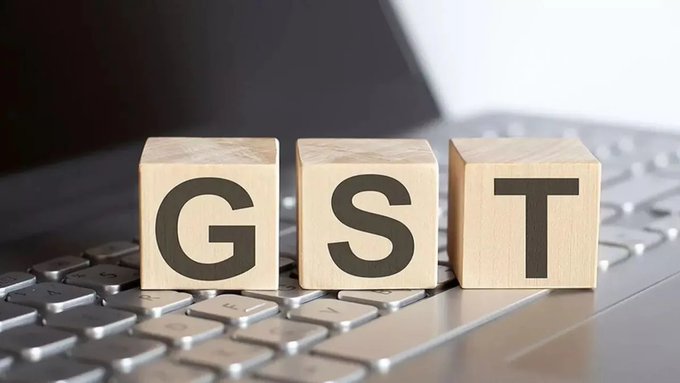
New Delhi: Amid concerns that the Centre’s proposed pro-middle-class ‘Next Gen GST’ with a two-slab structure could impact revenues, government sources clarified that both the Centre and states are equal stakeholders in GST collections, and projections show revenues will rise over time with higher consumption.
Currently, GST revenues are shared equally between the Centre and states. Additionally, 41% of the Centre’s share of the divisible tax pool is allocated to states under the Finance Commission’s formula.
“Both the Centre and states are equal partners in GST. In such a setup, can it be fair to expect the Government of India to act as a donor to compensate states?” a government source said.
The existing GST framework has four slabs—5%, 12%, 18% and 28%. Food and essentials are taxed at nil or 5%, while luxury and sin goods attract 28%. The 18% slab contributes about 65% of GST revenue, while 5%, 12% and 28% slabs contribute 7%, 5% and 11% respectively.
The Centre has suggested to the Group of Ministers on GST rate rationalisation a simplified structure of two slabs—5% for ‘merit’ goods and 18% for ‘standard’ goods—along with a 40% rate for 5–7 specified items. This would replace the 12% and 28% slabs.
States currently retain exclusive taxation rights over land and petroleum products. The Centre also provides states with a 50-year interest-free loan for capital expenditure under a special scheme. Meanwhile, health and education cess collected by the Centre supports state development schemes, while compensation cess flows entirely to states.
Officials said revenue calculations show the new GST structure will strengthen collections. “When the compensation cess period ended in June 2022, there were similar concerns. But revenues improved, and states’ average tax buoyancy rose to 1.23 from 0.65 pre-GST. The proposed reforms are expected to enhance buoyancy further,” a second source noted.
GST, launched on July 1, 2017, subsumed multiple state and local taxes. To offset initial state losses, a compensation cess was levied for five years, later extended until March 2026 to repay loans taken during the COVID-19 period for revenue support to states.