






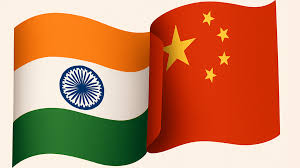
NEW DELHI: China’s move to relax export restrictions on rare-earth minerals and fertilisers to India is a positive step, but India must urgently reduce its dependence on its neighbour, with which it faces a record USD 100 billion trade deficit, the Global Trade Research Initiative (GTRI) said on Wednesday.
Between 2014 and 2024, China’s dominance in India’s imports only deepened. Its share stands at 57.2% in telecom and electronics, 44% in machinery and hardware, and 28.3% in chemicals and pharmaceuticals, GTRI noted.
“The only real safeguard for India is to strengthen domestic capabilities — cut dependence, invest in deep manufacturing, and evolve into a true product nation,” GTRI founder Ajay Srivastava said. “A more self-reliant India can engage China on equal terms, keeping ties stable and pragmatic instead of vulnerable to sudden shifts.”
GTRI highlighted that China now dominates India’s import basket across nearly every industrial sector — from pharmaceuticals and electronics to renewable energy, construction materials, and consumer goods.
For example, China supplies:
97.7% of India’s erythromycin imports,
96.8% of silicon wafers and 86% of flat panel displays,
82.7% of solar cells and 75.2% of lithium-ion batteries.
Everyday items are also heavily sourced from China: laptops (80.5%), embroidery machinery (91.4%), and viscose yarn (98.9%).
This overwhelming reliance, Srivastava warned, gives Beijing leverage to weaponise supply chains during political tensions. Meanwhile, India’s exports to China have declined sharply, reducing its share in bilateral trade to just 11.2% today from 42.3% two decades ago.
The think tank said the problem is structural: in pharmaceuticals, antibiotics worth USD 166.3 million were imported from China in FY2025, forming 88.1% of India’s total antibiotic imports. In electronics, India sourced USD 151.6 million in silicon wafers (96.8%), USD 1.06 billion in flat panel modules (86%), and over USD 3 billion in chips, processors, and circuit boards with Chinese shares averaging 37–40.5%.
Consumer electronics remain equally exposed. India imported USD 4.45 billion worth of laptops and tablets (80.5% from China) and USD 7.15 billion worth of smartphone parts (51.7%). Even low-tech imports — ceramic tiles, plastic furniture, lighting products, headgear — rose more than 150% in the past decade, hurting Indian MSMEs.
“The data shows India is structurally dependent while gaining little market access in return. Without decisive policy intervention, this imbalance will only deepen,” Srivastava said.
To halve the trade gap with China to USD 50 billion in five years, GTRI recommended measures such as reverse engineering for rapid substitution and building deep-tech manufacturing capacity.