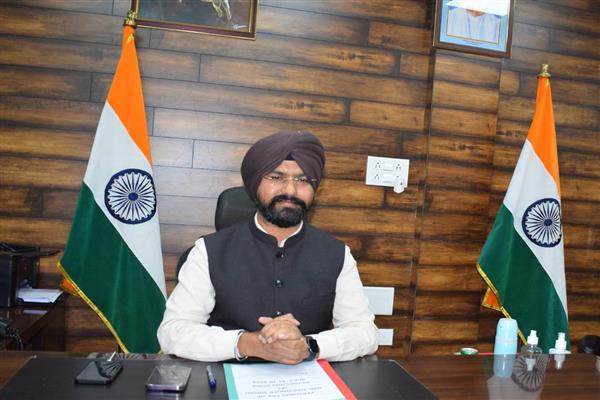







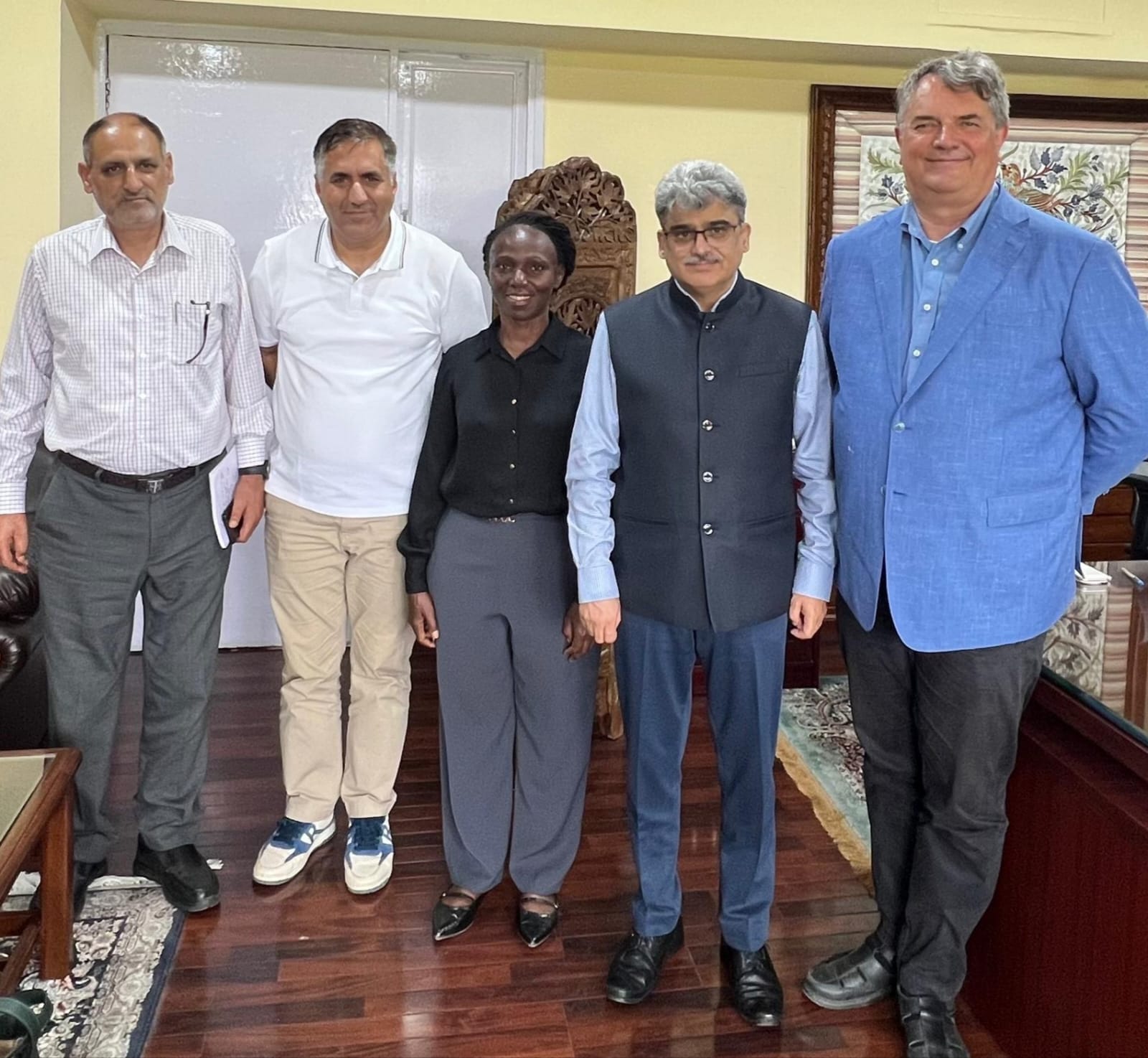
SRINAGAR: Chief Secretary Atal Dulloo today held extensive deliberations with a delegation from the International Crops Research Institute for Semi-Arid Tropics (ICRISAT), Hyderabad, to advance the agenda of Climate Smart Agriculture in Jammu and Kashmir.
The delegation, led by Dr. Stanford Blade, Deputy Director General of ICRISAT, included senior scientists Dr. Manzoor Dar and Dr. Demaris Odeny. Professor Haroon Naik, Director Research, SKUAST-Kashmir, was also present.
Discussions focused on establishing the Himalayan Centre of Excellence for Dryland Agriculture at SKUAST-K, a flagship initiative aimed at positioning J&K as a leader in climate-resilient and sustainable farming.
The proposed Centre will act as a hub for research, innovation, and technology dissemination tailored to the unique agro-ecological conditions of the Himalayan region. Its core areas will include developing climate-resilient crop varieties, strengthening decentralized seed systems, promoting regenerative and dryland farming practices, advancing soil and water conservation, and enhancing farmer-centric value chains across the UT.
Fodder security emerged as a critical theme during the deliberations. With a significant share of farming households dependent on livestock—particularly in hilly and rainfed areas—the Chief Secretary was apprised of the need to scale up fodder development programmes. Ensuring year-round access to quality fodder, he was informed, would boost livestock productivity and improve both nutritional and livelihood security for rural communities.
The Centre of Excellence is envisioned to integrate crop-livestock systems, advanced research, and farmer-focused innovations, thereby strengthening resilience against climate shocks and ensuring sustainable livelihoods for J&K’s farming communities.