






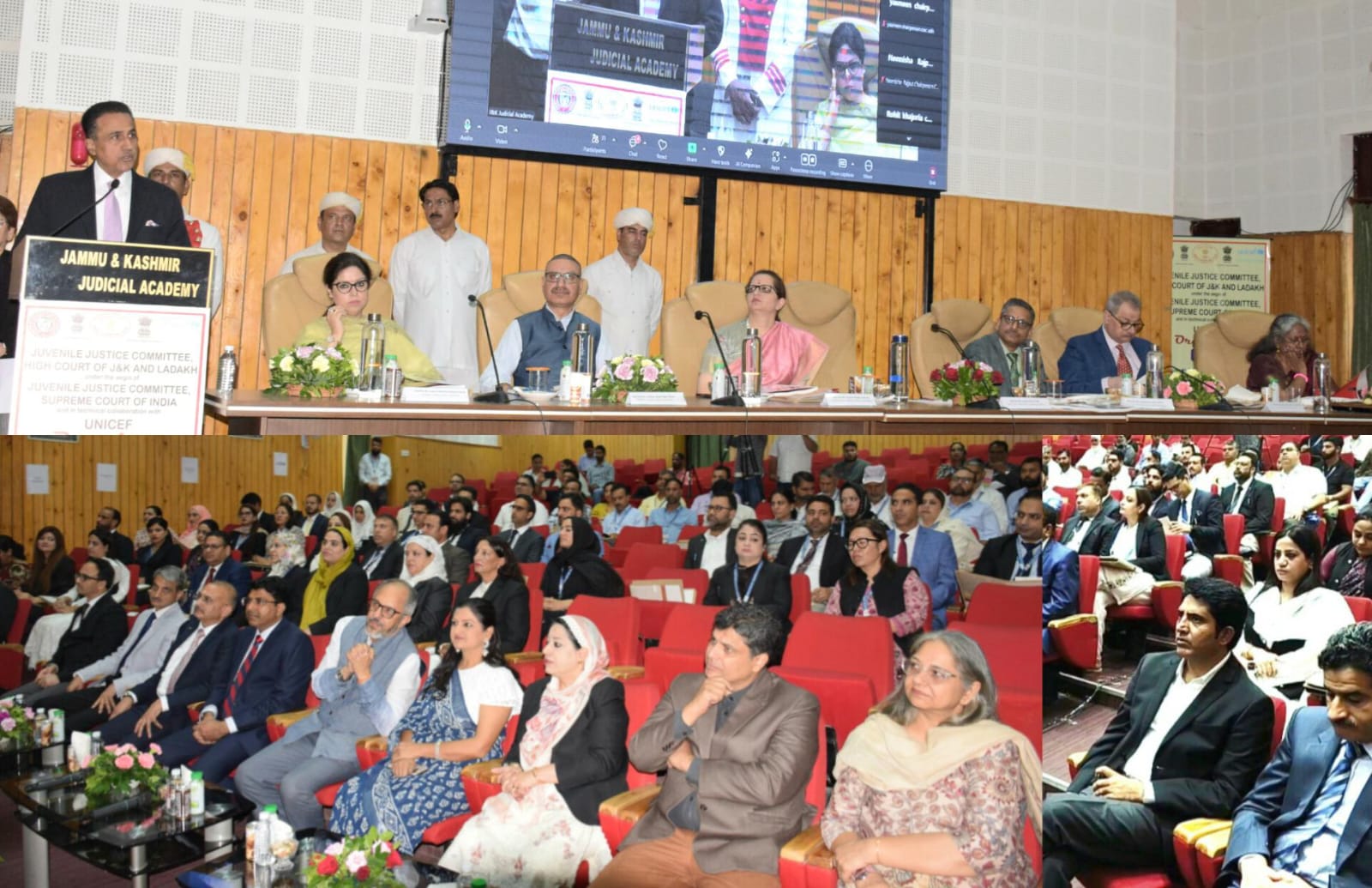
SRINAGAR: The Juvenile Justice Committee of the High Court of Jammu & Kashmir and Ladakh, in collaboration with UNICEF India, organized a one-day Annual Stakeholders’ Consultation on “Safeguarding the Girl Child: Towards a Safer and Enabling Environment for Her in India” at the Jammu & Kashmir Judicial Academy, Moominabad, Srinagar.
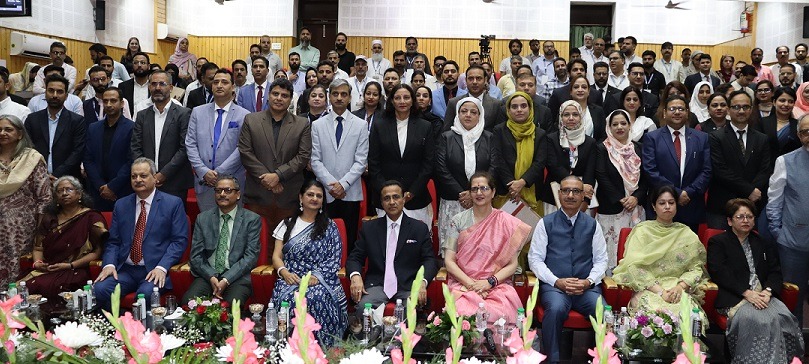
The programme was inaugurated by Chief Justice Arun Palli in the presence of Justice Sindhu Sharma (Chairperson, Juvenile Justice Committee), Justices Rajnesh Oswal, Javed Iqbal Wani, Mohd. Akram Chowdhary, Rahul Bharti, Moksha Khajuria Kazmi, Shahzad Azeem, and other High Court judges. The inaugural session was also attended by the Commissioner Secretary, Social Welfare, MD National Health Mission, and Secretary of Education and Skill Development.
Opening the proceedings, speakers highlighted the timeless Sanskrit maxim: “Where women are honoured, divinity prevails,” emphasizing that protecting and empowering the girl child is not only a legal duty but a sacred social responsibility. Despite constitutional and legislative safeguards, challenges such as safety risks, discrimination, limited access to resources, and societal biases persist, necessitating collaborative action by the State, judiciary, and civil society.
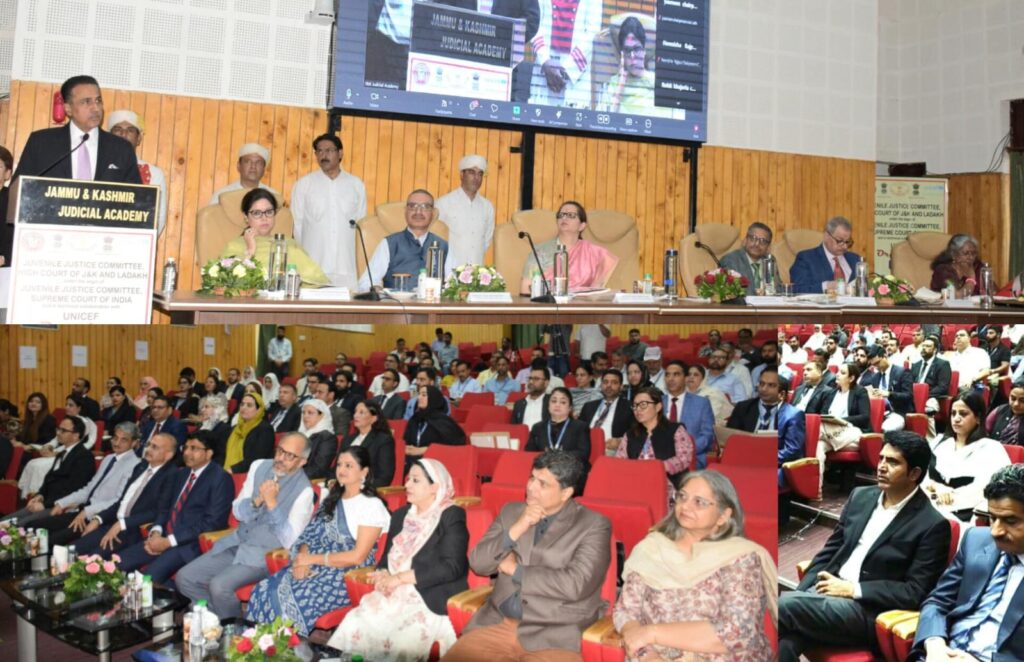
In her welcome address, Justice Moksha Khajuria Kazmi underscored that safeguarding the girl child is a moral, constitutional, and societal imperative. Justice Javed Iqbal Wani highlighted issues such as declining child sex ratios, barriers to education, and higher mortality rates, calling for stronger laws, awareness campaigns, and empowerment initiatives. Justice Mohd. Akram Chowdhary echoed the need for collective societal effort to ensure safety and dignity for girls.
Vijay Lakshmi Arora, Child Protection Specialist, UNICEF India, described protection of the girl child as both a moral and legal duty, noting improvements in neonatal and infant mortality, child marriage rates, and sex ratios at birth in Jammu & Kashmir.
Delivering the keynote, Justice Sindhu Sharma reflected on the paradox of the girl child in India—celebrated for strength yet burdened by discrimination, poverty, and violence. She urged society to translate legal protections into tangible safety, dignity, and empowerment. Chief Justice Arun Palli, in his presidential address, emphasized moving beyond safeguarding to empowerment, highlighting the need to shift societal mindsets and celebrate girls as equal and vital contributors to India’s future.
The day-long consultation featured four thematic technical sessions chaired by experts and administrators:
- Legislation, Programs, and Schemes – Reviewed government interventions and gaps in J&K and Ladakh.
- Advancing Gender Equity through Education and Skill Development – Focused on school reforms, vocational training, sports, and digital literacy for adolescent girls.
- Access to Justice, Legal Aid, and Community Support – Explored child-friendly policing, institutional collaboration, and community awareness.
- Gender-Based Health Inequities – Addressed maternal health, reproductive services, adolescent mental health, and targeted nutrition interventions under national schemes.
The valedictory session, chaired by Justice Sindhu Sharma with Justice Moksha Khajuria Kazmi in attendance, included summaries by Hilal Ahmad Bhat, Child Protection Specialist, UNICEF J&K, and remarks by Rajiv Gupta, Registrar Vigilance, High Court of J&K and Ladakh. Sonia Gupta, Member Secretary, Juvenile Justice Committee, emphasized translating collective resolve into actionable frameworks. The session concluded with a vote of thanks by Shama Sharma, Secretary, DLSA Rajouri.
The consultation saw extensive virtual participation from various departments of the Union Territories of J&K and Ladakh. It reaffirmed the High Court’s commitment, through its Juvenile Justice Committee, to strengthen child protection systems and ensure justice, dignity, and equal opportunities for the girl child in Jammu & Kashmir and Ladakh.