






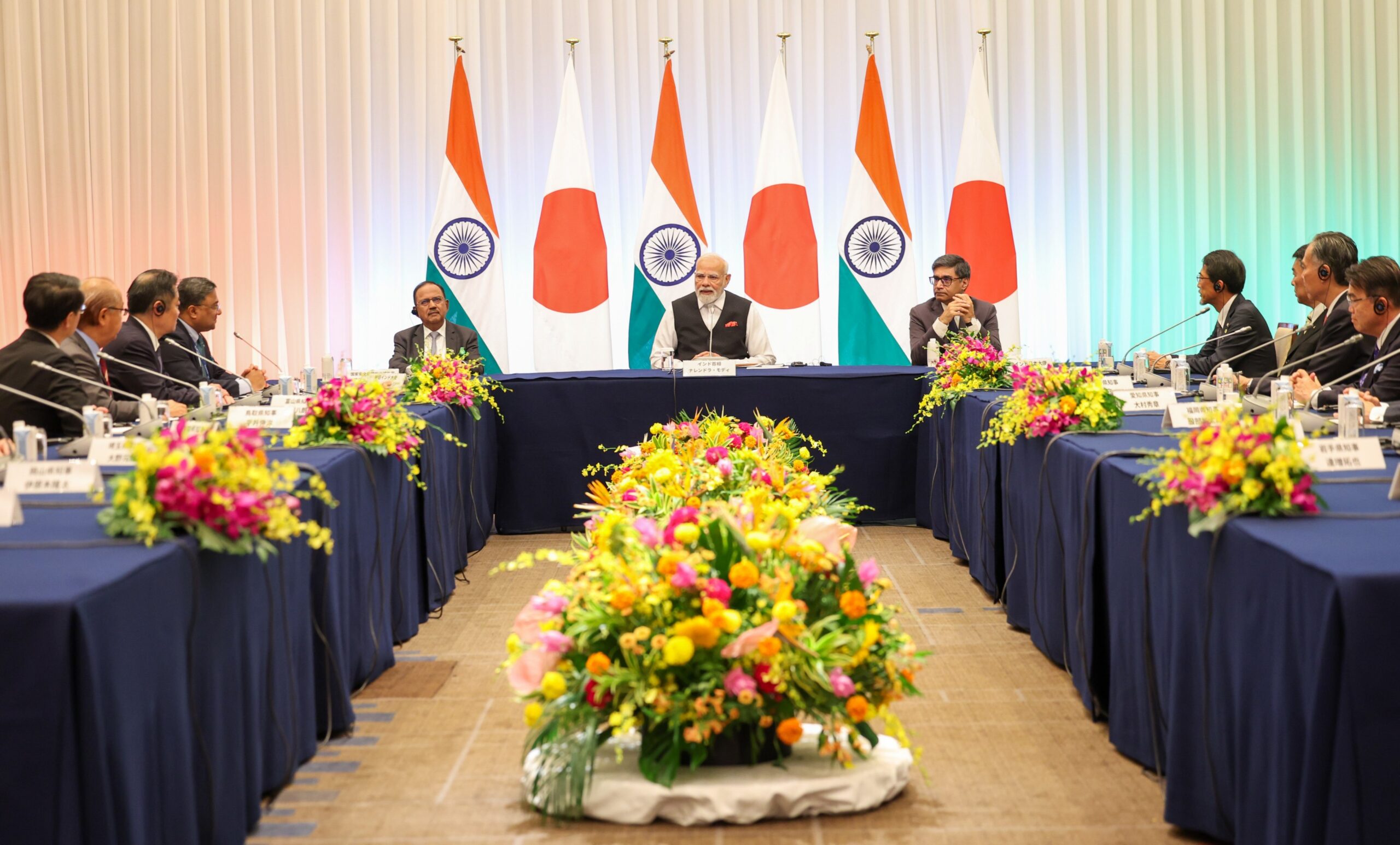
Tokyo: Prime Minister Narendra Modi on Saturday met governors of 16 Japanese prefectures in Tokyo and emphasized the need to deepen state-prefecture cooperation under the India-Japan Special Strategic and Global Partnership, the Ministry of External Affairs (MEA) said in a statement.
In a post on X, the MEA wrote: “Taking greater strides in the steadfast India-Japan ties. PM Narendra Modi met with the Governors of 16 prefectures in Tokyo.”
According to the statement, the Prime Minister highlighted the vast potential of state-prefecture collaboration and urged concrete action under the State-Prefecture Partnership Initiative, launched during the 15th India-Japan Annual Summit, for shared progress.
Discussions centered on expanding cooperation between Indian states and Japanese prefectures in areas such as technology, innovation, investment, skills, start-ups, and small and medium enterprises (SMEs).
In his address, Modi underlined that India-Japan relations, rooted in centuries-old civilisational ties, continue to thrive. He stressed the importance of taking engagement beyond Tokyo and Delhi to strengthen partnerships at the sub-national level.
The Prime Minister noted that the State-Prefecture Partnership Initiative would help boost cooperation in trade, technology, tourism, skills, security, and cultural exchanges. He urged Japanese governors and Indian states to build stronger collaborations in manufacturing, mobility, next-generation infrastructure, start-ups, and small businesses.
Acknowledging that every Japanese prefecture has its own economic and technological strengths and Indian states possess distinct capabilities, Modi invited the governors to contribute to India’s growth journey. He also called for enhanced youth and skills exchanges, stressing the value of combining Japanese technology with Indian talent.
The Japanese governors, the MEA said, observed that sub-national collaboration is crucial for elevating bilateral business, educational, cultural, and people-to-people ties.