







Srinagar: The display of the national emblem on a renovation plaque at the Hazratbal mosque in Srinagar has sparked widespread controversy, drawing criticism from local leaders and devotees, and leading to the plaque being vandalised by unidentified individuals.
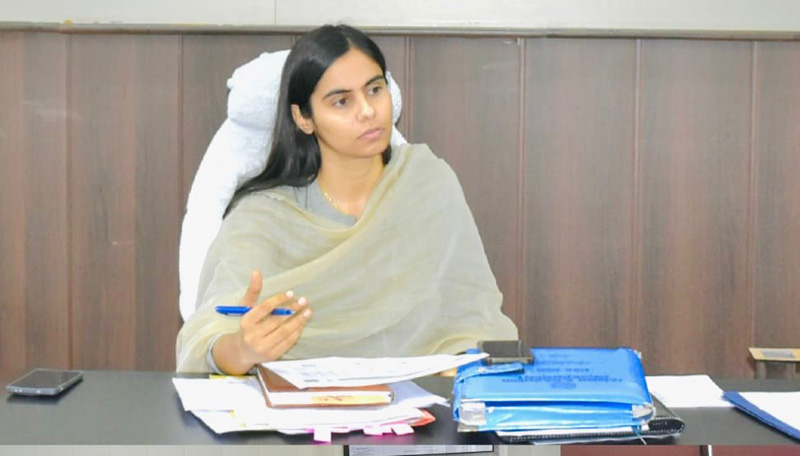
The chairperson of the Jammu and Kashmir Waqf Board, Darakshan Andrabi, has called for legal action, including invoking the Public Safety Act (PSA), against those responsible for removing the emblem.
The incident occurred following the mosque’s recent renovation. The inauguration plaque installed inside the shrine, which houses a relic of Prophet Muhammad, featured the national emblem—a decision that drew objections from the Muslim community. Devotees and political leaders, including members of the ruling National Conference (NC), argued that displaying a sculpted figure in a place of worship violates the Islamic principle of monotheism, which strictly forbids idol worship.
Shortly after Friday prayers, unknown individuals broke the stone plaque and removed the emblem. Andrabi, addressing a press conference at the mosque, described the vandals as “militants” and “hooligans,” and urged authorities to register FIRs and book them under the PSA, which allows detention without trial for up to two years.
“This is not just a scar on the stone—it is a scar on my heart and on the Constitution,” Andrabi said, questioning why the emblem would provoke controversy despite its official use nationwide. She also specifically called for an FIR against NC spokesperson and MLA Tanvir Sadiq, suggesting that the vandals were associated with him.
In response, the NC issued a statement on X, stressing the importance of mutual respect and humility within sacred spaces. The party acknowledged that concerns were raised about the plaque’s design and underlined that any activity at Hazratbal must respect the faith and sensitivities of devotees.
“The Waqf is not a personal estate but a trust run on contributions from ordinary Muslims, and it must be managed according to their faith and traditions. Yet we now witness an unelected individual imposing herself in holy shrines—a practice that disrespects both the sanctity of these spaces and the principles of accountability and humility in Islam,” the NC statement said. It added that threats of PSA arrests instead of apologies for offending religious sentiments were particularly troubling.
PDP leader Iltija Mufti criticized Andrabi’s PSA demand, calling it a reflection of a “punitive and communal mindset” and suggesting that Muslims are being deliberately provoked. She said, “Labelling Kashmiris as ‘terrorists’ for expressing anger over an issue affecting their religious sentiments is unacceptable.”
NC’s Srinagar MP and Shia leader Ruhullah Mehdi also condemned the incident, calling the plaque an attempt to “monumentalise egos” and stating that invoking the PSA “adds insult to injury.” He emphasized that Hazratbal has undergone renovations in the past without such claims of credit, and that sacred spaces need no personal nameplates for legitimacy.
Devotees visiting the shrine condemned the Waqf Board for inscribing the Ashoka emblem, describing it as “shameful” and insensitive to Muslim religious sentiments. Sadiq, the NC MLA from Zadibal, echoed these concerns, stating that placing a sculpted figure in the shrine contradicts the Islamic principle of Tawheed, which forbids idol worship.
“Sacred spaces must reflect only the purity of Tawheed, nothing else,” he said in a post on X.