






SRINAGAR: Lieutenant Governor Manoj Sinha on Sunday urged the scientific community to explore the development of soil sensors using nanotechnology to strengthen early warning systems against landslides in the Himalayan region.
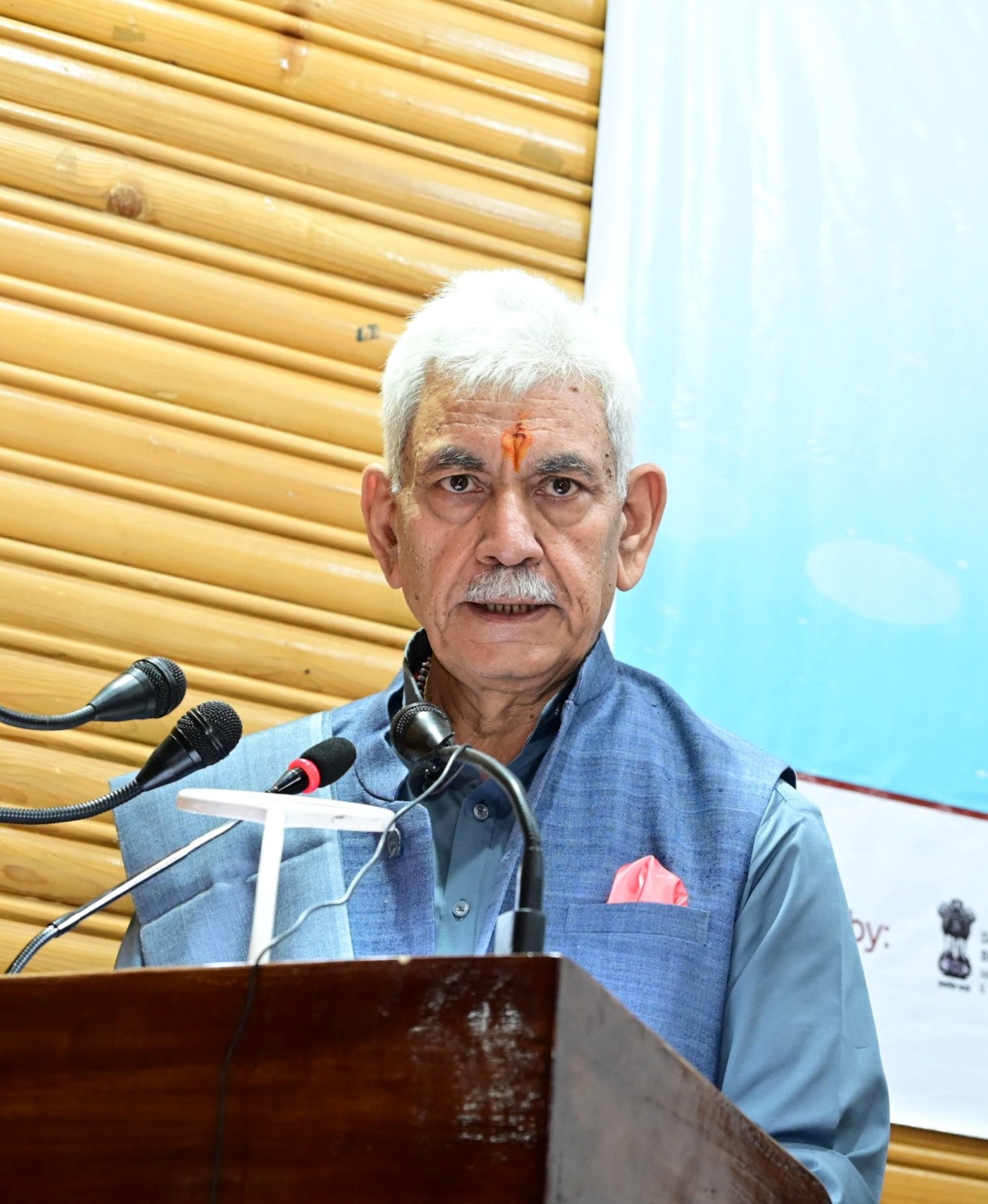
“Considering the challenges posed by climate change, we must focus on creating nanomaterials that can cut pollution in chemical manufacturing. At the same time, we should work on soil sensors tailored for the Himalayan terrain,” Sinha said while addressing the inaugural session of the International Conference on Nanotechnology for Better Living at the University of Kashmir.
He said such sensors would form a crucial part of an Advanced Early Warning System, capable of detecting soil saturation levels and alerting authorities about potential landslides. These initiatives, he stressed, could prove to be game changers in mitigating natural disaster risks in India’s Himalayan belt.
The five-day conference, jointly organised by the University of Kashmir and IIT Hyderabad, brought together top scientists and researchers to highlight recent advancements in nanotechnology and its role in sustainable living.
Sinha noted that breakthroughs in nanoscience are transforming industries, healthcare, and the environment, ensuring a better standard of living. “Cutting-edge research in nanotechnology will be central to tackling global challenges in the future,” he added.
He also called for the creation of a dedicated group to design an Advanced Early Warning System for flash floods by developing more sensitive and accurate nanotechnology-based sensors.
Highlighting the role of nanotechnology in national security, Sinha urged experts to contribute to the defence sector by developing lighter components for equipment, thereby strengthening the country’s self-reliance drive.
He further stressed the need to incentivise and nurture talent in nanotechnology across academic institutions. “Our focus must remain on using nanotechnology for humanity’s benefit. Climate change is an undeniable challenge, and our innovations show how rapidly we are advancing in this field,” he said.