






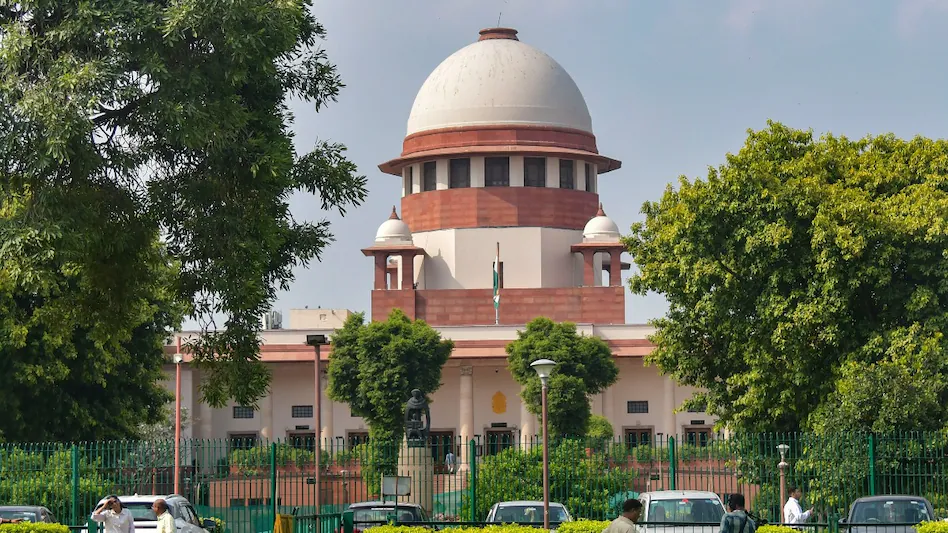
New Delhi: The Supreme Court on Tuesday observed that governors are expected to act within a “reasonable time” on bills passed by state legislatures, even if the phrase “as soon as possible” did not figure in Article 200 of the Constitution.
A five-judge Constitution Bench led by Chief Justice B R Gavai, hearing the presidential reference on whether timelines could be set for governors and the President in dealing with bills, stressed that the court would only interpret the Constitution, not examine individual cases.
Article 200 empowers a Governor to either assent to a bill, withhold assent, return it (if not a money bill) for reconsideration, or reserve it for the President. Its proviso directs that once a bill is reconsidered and returned by the assembly, the Governor cannot withhold consent.
Senior advocate Arvind Datar, appearing for the Punjab government, argued that the framers inserted “as soon as possible” in Article 200, leaving scope for courts to prescribe a three-month deadline for assent. The bench, however, noted that governors were bound to act within a reasonable time regardless.
Senior advocate K K Venugopal, for Kerala, said former Governor Arif Mohammad Khan had often sought ministry briefings before acting on bills. “We will not be deciding individual matters,” the CJI clarified.
Arguing for Karnataka, senior advocate Gopal Subramanium said the constitutional scheme made both the President and governors “titular heads,” required to act on the aid and advice of their respective councils of ministers. Article 361, he noted, granted them immunity precisely because they did not exercise executive powers personally but only through ministerial advice under the rules of business.
He added that the Constitution did not permit “parallel administrations” or allow governors to override elected governments. Referring to the 44th Amendment, he pointed out that even the President could only send advice back once for reconsideration but was ultimately bound to accept it—a principle equally applicable to governors under Article 163, barring limited discretionary areas like Article 356.
Accepting the Centre’s stand, Subramanium cautioned, would place governors beyond judicial scrutiny, turning them into “all-pervading authorities.” He stressed that governors were not agents of the Union but custodians of the state’s well-being, and reviving colonial-era doctrines would undermine democratic governance.