






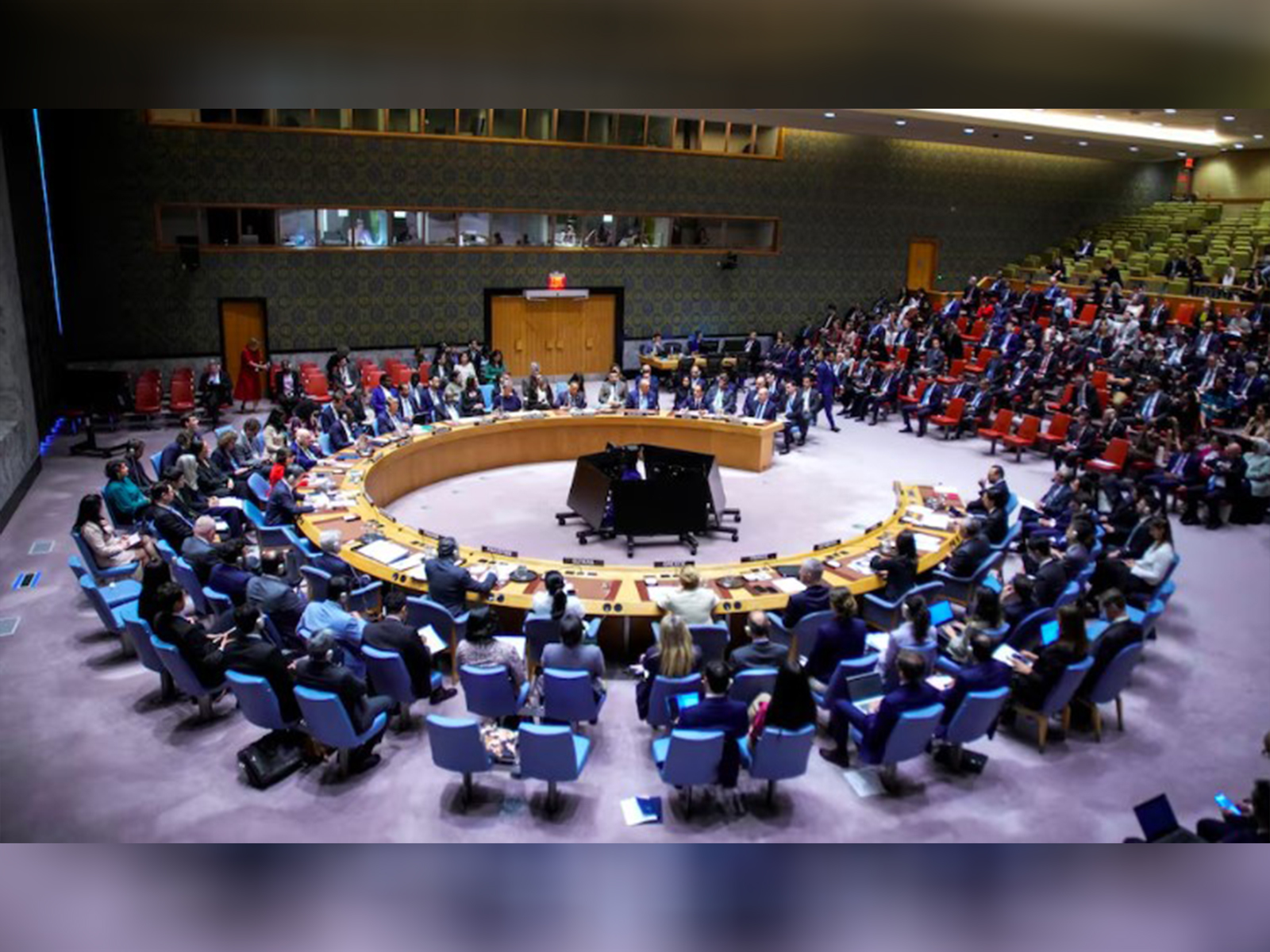
New York: On Thursday, the United States vetoed a United Nations Security Council resolution calling for an immediate and permanent ceasefire in Gaza, as Israel escalated its military operations in Gaza City.
The draft resolution, proposed by the Council’s 10 elected members, received support from 14 of the 15 members. It called for an “immediate, unconditional and permanent ceasefire in Gaza respected by all parties,” the release of all hostages held by Hamas and other groups, and the lifting of restrictions on humanitarian aid.
US Deputy Special Envoy to the Middle East Morgan Ortagus defended Washington’s veto, stating, “US opposition to this resolution will come as no surprise. It fails to condemn Hamas or recognize Israel’s right to defend itself, and it wrongly legitimizes false narratives that benefit Hamas, which have unfortunately gained traction in this council.”
The veto was sharply criticized by Palestinian and Arab representatives. Palestinian envoy Riyad Mansour said the decision highlighted the Council’s “silence at a great cost to its credibility and authority,” adding that the use of veto power “should not be allowed when atrocity crimes are at stake.”
Algeria’s UN Ambassador Amar Bendjama addressed Palestinians directly, saying, “Palestinian brothers, Palestinian sisters, forgive us. Forgive us, because the world speaks of rights but denies them to Palestinians. Forgive us because our sincere efforts have shattered against this wall of rejection.”
Meanwhile, Israeli Ambassador Danny Danon asserted that Israel required “no justification” for its military actions in Gaza, expressing gratitude to the US for its veto.
The vote coincided with the 80th anniversary of the UN’s founding, an occasion described as “somber” by Al Jazeera’s diplomatic editor James Bays, who noted that the US stance reflects “an America-first view of the world” at a time when many nations are advocating multilateral diplomacy.