






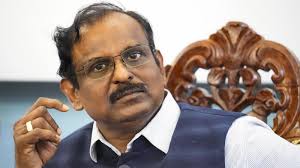
BENGALURU: India’s Gaganyaan programme, which aims to send astronauts into space and return them safely, is making steady progress, with the first crewed mission now targeted for early 2027, ISRO Chairman V. Narayanan announced today.
Speaking at the inauguration of the Hydrogen Fuel National Workshop in Bengaluru, Narayanan said around 80–85% of the programme’s development work has been completed.
“The first uncrewed mission is scheduled for December this year. Instead of humans, we will send a humanoid to test the spacecraft systems. This will be followed by two additional uncrewed missions. Guided by the directions of the Prime Minister, we plan the first crewed flight in the first quarter of 2027,” he said.
While human spaceflight is a major focus, Narayanan highlighted that ISRO is pursuing multiple avenues to benefit the nation. “Gaganyaan is one program, but ensuring the safety and security of every citizen is equally important. We are also leveraging space technology for Earth observation, navigation, communication, and other applications,” he said. “Space technology supports food security, water management, fisheries monitoring, television broadcasting, telecommunication, telemedicine, and more.”
In a major technological announcement, Narayanan revealed that ISRO is developing a 60–70 ton liquid oxygen-cryogenic upper stage for rockets, a crucial step for future manned lunar missions. “We are conceiving a rocket capable of carrying humans to the Moon. The upper stage under development will enable heavy payload launches and mission success,” he said.
He also outlined advancements in rocket propulsion, noting that ISRO is working on high-efficiency liquid hydrogen–liquid oxygen engines. “These enhancements will enable India to undertake complex missions, including deep-space exploration and human lunar travel,” Narayanan added.
Highlighting ISRO’s work on sustainable technologies, he spoke on hydrogen fuel applications. “Hydrogen is a clean, green fuel. When used with liquid oxygen in rocket engines, the only byproduct is water vapor. It also has potential in automobiles, fuel cells, gas turbines, and future aircraft engines. Workshops like this facilitate exchange of ideas on design, safety, and handling of hydrogen fuel,” he said.
The Hydrogen Fuel National Workshop aims to foster innovation in hydrogen-based propulsion systems, reduce environmental impact, improve fuel efficiency, and support next-generation space missions. It also provides a platform for scientists, engineers, and industry experts to collaborate and share best practices.
Narayanan emphasized the strategic importance of India’s space programme. “A strong space program is essential for national development, scientific achievement, and positioning India as a global player in space exploration. These technological advancements are not only critical for mission success but also inspire the next generation of scientists and engineers,” he said.
India’s space programme has achieved several milestones, from successful satellite launches and lunar missions to the development of Gaganyaan. The upcoming high-capacity upper stage and hydrogen-based propulsion systems are expected to strengthen India’s position in global space exploration. Experts praised ISRO’s multi-pronged approach, noting that combining human spaceflight, advanced propulsion, and sustainable hydrogen fuel technologies places India alongside global leaders in space innovation.