






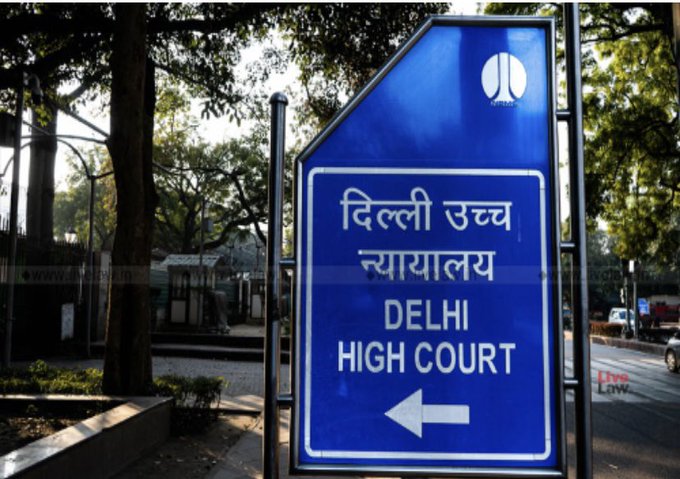
New Delhi: The Delhi High Court on Wednesday declined to hear a plea seeking the removal of the graves of terrorists Mohammad Afzal Guru and Mohammad Maqbool Bhatt from Tihar Jail.
Both Guru and Bhatt were sentenced to death and executed at the prison.
Noting the court’s stance, the petitioners’ counsel requested permission to withdraw the petition and refile it with additional data.
A bench comprising Chief Justice Devendra Kumar Upadhyaya and Justice Tushar Rao Gedela allowed the petitioners to withdraw the PIL, recording it as “dismissed as withdrawn.”
“For relief through a PIL, one must demonstrate violation of constitutional, fundamental, or statutory rights. There is no law or rule prohibiting cremation or burial within jail premises,” the bench observed.
The petition had also sought directions to relocate the remains, if necessary, to a secret location to prevent “glorification of terrorism” and misuse of jail grounds.
Filed by Vishwa Vedic Sanatan Sangh and Jitendra Singh, the plea argued that the construction and continued existence of these graves inside a state-controlled prison was “illegal, unconstitutional, and against public interest.”
Advocate Varun Kumar Sinha, representing the petitioners, claimed that Tihar Jail had become a site of “radical pilgrimage,” attracting extremist elements to venerate convicted terrorists. “This not only undermines national security and public order, but also glorifies terrorism, violating the principles of secularism and rule of law under the Constitution of India,” he contended.
The bench questioned the basis for this claim, asking for evidence showing people paying homage at the graves.
The plea also argued that the graves contravened the Delhi Prisons Rules, 2018, which require executed prisoners’ bodies to be disposed of in a manner that prevents glorification, maintains prison discipline, and preserves public order.
“The petitioners therefore seek the court’s urgent intervention to direct the removal of these graves from Tihar Jail and ensure their relocation to a secure, undisclosed location, consistent with established state practice in the cases of executed terrorists such as Ajmal Kasab and Yakub Memon,” it said.
The plea highlighted that both Bhatt and Guru, influenced by extremist ideologies, carried out acts of terrorism that severely threatened India’s sovereignty, territorial integrity, and security. Bhatt was executed in 1984, while Guru was hanged in February 2013.