







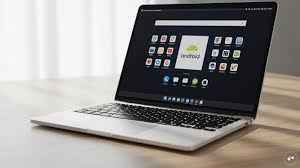
Android has long powered smartphones, tablets, and even smart cars—but soon, the platform is set to make its mark on traditional personal computers. It’s official: Google is bringing Android to PCs, partnering with Qualcomm to provide the necessary hardware support. The announcement came during the Snapdragon Summit 2025, which also offered a glimpse of a unified ChromeOS + Android platform designed for personal computing devices.
While Google’s ChromeOS laptops have had pockets of success, they still lag behind Windows, macOS, and even Linux. Integrating Android with ChromeOS could finally merge the best of mobile and PC experiences. Google has confirmed that the Android for PC version will launch next year, possibly debuting at Google I/O 2026 in May.
Android for PCs: What to Expect
Though details remain scarce, Qualcomm’s chief expressed excitement about Android for PC at the event. Based on Android and ChromeOS experiences, the new platform is expected to combine Android’s interface with ChromeOS’s multitasking capabilities, delivering a cohesive OS for PCs. It will likely position itself somewhere between Windows and macOS, while retaining deep links to Linux, given Android’s Linux-based kernel.
Android’s performance on tablets has been mixed, often relying on partners to maximize hardware capabilities. On PCs, the platform will need to be more dynamic and efficient, handling complex tasks without overextending itself. While Apple will remain a unique competitor, Android for PC will primarily aim to challenge Windows—a tall order, given Microsoft’s stronghold in the market.
For Android to succeed on PCs, it must replicate the seamless computing experience it has achieved on smartphones and smart TVs, an area where tablets have struggled. Expanding Android to PCs would complete Google’s ecosystem strategy, linking phones, TVs, watches, smart homes, cars, and now, traditional computers under a single, unified platform.