






LAHORE: Religious extremists affiliated with a radical Islamist party attacked the homes and businesses of Ahmadis in Punjab province following the burial of an Ahmadi woman, according to the community’s representative organisation.
Jamaat-e-Ahmadiyya Pakistan (JAP) reported that the incident took place this week in Piru Chak, Sialkot District, about 130 km from Lahore. The deceased, 55-year-old Qudsia Tabassum, was brought to the local graveyard for burial when a group of Muslim extremists arrived and obstructed the process. “They declared that no Ahmadi would be allowed to be buried in that graveyard from now on,” the JAP said.
The organisation noted that the graveyard had been allocated to the Ahmadi community after the 1947 Partition. Members of other sects, who were sometimes denied burial by their own communities, had historically been allowed to use this graveyard. Currently, there are 220 Ahmadi graves there, along with around 100 graves of people from other sects.
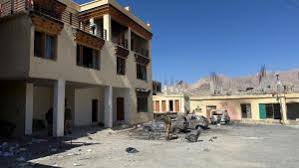
According to the JAP, when the Ahmadis insisted on burying Ms. Tabassum in the designated graveyard, a large number of extremists, led by Tehreek-e-Labbaik Pakistan, attacked Ahmadi homes and shops, causing injuries to some community members.
Police officer Muhammad Adnan Bhatti said the clashes in Piru Chak involved both Ahmadis and local Muslims. “Ahmadis also attacked Muslim homes, injuring some residents,” he said. He added that a case has been filed against 30 Ahmadis under sections 506, 148, and 149 of the Pakistan Penal Code.
The JAP criticised authorities, saying that while police registered a case against its members, their application regarding the attack has not been addressed. To ease tensions, the woman was ultimately buried 14 kilometres away from the original graveyard.
Although Ahmadis identify as Muslims, Pakistan’s Parliament declared them non-Muslims in 1974. A decade later, they were prohibited from calling themselves Muslims or practising certain aspects of Islam, including constructing mosque symbols such as minarets or domes, or publicly displaying Quranic verses.