






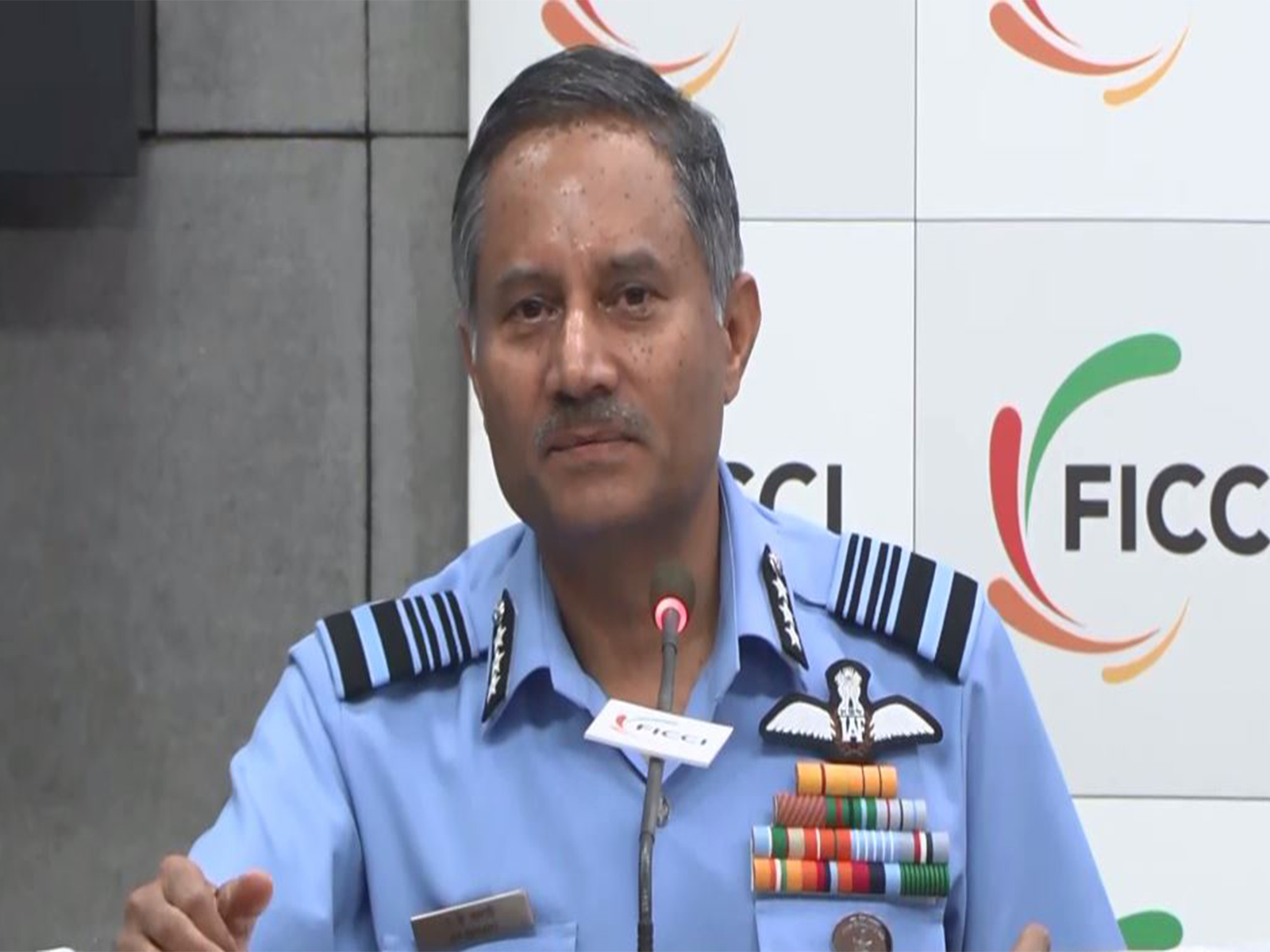
New Delhi: Deputy Chief of Air Staff, Air Marshal Awadhesh Kumar Bharti, emphasized the need for indigenisation in India’s defence sector to prepare for future wars, warning that progress toward operationalisation has been “painfully slow.”
Speaking at the Aero Tech India 2025 event in New Delhi on Tuesday, Air Marshal Bharti highlighted the importance of “leapfrogging” in critical technologies to achieve strategic autonomy.
“To win future wars, indigenisation is essential. Our global partners may not always share niche or critical technologies, so we must advance independently. Leapfrogging will largely have to be done on our own,” he said.
He stressed that India must gain strategic autonomy across a range of areas, from secure chips and communication systems to hypersonics, airborne platforms, and space-based assets.
Pointing to the slow pace of progress, Air Marshal Bharti noted that research and development in the country must accelerate. “Indigenisation is key to our future capabilities. While significant work is underway, the transition from conceptualisation to operationalisation is painfully slow. To speed up innovation, research, infrastructure, and the overall environment must undergo a revolution,” he said.
Describing the future battlefield, he said warfare will span the entire spectrum—from low-cost unmanned systems like drones to high-cost, AI-integrated platforms. “Future conflicts will involve both extremes: mass deployment of low-cost systems on one end, and niche, high-tech equipment with AI and human collaboration on the other,” he explained.
Air Vice Marshal (Retd) Anil Golani, DG of the Centre for Aerospace Power and Strategic Studies, also spoke at the event, underscoring the role of the Indian Air Force in Operation Sindoor and calling for reduced dependence on imports.
“Our national security has been reinforced by operations like Sindoor. The current geopolitical landscape underscores the importance of indigenisation in defence manufacturing. We must focus on innovation, self-reliance, and addressing shortages in combat-enabler aircraft. Development of next-generation beyond-visual-range air-to-air missiles and standoff weapons must also be prioritized,” he said.
He lauded the role of MSMEs in the defence sector, noting that the Tejas program alone is expected to create about 12,000 jobs annually over the next six years, supported by 115 suppliers. “This growth will double the number of MSMEs in the defence sector to nearly 16,000 by 2030,” he added.
Aero Tech India 2025 was organised by the Centre for Air Power and Strategic Studies (CAPSS) in collaboration with the Federation of Indian Chambers of Commerce and Industry (FICCI) in New Delhi.