






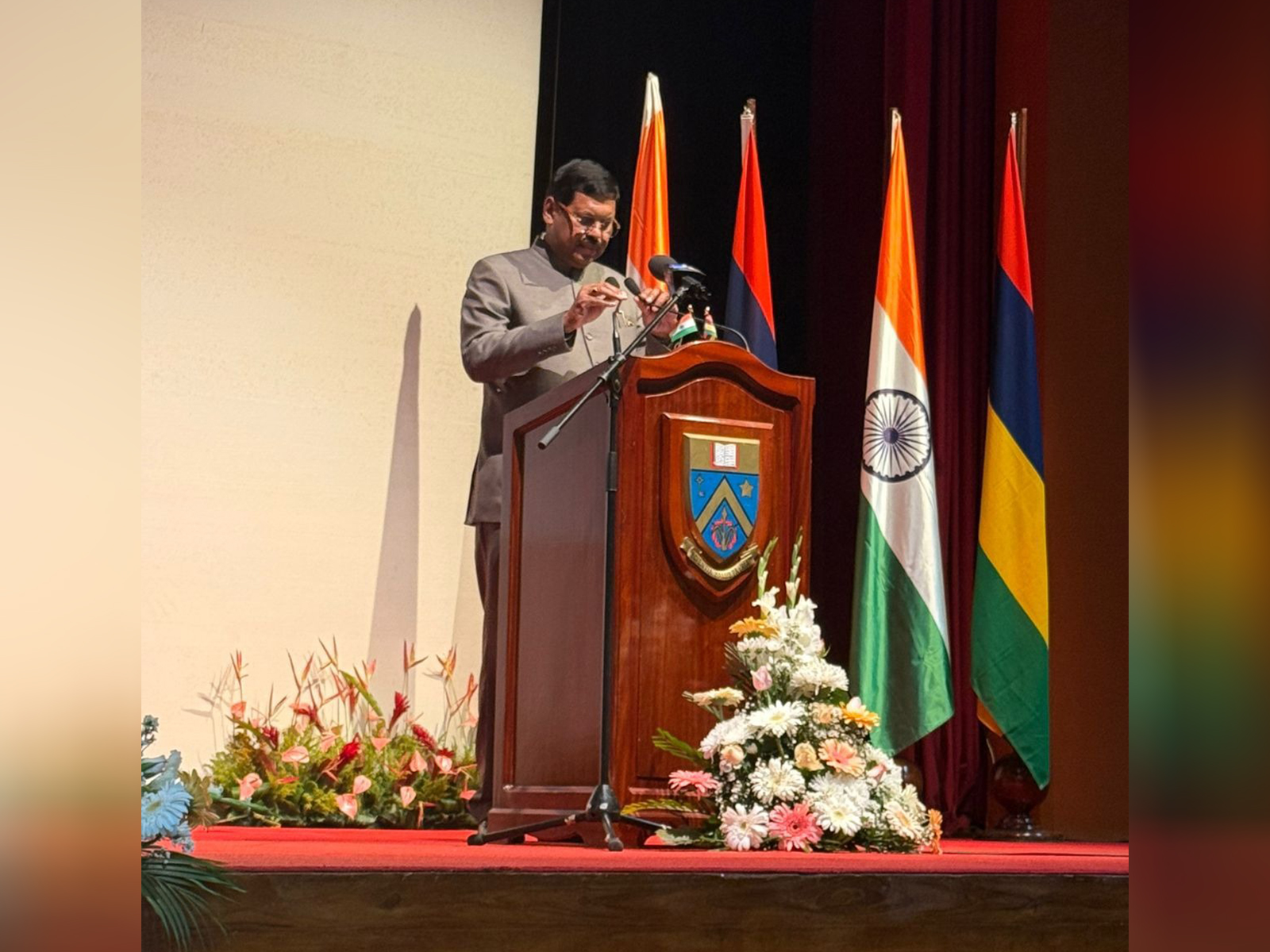
Port Louis [Mauritius]: The Chief Justice of India (CJI) BR Gavai on Friday underscored that the Supreme Court’s ruling against the demolition of homes of accused persons by state authorities reinforces that India’s legal system operates under the rule of law, not the “rule of the bulldozer.” The ruling affirms that such demolitions violate the fundamental right to shelter under Article 21.
CJI Gavai made these remarks during the Inaugural Sir Maurice Rault Memorial Lecture 2025 in Mauritius, delivering a talk titled “Rule of Law in the Largest Democracy.”
Highlighting the judiciary’s constitutional role, he noted that the Supreme Court has consistently relied on the principle of the rule of law to guide its interpretation and application of the Constitution.
He explained, “By adopting a broader understanding of the rule of law, we recognized that the procedures enshrined in constitutional, criminal, and procedural law are themselves vital components of the rule of law. These mechanisms regulate the exercise of executive power, ensuring that authority is exercised fairly, justly, and within legal boundaries.”
The CJI further emphasized that the ruling clarified that the executive cannot act as judge, jury, and executioner simultaneously. “Guidelines were therefore established to ensure that no demolition can occur without strict adherence to established legal procedures,” he added.
CJI Gavai also reflected on the evolving nature of the rule of law, noting that while its interpretation differs across societies, its core purpose remains consistent: to act as a check on power and uphold fairness. In India, this has emphasized non-arbitrariness and human dignity as central to constitutionalism. In Mauritius, under the guidance of jurists like Sir Maurice Rault, it has involved affirming judicial independence, limiting discretion, and ensuring that law—not individuals—governs.
He paid tribute to Sir Maurice Rault, calling him a jurist who embodied justice and fairness, and congratulated Justice BR Mungly Gulbul, the first woman Chief Justice of Mauritius. CJI Gavai also expressed gratitude to Mauritius’ Attorney General, the Bar Association, and the Institute for Judicial and Legal Studies for organizing the lecture. He linked the democratic traditions of India and Mauritius to Mahatma Gandhi’s legacy, commemorating the 156th anniversary of his birth on October 2.
Concluding his lecture, the CJI highlighted the dynamic nature of the rule of law, describing it as “a conversation across generations—between judges and citizens, parliaments and peoples, nations and their histories. It is about how we govern ourselves with dignity and resolve the inevitable tensions between liberty and authority in a democratic society.”