






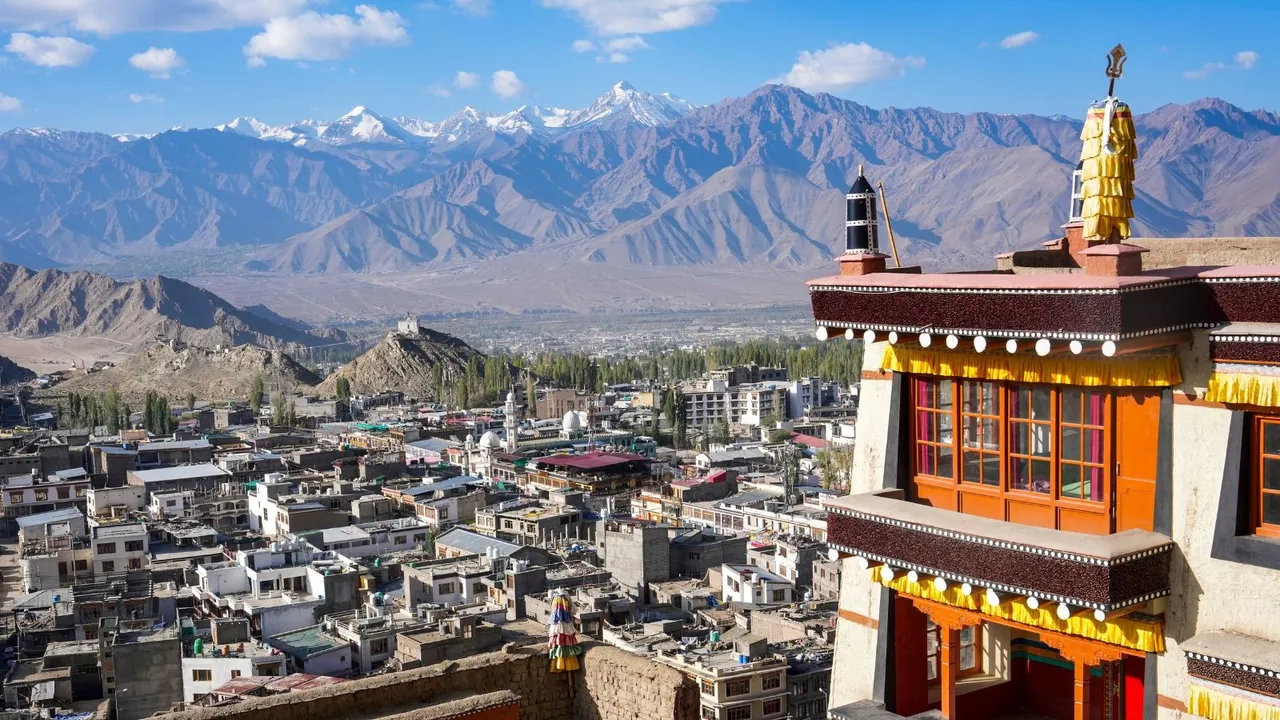
Leh: Following recent violent incidents that disrupted normal life in Leh, tourism stakeholders in Ladakh have urged authorities to implement additional financial relief measures to help the sector recover from mounting losses.
Hoteliers, tour operators, and transporters said the unrest, combined with an already weak tourist season, has severely affected local businesses, requiring urgent support through measures such as interest subvention during the moratorium period and comprehensive loan restructuring.
The appeal was made jointly by the All Ladakh Hotel and Guest House Association, All Ladakh Tour Operators Association, Leh Cooperative Taxi Ltd, and tempo and biker unions in a letter to the chairman of the Union Territory Level Bankers Committee (UTLBC).
Leh witnessed violent clashes on September 24 amid protests demanding statehood and Sixth Schedule status for Ladakh. The violence left four people dead and dozens injured, leading to curfew imposition and suspension of mobile internet services. Climate activist Sonam Wangchuk, one of the protest leaders, was detained following the unrest.
Although most restrictions were lifted after a week, the disturbances significantly impacted the tourism sector.
The stakeholders acknowledged the finance department’s September 19 notification declaring Ladakh “affected by disturbances” effective April 22, under Chapter 7 of RBI’s Directions on Relief Measures in Areas Affected by Natural Calamities. They also welcomed the planned one-year moratorium extension.
“However, the tragic events of September 24 have once again plunged Ladakh’s tourism and trade sectors into financial distress. With the season effectively over and businesses shutting down for winter, local operators are struggling to meet even basic financial obligations,” the letter noted.
The tourism community warned that prolonged disruptions and a near-complete halt in tourist activity have put thousands of livelihoods at risk.
“Tourism in Ladakh is not just an economic sector—it sustains over 70 percent of the region’s livelihoods, directly or indirectly. With winter approaching and operations paused for months, urgent financial intervention is crucial to prevent defaults, closures, and long-term economic damage,” the letter stated.
While welcoming the moratorium extension, stakeholders highlighted that accumulated interest during this period would still burden distressed borrowers. They requested that the moratorium be made interest-free or that interest subvention be provided for at least 12 months to provide meaningful relief.
The letter also called for mandatory restructuring of all tourism-related loans across sectors—including hotels, guest houses, taxis, bikes, transporters, tour operators, and small traders—so repayment schedules could be revised without penalties or reclassification as NPAs.
They further emphasized that many local entrepreneurs rely on continued credit for seasonal operations and requested that accounts availing relief be shielded from CIBIL score downgrades or NPA classification, protecting future creditworthiness.
“We sincerely urge the UTLBC and concerned financial institutions to expedite the formulation and release of a comprehensive relief package to safeguard both livelihoods and financial stability in the Union Territory,” the letter concluded.