






New Delhi: NexCAR19, the world’s first humanised CAR-T cell therapy developed in India, has made advanced gene therapies more affordable and accessible while upholding scientific excellence and patient safety, the Ministry of Science and Technology announced on Wednesday.
Designed to treat relapsed or refractory B-cell Non-Hodgkin’s Lymphomas and B-cell Acute Lymphoblastic Leukaemia in patients unresponsive to standard treatments, NexCAR19 was developed using a lentiviral vector platform.
“NexCAR19, India’s first living drug, represents a major milestone in making gene therapies affordable and accessible without compromising on scientific rigour or safety,” the Ministry said.
Developed by ImmunoACT, a gene therapy company incubated at IIT Bombay and supported by the Department of Biotechnology (DBT) and Biotechnology Industry Research Assistance Council (BIRAC), NexCAR19 was among the three groundbreaking innovations unveiled by Prime Minister Narendra Modi at the ESTIC2025 conclave in New Delhi.
The other two innovations include QSIP, India’s indigenously developed quantum security chip, and a 25-qubit quantum processing unit (QPU) — the nation’s first quantum computing chip.
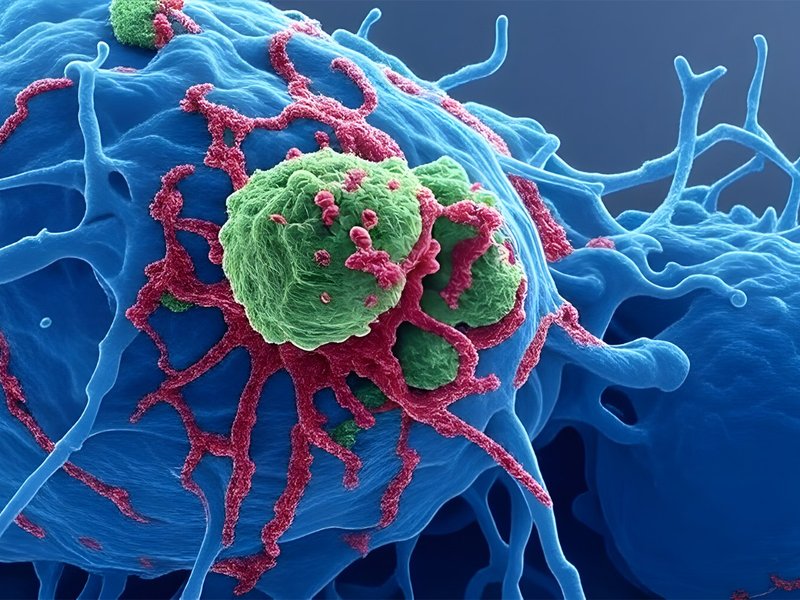
CAR-T therapy (Chimeric Antigen Receptor T-cell therapy) is a revolutionary cancer treatment that reprograms a patient’s own immune cells to target cancer. Global clinical trials have shown significant success in treating end-stage patients, particularly those with Acute Lymphocytic Leukaemia.
Under the BioE3 Policy, the DBT recently provided funding to ImmunoACT to establish a 200L GMP-grade lentiviral vector and plasmid manufacturing platform under its Biomanufacturing initiative. This infrastructure aims to scale production and further reduce treatment costs.
“The platform will integrate advanced bioreactor technologies to enable high-density cell growth, continuous production, and improved lentiviral vector yields. The GMP-grade gene delivery system is expected to support therapy for at least 1,000 patients per year,” the Ministry noted.
With cancer cases on the rise, the DBT is also advancing early- and late-stage translational research to develop indigenous CAR-T therapies targeting a broader range of cancers — including Multiple Myeloma, Acute Lymphocytic Leukaemia, relapsed B-cell ALL, and glioblastoma — while addressing associated toxicities.
Through these initiatives, India is positioning itself at the forefront of affordable, homegrown gene and cell therapy innovation.