







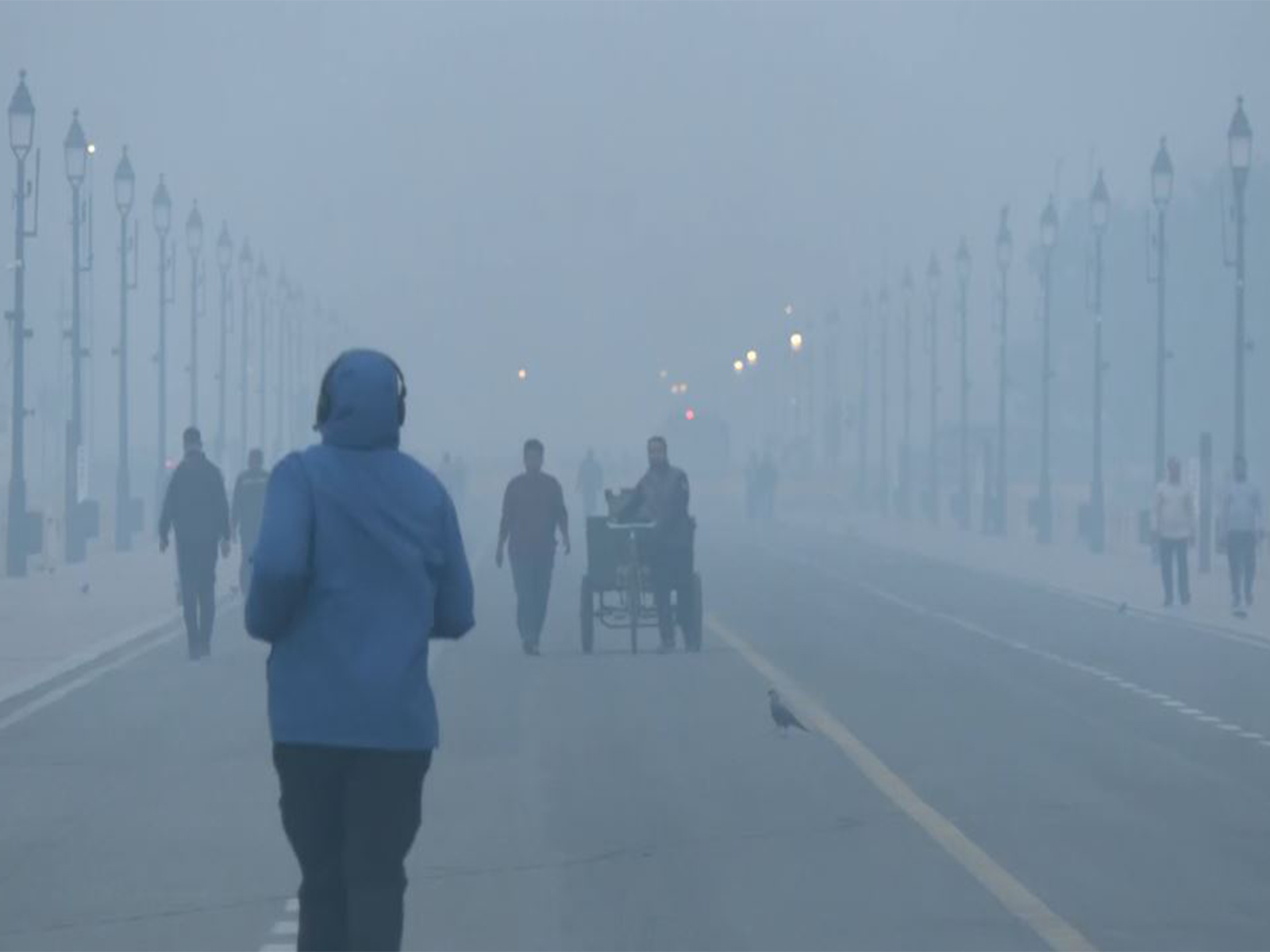
New Delhi [India]: The air quality in the national capital deteriorated further on Friday morning, slipping into the ‘very poor’ category, with Delhi’s overall Air Quality Index (AQI) standing at 312 as of 8 am, according to data from the Central Pollution Control Board (CPCB).
On Thursday, the city’s overall AQI at 8 am was 271, classified as ‘poor’.
Several monitoring stations across the city reported ‘very poor’ air quality levels. Among them, Anand Vihar registered an AQI of 332, Alipur 316, Ashok Vihar 332, Bawana 366, Burari Crossing 345, Chandni Chowk 354, Dwarka Sector-8 310, ITO 337, Jahangirpuri 342, Mundka 335, Narela 335, Okhla Phase 2 307, Patparganj 314, Punjabi Bagh 343, RK Puram 321, Rohini 336, and Sonia Vihar 326.
Other stations, including Aya Nagar (261), IGI Airport (259), JLN Stadium (296), Lodhi Road (224), and Najafgarh (265) recorded ‘poor’ air quality levels.
As per CPCB standards, an AQI between 0–50 is considered ‘good’, 51–100 ‘satisfactory’, 101–200 ‘moderate’, 201–300 ‘poor’, 301–400 ‘very poor’, and 401–500 ‘severe’.
To mitigate pollution levels, truck-mounted water sprinklers were deployed across several parts of the city.
With the onset of winter, Delhi also woke up to a thick layer of haze on Friday. According to the Regional Meteorological Centre (RMC), the national capital recorded a minimum temperature of around 12°C on November 6. Temperatures recorded were 12.7°C in Safdarjung, 12.5°C in Palam, 12°C at Lodhi Road, and 11.4°C in Aya Nagar.
Since Diwali, Delhi and the National Capital Region (NCR) have continued to experience ‘poor’ to ‘very poor’ air quality in most areas, even as Stage II of the Graded Response Action Plan (GRAP) remains in effect.
Meanwhile, the New Delhi Municipal Council (NDMC) has doubled parking fees across the city following the activation of GRAP Stage II measures to curb pollution.