






From Kashmir to Faridabad — inside the network that turned doctors into alleged terrorists.
The recent discovery of nearly three tonnes of explosives in Faridabad has shocked the nation and exposed a dark undercurrent of radicalisation hidden behind professional respectability. At the centre of this unfolding investigation are two doctors, men once trusted to save lives, now accused of plotting a terror attack in the National Capital Region. What began as a routine probe into some threatening posters in Kashmir has turned into one of the most sophisticated terror conspiracies uncovered in recent times.
The sequence of events began on October 19, 2025, when police in Srinagar’s Nowgam area discovered posters carrying the insignia of Jaish-e-Mohammad. The posters contained threats against security personnel and informers, prompting authorities to register a case under the Unlawful Activities (Prevention) Act, the Explosive Substances Act, and the Arms Act. Investigators reviewing CCTV footage from the Bunpora Nowgam area noticed a man pasting the posters late at night. What initially appeared to be a minor act of propaganda soon became the first clue to a much larger operation.
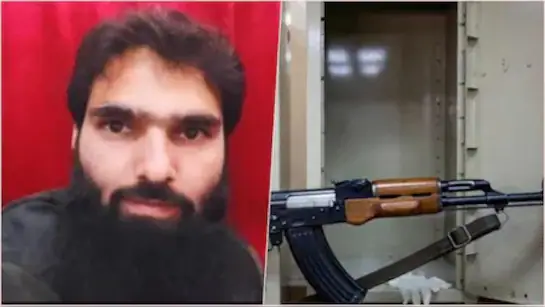
The man was identified as Dr Adeel, a medical professional who had earlier worked at the Government Medical College in Anantnag and had recently taken a position at a private hospital in Saharanpur, Uttar Pradesh. On October 25, 2025, a team from Jammu and Kashmir Police, working with central agencies, arrested him in Saharanpur. During a search of his old locker at the medical college, police recovered an assault rifle, confirming his connection to terrorist elements. Investigators later revealed that Adeel had been radicalised and was working in close coordination with handlers based in Pakistan linked to Jaish-e-Mohammad and Ansar Ghazwat-ul-Hind. His role was to identify educated professionals who could operate quietly and avoid suspicion.
During questioning, Adeel’s statements led investigators to another name, Dr Muzammil, a resident of Pulwama working at the Al-Falah School of Medical Sciences and Research Centre in Faridabad. Surveillance and intelligence inputs suggested that Muzammil was deeply involved in managing logistics for the same network. On November 6, 2025, police raided two houses rented by him in Faridabad. What they discovered stunned even seasoned officers. Inside twelve large suitcases were bags filled with suspected ammonium nitrate and other explosive materials weighing nearly 2,900 kilograms. Along with these, police recovered electronic circuits, timers, batteries, wires, remote controls, and metal pieces, all essential components for making improvised explosive devices. Two pistols and two rifles, including an AK-56, were also found.
The arrests that followed between November 7 and 9, 2025, widened the scope of the case. Apart from Adeel and Muzammil, police arrested Arif Nisar, Yasir-ul-Ashraf, Maqsood Ahmad Dar, cleric Irfan Ahmad, and Zameer Ahmad Ahanger. Investigators described the group as part of a white-collar terror network composed of educated individuals, ideologues, and sympathisers operating under the cover of legitimate professions. Communication within the network was conducted through encrypted messaging applications using coded language. Funding was routed through informal channels disguised as donations for education or welfare. Some of the money was allegedly raised through professional and academic groups under the pretext of charitable causes.
According to investigators, the plan was to execute a large-scale strike in Delhi-NCR aimed at creating communal unrest and widespread panic. Although the exact targets were still under verification, the quantity of explosives pointed to a devastating attack being planned. The structure of the network and the use of highly educated operatives indicate a dangerous shift in terror recruitment strategies. Both Adeel and Muzammil were chosen precisely because their backgrounds in medicine made them unlikely to be suspected. One of the accused reportedly told interrogators that they were selected because no one would suspect doctors in Delhi-NCR.
Further investigation revealed that a female colleague of Dr Muzammil had also assisted the group. Her Maruti Suzuki car had been used to transport smaller consignments of explosives and weapons, leading to her subsequent arrest. Investigators believe this indicates the presence of a wider support network providing logistical and financial aid to the accused.
With the seizure of nearly three tonnes of explosives so close to the national capital, the National Investigation Agency, Delhi Police Special Cell, and Haryana Police launched a joint probe. Forensic experts are analysing the recovered material and digital devices to trace all remaining members of the module. Security agencies have intensified surveillance in and around Delhi, especially near public venues and transit hubs. Preliminary reports suggest that the group might have been planning to strike during a major event or festival to maximise casualties and impact.
The Faridabad case has sent shockwaves through the medical and academic community. It has shown how extremist ideologies can reach even those from well-educated and respected professions. Experts warn that terrorist organisations are deliberately targeting professionals who possess the technical skills and credibility to operate undetected. This emerging form of radicalisation is being described by officials as white-collar terrorism, where trust, intellect, and social standing are exploited for violent ends.
The investigation remains ongoing, and authorities are pursuing leads that suggest more individuals may be linked to this network. What began with a few posters in Kashmir has now exposed a sophisticated web of terrorism stretching across states and professional circles. The Faridabad explosives case not only prevented what could have been a catastrophic attack in the National Capital Region but also highlighted a deeply troubling reality — that the face of terrorism in India is changing, becoming smarter, more educated, and far more difficult to detect.