






Delhi Blast Probe: Arrested Doctor Conducted Multiple Recces of Red Fort in January, Say Officials
NEW DELHI: Data retrieved from the mobile phone of Dr. Muzammil Ganaie — one of the eight people arrested after police dismantled a white-collar terror module — has revealed that he carried out several reconnaissance missions around Delhi’s Red Fort in January this year, officials said on Wednesday.
Investigators suspect these visits were part of a larger plot to target the historic monument on Republic Day, a plan that was thwarted by heightened security and patrolling in the area.
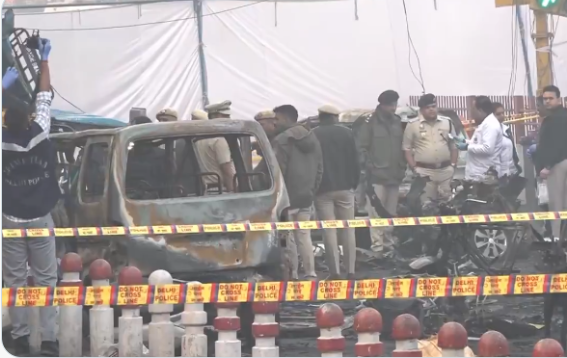
Hours after the module — reportedly linked to Jaish-e-Mohammed and Ansar Ghazwat-ul-Hind — was busted, a powerful blast tore through a slow-moving car near the Red Fort, killing 12 people and injuring several others.
Police seized around 2,500 kg of ammonium nitrate, potassium chlorate, and sulphur from multiple locations across Jammu and Kashmir, Haryana, and Uttar Pradesh as part of the crackdown.
Forensic experts from the FSL collected about 40 samples from the blast site. Initial tests indicate that one of the explosive materials used was likely ammonium nitrate.
A senior police officer said Dr. Ganaie’s mobile data and tower locations confirmed his repeated presence in and around the Red Fort during the first week of January. Along with Dr. Umar Nabi, an assistant professor at Al-Falah University who allegedly drove the car that exploded, Ganaie visited the monument several times to observe security deployment and crowd patterns.
“These reconnaissance trips were part of detailed planning ahead of a possible attack on January 26,” the officer said.
The forensic team has also recovered live cartridges, two types of explosive residues, and other evidence from the site. Preliminary analysis suggests that the second explosive material could be more potent than ammonium nitrate, pending confirmation through further testing.
During follow-up raids on Monday, investigators recovered 360 kg of ammonium nitrate from Faridabad, where Dr. Ganaie and Dr. Shaheen Sayeed, both associated with Al-Falah University, were arrested.
In a related development, Jammu and Kashmir Police detained a cleric from Haryana’s Mewat, identified as Maulvi Ishtiyaq, who was living in a rented house within the Al-Falah University complex. Over 2,500 kg of explosive materials had earlier been recovered from his residence, officials said. He is expected to become the ninth person formally arrested in the case.
Meanwhile, Delhi Police have intensified security checks across the national capital following the blast. Paramilitary forces and police personnel have been deployed in large numbers at all entry and exit points, including Ghazipur, Singhu, Tikri, and Badarpur borders. Random vehicle checks are being carried out at metro stations, markets, railway stations, and bus terminals.
“All district units and specialised wings have been directed to remain on high alert and increase patrolling in crowded areas,” a senior police official said. “We’re taking no chances — our priority is to maintain public confidence and ensure the city’s safety.”
Sniffer dogs, metal detectors, and anti-sabotage squads have been deployed at sensitive locations as part of the enhanced security measures.