






New Delhi: India on Friday said that global climate ambition remains insufficient even a decade after the Paris Agreement, as it joined Brazil’s new Tropical Forests Forever Facility (TFFF) as an observer. New Delhi urged developed nations to accelerate emission cuts and deliver long-promised climate finance.
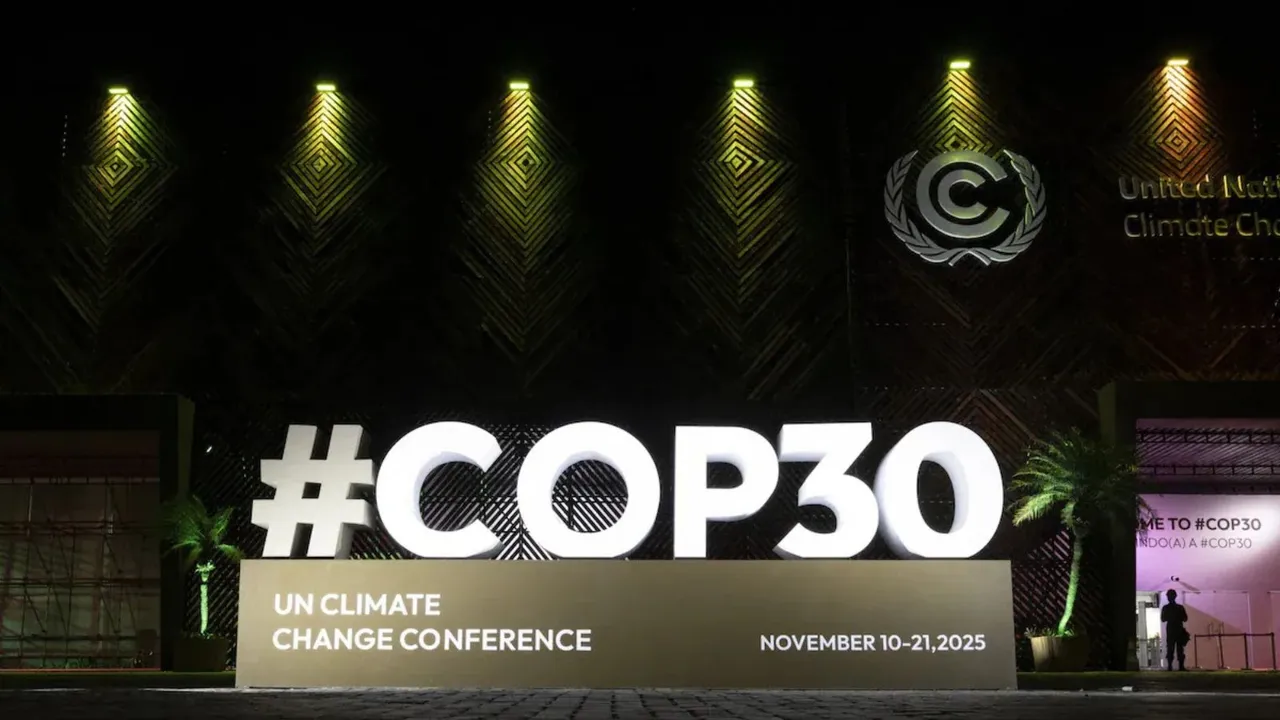
Delivering India’s statement at the Leaders’ Summit of COP30 in Belem, Brazil, Indian Ambassador Dinesh Bhatia reaffirmed the country’s commitment to multilateralism and the Paris Agreement, which marks its 10th anniversary this year.
“India welcomes and supports Brazil’s initiative to establish the Tropical Forests Forever Facility — a significant step toward collective and sustained global action to protect tropical forests. India is pleased to join the Facility as an observer,” Bhatia said.
Launched on Thursday, the Brazil-led global fund aims to mobilise about USD 125 billion through public and private investments to reward tropical countries for conserving and expanding forests.
India said COP30 offers an opportunity to reflect on the world’s progress since the Rio Summit, which established the principles of equity and common but differentiated responsibilities and respective capabilities (CBDR-RC).
Ten years after the Paris Agreement, Bhatia noted, “global ambition remains inadequate,” with many countries’ Nationally Determined Contributions (NDCs) still falling short of what is needed to limit warming to 1.5°C.
While developing nations continue to take “decisive climate action,” India said developed countries that have “disproportionately appropriated the global carbon budget” must now accelerate emission reductions and provide “adequate, predictable, and concessional” support.
India also called on developed nations to reach net zero much earlier than their declared timelines and to invest in achieving net negative emissions.
Emphasising that adaptation is as crucial as mitigation, Bhatia said attention must be directed to local-level climate risks and vulnerabilities, especially in developing countries. He underlined that affordable finance, technology, and capacity building are essential for implementing ambitious climate plans.
“Equitable, predictable and concessional climate finance remains the cornerstone for achieving global climate goals,” he added.
Highlighting India’s domestic achievements, Bhatia said the country had reduced the emission intensity of its GDP by 36% between 2005 and 2020 and continues on a low-carbon growth path. Non-fossil fuel-based power now constitutes over half of India’s total installed capacity, meeting its revised NDC target five years ahead of schedule.
India’s forest and tree cover has expanded to 25.17% of its geographical area, creating an additional carbon sink of 2.29 billion tonnes of CO₂ equivalent between 2005 and 2021.
With about 200 GW of renewable energy, India is now the world’s third-largest renewable energy producer, driven by ambitious initiatives in solar, wind, green hydrogen, and biofuels.
Bhatia also highlighted India’s leadership in co-founding the International Solar Alliance (ISA) with France in 2015, now comprising over 120 member countries promoting affordable solar energy and South–South cooperation.
“Let the next decade of climate action be defined not just by targets, but by implementation, resilience, and shared responsibility built on trust and fairness,” he said.