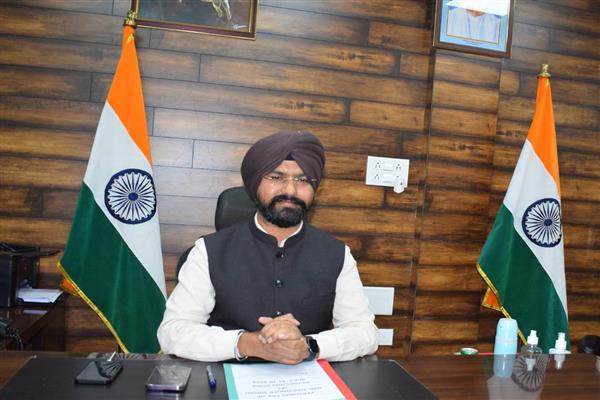







Chasoti: Jammu and Kashmir Chief Minister Omar Abdullah on Saturday expressed deep concern over the recent natural disasters in the Union Territory, Himachal Pradesh, and Uttarakhand, stressing the need to consult experts to explore ways to “mitigate the risks and dangers.”
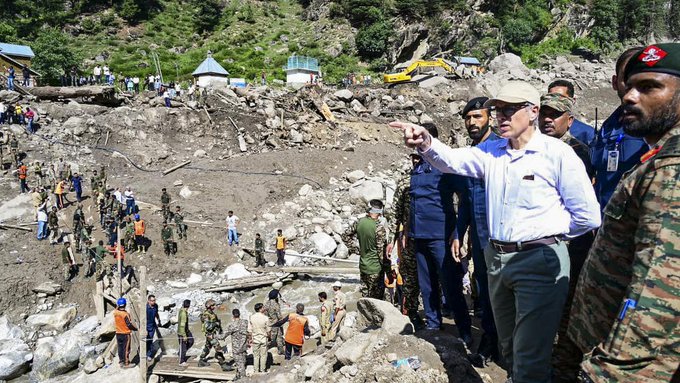
Speaking to reporters near Chasoti during his return to the cloudburst-hit remote village in Kishtwar district, Abdullah highlighted that the entire Himalayan region is increasingly vulnerable to glacial lake bursts and cloudbursts.
Responding to a question about forming a team of experts to protect J&K’s fragile ecosystem, he said: “We are looking into it. This is not just about what’s happening in J&K. Look at the alarming footage from Uttarakhand and the situation in Himachal. The entire region is now prone to glacial lake bursts and cloudbursts. We will have to consult experts, both collectively and individually, to see how we can reduce these risks and dangers.”
The massive cloudburst that struck Chasoti, the last motorable village en route to the Machail Mata temple, on Thursday afternoon resulted in around 60 deaths and over 100 injuries. More than 80 people remain missing, according to family reports.
When asked if his government plans to regulate pilgrimages in mountainous areas, Abdullah noted that earlier, yatras were limited to small groups of 100–400 pilgrims, but now thousands participate.
“Given the changing weather patterns, we will need to consider stricter regulation and registration. However, announcing anything hastily would be wrong, as these involve people’s religious sentiments,” he said. “We need to consult religious leaders and those associated with these local pilgrimages before taking any measures.”
Abdullah also clarified that the number of missing persons is not final. “Some people may have no mobile coverage or may have stopped halfway due to the circumstances. So, the reported missing figures will change over time,” he said.
He described the flash floods’ impact: “The floods brought down large rocks. The area where we are standing used to be a riverbank—it was not a lake. The river transformed into a lake after the cloudburst. Some individuals may have been washed away, and our efforts are focused on finding them and retrieving bodies to return them to their families.”