






Dulloo Reviews Implementation of Jal Shakti Abhiyan: ‘Catch the Rain’ Campaign
SRINAGAR: Chief Secretary Atal Dulloo on Monday directed the Forest Department to undertake compulsory geo-tagging of all water bodies across Jammu and Kashmir to ensure their effective conservation, protection, and scientific management.
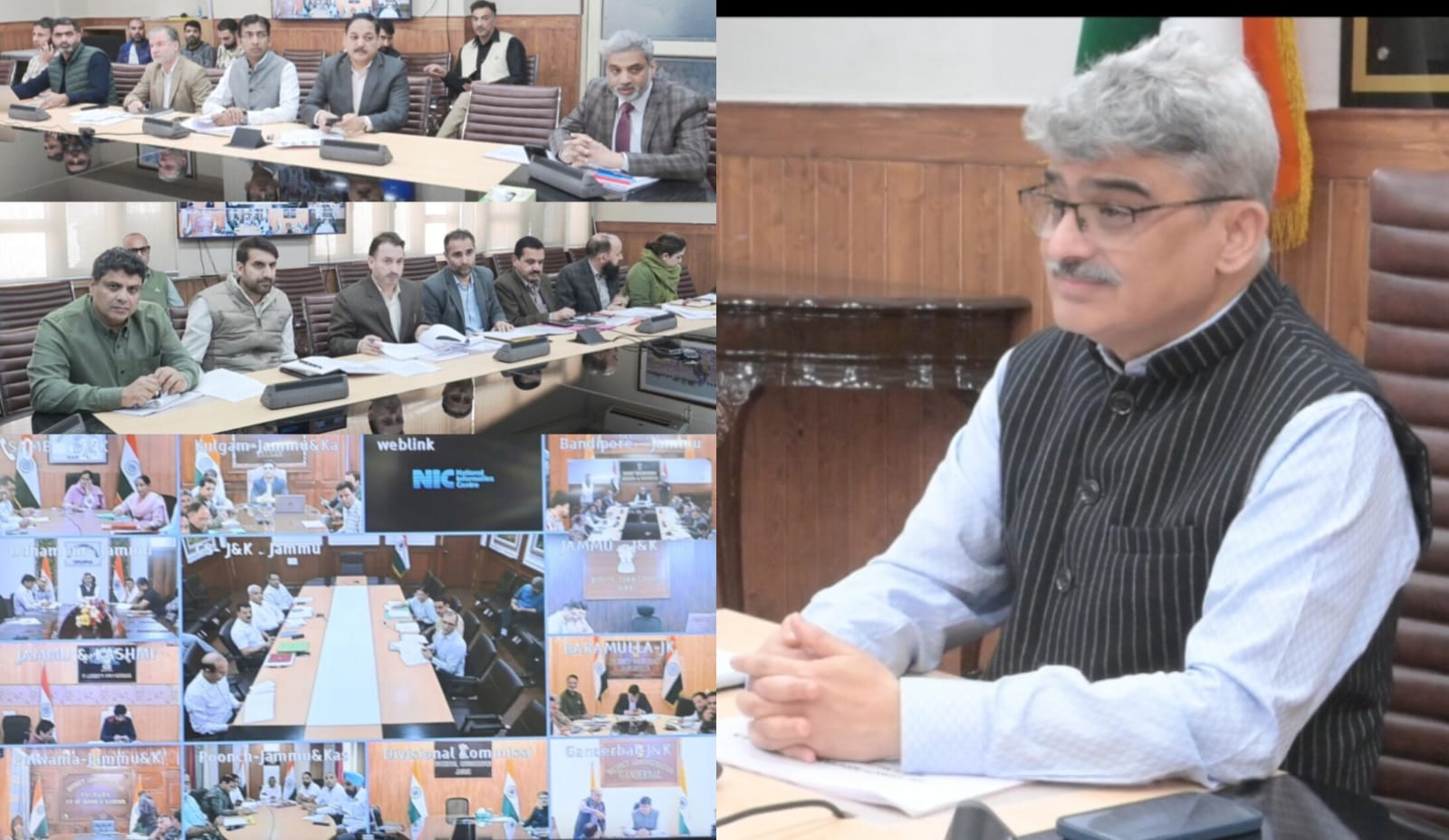
He issued these directions while chairing a high-level meeting to review the progress of the Jal Shakti Abhiyan: Catch the Rain (JSA:CTR) campaign being implemented across the Union Territory.
The meeting was attended by Additional Chief Secretary, Jal Shakti Department, Shaleen Kabra; Principal Chief Conservator of Forests; Commissioner Secretaries of Forests and Social Welfare; Divisional Commissioner, Kashmir; Secretaries of School Education and Rural Development Departments; besides other senior officials. Deputy Commissioners of all districts participated through video conferencing.
Dulloo emphasized the need for close coordination among the Jal Shakti, Forest, and Rural Development Departments to ensure comprehensive identification and geo-referencing of all water bodies—both in forest and non-forest areas—within the next month. He directed that this crucial exercise be completed before the onset of snowfall in the winter zones.
Calling for time-bound and concerted action, the Chief Secretary said the administration must act swiftly to address the challenges posed by climate change and secure water resources for future generations. “Every department must play its designated role under the key interventions of the Catch the Rain programme,” he added.
Speaking on the occasion, ACS Shaleen Kabra said that the Jal Shakti Abhiyan provides a strong platform to assess and accelerate water conservation and management efforts across the region. He noted that the campaign is moving from the planning stage to intensive, community-driven implementation, with a focus on water security and sustainability.
Kabra informed the meeting that 100% District Water Conservation Plans (DWCPs) have been prepared and uploaded for all 20 districts on the JSA portal, providing a scientific framework for the sustainable management of water resources in the Union Territory.
The meeting also reviewed progress in districts including Doda, Ganderbal, Jammu, Bandipora, and Ramban, and discussed post-monsoon reports submitted by Central Nodal Officers.
Officials highlighted that the Jal Shakti Abhiyan focuses on five key interventions — Water Conservation and Rainwater Harvesting, Renovation of Traditional and Other Water Bodies, Reuse of Water and Recharge Structures, Watershed Development, and Intensive Afforestation.
It was informed that the campaign promotes inter-departmental convergence, with works being executed through existing resources such as MGNREGS, Finance Commission Grants, and local funds, without any separate allocation under JSA.
Underscoring the government’s commitment to tackling water scarcity, the meeting reaffirmed that the ‘Catch the Rain’ campaign remains central to building long-term water security. Guided by the principle “Catch the rain, where it falls, when it falls,” the initiative integrates scientific planning, geo-tagging, and community participation to strengthen climate resilience and water sustainability across Jammu and Kashmir.