






Leh: Curfew Imposed, 50 Detained After Clashes Leave Four Dead
At least 50 people were detained on Thursday as police and paramilitary forces enforced a strict curfew in Leh following violent clashes on Wednesday that left four people dead and over 80 injured.
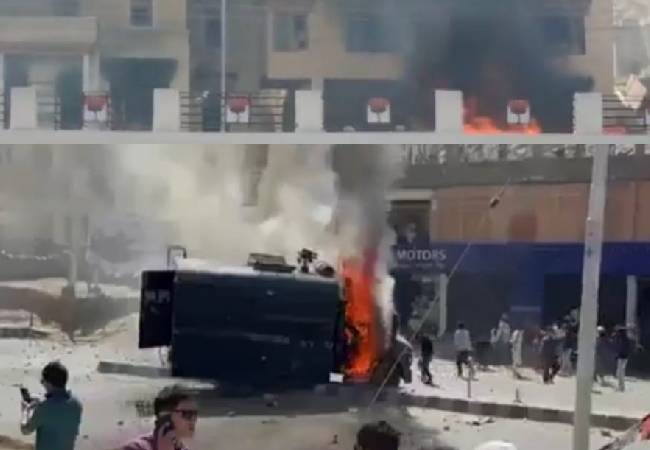
The unrest erupted after a shutdown called by the Leh Apex Body (LAB) — aimed at pressing the Centre on demands for statehood and extension of the Sixth Schedule to Ladakh — escalated into violence, arson, and street clashes.
Prohibitory restrictions banning gatherings of five or more people were also imposed in other towns, including Kargil, where the Kargil Democratic Alliance (KDA) had called a shutdown in support of climate activist Sonam Wangchuk, who was on a hunger strike.
Wangchuk ended his fortnight-long hunger strike after the clashes in Leh. Protesters had set fire to the BJP office and several vehicles and vandalised the Hill Council headquarters, prompting authorities to declare an indefinite curfew in the town.
“The situation in the curfew-bound areas is well under control. No untoward incidents have been reported,” a police official told reporters, adding that around 50 people were detained overnight for their role in the violence.
Among the injured, three were Nepali nationals, and police are investigating possible foreign involvement.
The LAB and KDA have led agitations over the past four years, pressing for statehood and Sixth Schedule extension, and have held multiple rounds of talks with the Central government. The next round is scheduled for October 6.
Authorities deployed heavy police and paramilitary forces in Kargil, Zanskar, Nubra, Padam, Changtang, Drass, and Lamayuru. Kargil District Magistrate Rakesh Kumar issued prohibitory orders under Section 163 of the Bharatiya Nagarik Suraksha Sanhita, banning assemblies of five or more people, processions, or demonstrations without prior permission.
The order also restricted the use of loudspeakers, sound amplifiers, and vehicle-mounted public address systems without authorisation. It prohibited any statements—verbal, written, or electronic—that could disturb public peace, provoke enmity, or breach law and order.
Tensions escalated in Leh when two of the 15 hunger strikers, who had been fasting for 35 days since September 10, were hospitalised on Tuesday after their health deteriorated. The LAB youth wing subsequently called for protests.
The Centre alleged that the violence was fuelled by “provocative statements” from Wangchuk and that certain “politically motivated” individuals were unhappy with the progress of ongoing talks with Ladakhi groups.
“The government remains committed to the aspirations of the people of Ladakh by providing adequate constitutional safeguards,” the Home Ministry said on Wednesday night.
Lt Governor Kavinder Gupta described the events as heart-wrenching, stressing that while peaceful expression is a democratic right, the violence was not spontaneous but the result of a conspiracy. “Curfew has been imposed as a precaution to prevent further casualties,” he said.
In an online press conference, Wangchuk said the hospitalisation of Tsering Angchuk (72) and Tashi Dolma (60) likely triggered the protests. He appealed to Ladakhi youth to halt violence, stating it undermines their cause and destabilises the region.
“This is the saddest day for Ladakh and for me personally. For the past five years, our path has been peaceful — hunger strikes, marches from Leh to Delhi — but today, our message of peace is overshadowed by violence and arson,” Wangchuk said.