






Jammu/Srinagar: After record-breaking rains battered Jammu and Kashmir over the past two days, the death toll in related incidents has risen to 41, with the majority of victims from a landslide on the Vaishno Devi pilgrimage route. On Wednesday, there was some respite from the downpours, allowing relief operations to gain momentum.
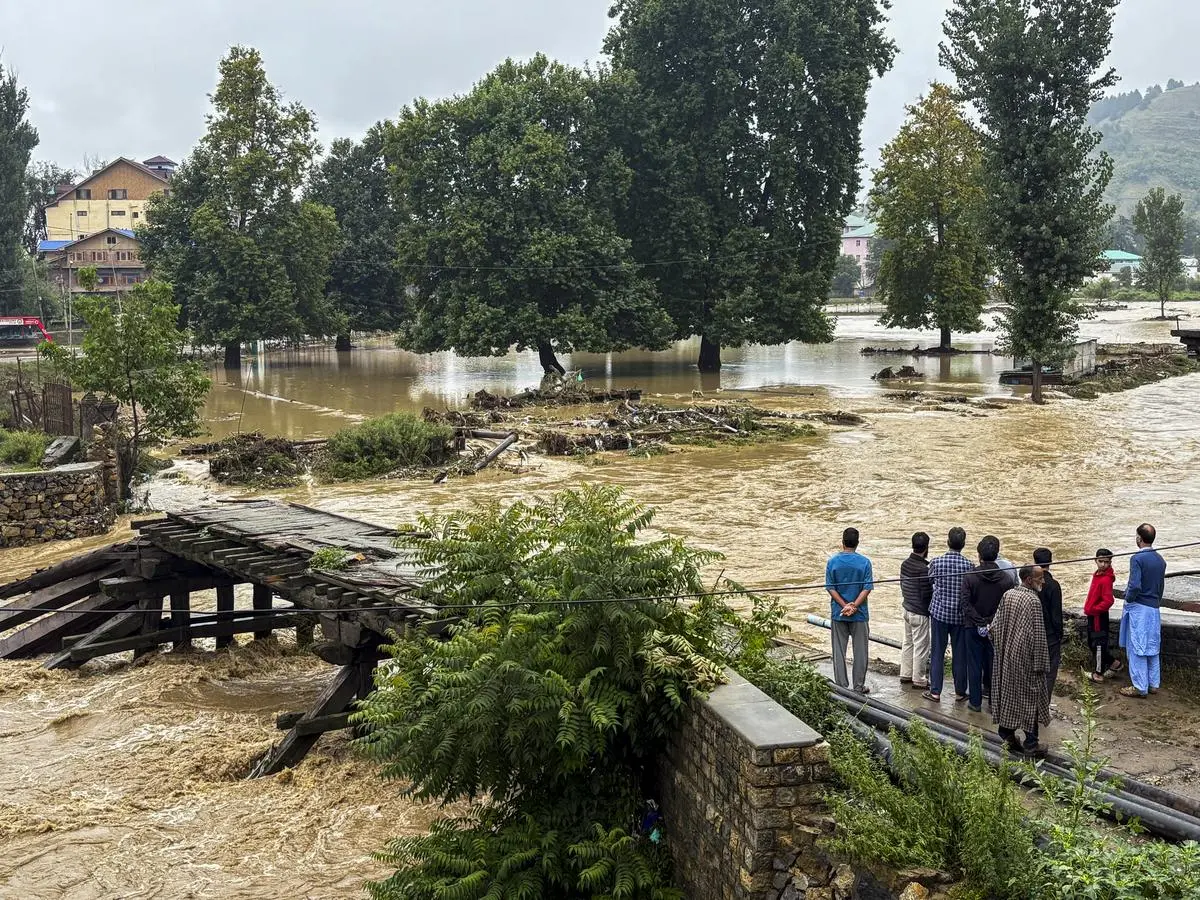
River levels across Jammu began receding from 11 AM, but the Jhelum in Anantnag and Srinagar remained above the flood alert mark, submerging several residential and commercial areas. Officials reported extensive damage to public infrastructure, including key bridges, private homes, and businesses, caused by overflowing rivers and flash floods. Over 10,000 people have been evacuated from low-lying areas.
In response to the severe weather, Education Minister Sakina Itoo announced that all educational institutions in Jammu and Kashmir would remain closed on Thursday.
The Northern Railways canceled 58 trains to and from Jammu and Katra, while 64 trains were either short-terminated or short-originated at various stations. Rail services briefly resumed on Wednesday morning with six trains departing from Jammu but were halted again due to flash floods and soil erosion near the Chakki River.
With the rain easing in some areas, Chief Minister Omar Abdullah traveled from Srinagar to Jammu to personally assess the situation. Phone and network services were restored across all networks after a 24-hour outage caused by damaged optical fibers.
In Reasi district, the Vaishno Devi landslide claimed 34 lives, with rescuers recovering more bodies from the debris. At least 20 people sustained injuries and are being treated in local hospitals. The landslide occurred near Inderprastha Bhojnalaya at Ardhkuwari, roughly halfway along the 12-km trek from Katra to the shrine, at around 3 PM on Tuesday. Rescue teams continue searching for survivors under the rubble.
The pilgrimage remains suspended for the second consecutive day. While the Himkoti trek route had been closed since Tuesday morning, authorities later halted the old route as a precaution.
Jammu recorded 380 mm of rainfall in the past 24 hours ending 8:30 AM Wednesday—the highest 24-hour rainfall since records began in 1910. In Doda district, four people, including three women, died on Tuesday. Two bodies, including a BSF jawan, were recovered in Pragwal, while another body in Akhnoor is yet to be identified. Additionally, an irrigation department employee’s body was found in Lakhanpur near the Punjab border.
Heavy overnight rains in the Kashmir Valley caused the Jhelum to breach the flood alert mark at Sangam (Anantnag) and Ram Munshi Bagh (Srinagar). Floodwaters entered residential areas in Srinagar—including Kursu, Rajbagh, Bemina, and Sekidafar—and inundated markets and homes in Anantnag town. In Anantnag, floodwaters also reached the district court complex, necessitating the evacuation of staff by SDRF personnel using boats. Authorities in Anantnag, Kulgam, and Srinagar evacuated residents from low-lying areas.
The Jammu-Srinagar national highway and over a dozen other roads affected by landslides remain closed.
Prime Minister Narendra Modi expressed his condolences on X, stating: “The loss of lives due to a landslide on the route to the Shri Mata Vaishno Devi Temple is saddening. My thoughts are with the bereaved families. May the injured recover at the earliest. The administration is assisting all those affected.”
Chief Minister Abdullah briefed the Prime Minister on the floods and expressed gratitude for the continued assistance. He said that with the rains stopping on Wednesday, there was slight relief as water levels gradually receded in low-lying areas.
In Kishtwar district, a flash flood in Margi swept away ten homes and a bridge, though no casualties were reported immediately. Torrential rains over the past 24 hours left rivers including the Tawi, Chenab, Ujh, Ravi, and Basanter flowing several feet above danger levels. By 11 AM Wednesday, water levels had begun to drop, although the skies remained cloudy.
This follows a cloudburst on August 14 in Chisoti, Kishtwar district, which triggered flash floods en route to the Machail Mata shrine, killing at least 65 people (mostly pilgrims), injuring over 100, and leaving 32 missing.