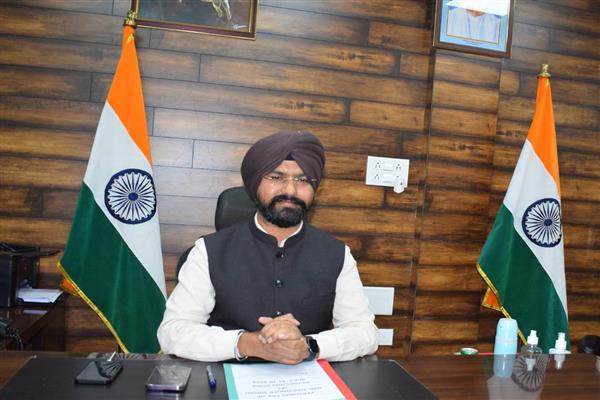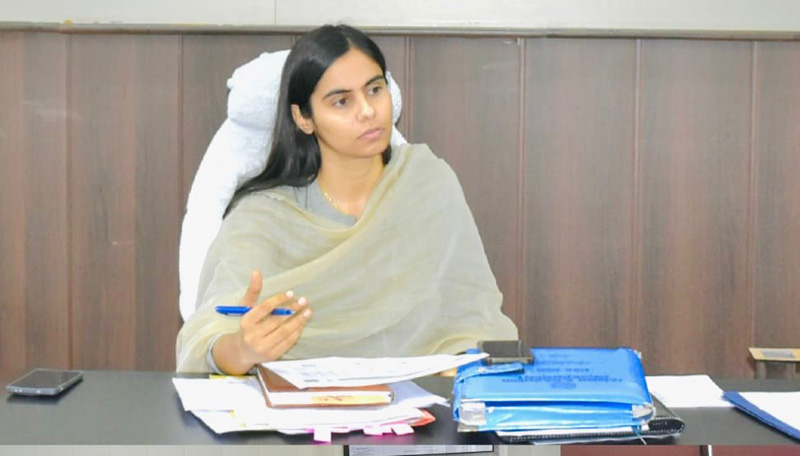








SRINAGAR: In a move to improve traffic flow in the city, Divisional Commissioner Kashmir, Anshul Garg, today chaired a high-level meeting with key stakeholders to review ongoing and proposed measures for decongesting major and interior roads in Srinagar.
The meeting was attended by Vice Chairpersons of LCMA and SDA, SSP Traffic Srinagar, ADC Srinagar, Chief Engineer R&B, Joint Commissioner SMC, and representatives from the Wildlife, Transport, and JKRTC departments.
Discussions focused on developing multi-level parking at strategic locations, widening Boulevard Road, setting up Smart City charging infrastructure, operationalizing ITMS cameras and traffic signals, regulating e-rickshaws, and framing a policy for the influx of used vehicles.
Emphasizing the need for swift action, Garg directed expedited creation of multi-level parking facilities in high-density areas including Nishat, Shalimar Bagh, Jama Masjid, Sanat Nagar, Bemina, and Batamaloo. The meeting also reviewed plans to widen Boulevard Road to ease traffic, enhance tourist and local mobility, and allow one-way traffic from Dalgate to Nehru Park.
Introducing one-way traffic on selected interior roads was discussed, with a pilot initiative to be launched to assess effectiveness before broader implementation. The development of charging infrastructure for Smart City electric buses was also highlighted to prevent e-bus congestion.
Garg instructed Srinagar Smart City Limited (SSCL) to adhere to timelines for operationalizing traffic lights and ITMS cameras at 66 key junctions. He urged private landowners along Boulevard Road to collaborate with the administration by providing land for parking on a tripartite basis.
The Divisional Commissioner called for strict regulation of e-rickshaws, demarcation of ‘No-Go Zones’ on main roads, and formulation of a policy to manage the growing influx of used vehicles in the Kashmir Valley.
To ensure effective implementation, he directed all departments to categorize proposed measures into short-, mid-, and long-term actions, stressing inter-departmental coordination, strict adherence to timelines, and removal of bottlenecks across key corridors to improve Srinagar’s urban transport ecosystem.