






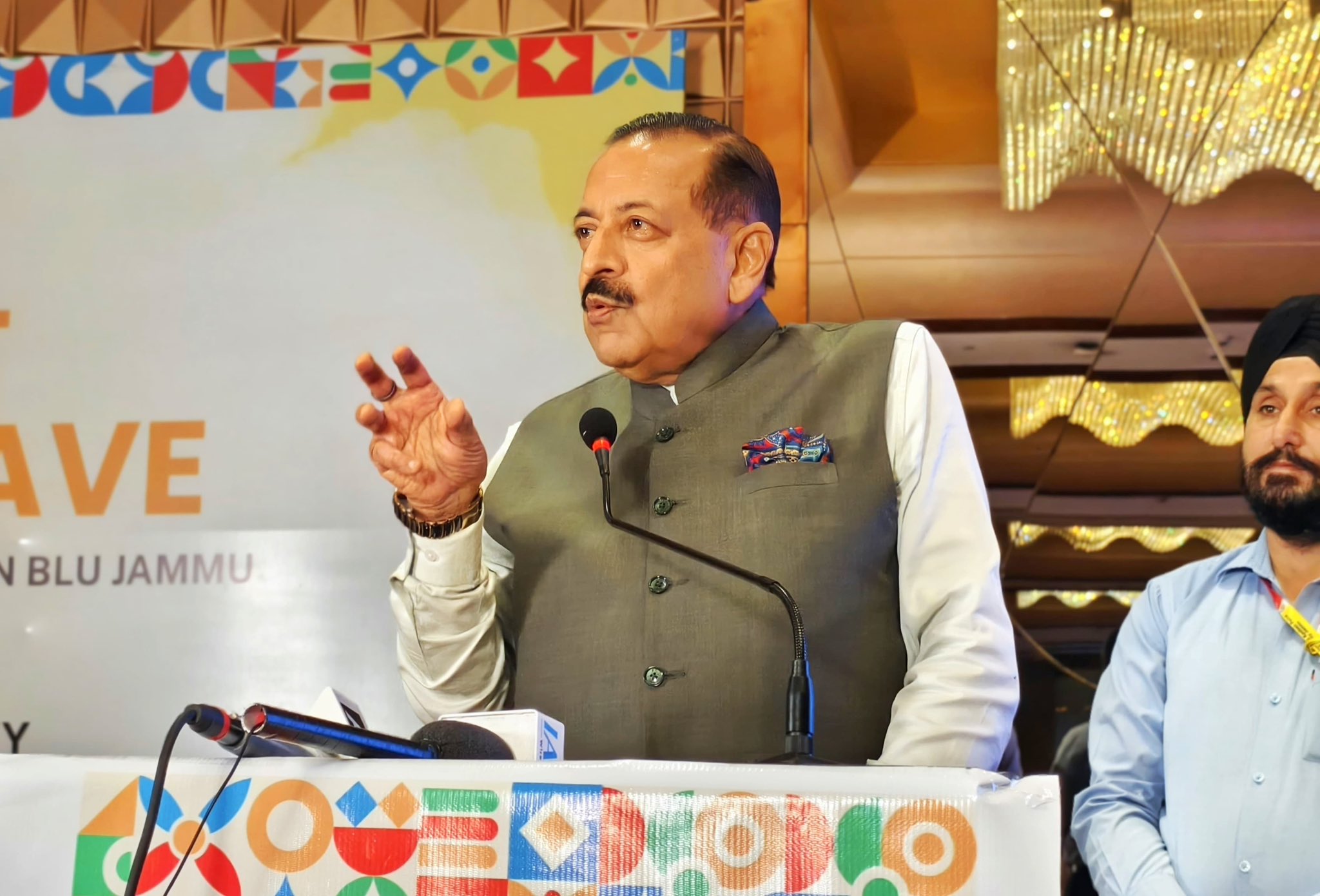
Jammu: Union Minister Dr Jitendra Singh on Sunday emphasized the crucial role of industry linkages and private sector participation, describing both as essential for sustainable start-ups and India’s economic growth.
Speaking at the Lead Impact Conclave, Singh, Minister of State in the Prime Minister’s Office, highlighted the government’s efforts in creating an enabling ecosystem by providing start-ups with industry connections to support their ventures and boost the economy.
“Start-ups have become a lucrative and sustainable source of livelihood. With 1.70 lakh start-ups, India ranks third globally, and around 60,000 of them are led by women who have emerged as successful agri-entrepreneurs,” he noted.
The minister called for stronger collaboration between industry and academic institutions in areas with future relevance. Advocating research on futuristic themes, he stated that the next major revolution would be bio-driven. “Bio-products like biofuels and genetically modified crops will become key contributors to the economy, making India self-reliant,” he added, emphasizing India’s expected leadership role in the coming years.
Singh stressed that the youth will be the torchbearers of a developed India when the nation completes 100 years of independence in 2047. He linked this vision to the National Education Policy, designed to equip young people with the right skills and training to be future-ready.
Highlighting regional successes, he praised the “purple revolution” in J&K as a model of youth-led agri start-ups. Inspired by this, Himachal Pradesh, Uttarakhand, and Arunachal Pradesh have adopted large-scale lavender cultivation, providing sustainable livelihood alternatives and reducing dependence on government jobs. The youth involved in such start-ups are earning lakhs while generating employment for others.
Singh noted that 50% of start-ups operate in tier-2 and tier-3 cities, including Surat, Vijayawada, and Kanpur. The government has introduced schemes like Mudra Yojana, PM SVANidhi Yojana, and PM Vishwakarma Yojana to financially support small and medium enterprises, street vendors, and transitional artisans.
He also highlighted the promotion of khadi products under the Vocal for Local initiative and urged participants to utilize the benefits of government schemes to enhance production, sales, and employment in the khadi sector. Singh called for workshops in rural areas to raise awareness and ensure maximum participation in these initiatives.