






NEW DELHI: Electronic Voting Machines (EVMs), which have been used in five Lok Sabha and more than 130 assembly elections, cannot be deployed in presidential, vice presidential, Rajya Sabha, or state legislative council polls.
The reason lies in the voting system. Since their introduction in 2004, EVMs have been designed to aggregate votes in direct elections such as Lok Sabha and state assemblies. In these polls, voters simply press a button against the candidate of their choice, and the one with the highest votes wins.
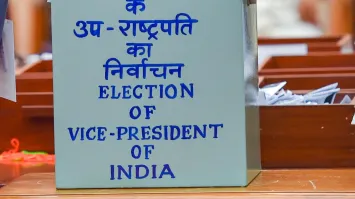
However, presidential and vice presidential elections follow a system of proportional representation with a single transferable vote. Under this method, electors rank candidates in order of preference by marking 1, 2, 3, and so on against the names of all contestants on the ballot paper. This requires complex vote counting based on preferences, something the current EVMs are not built to handle. Officials explained that a completely different technology would be needed for such elections.
For instance, NDA nominee C. P. Radhakrishnan and opposition candidate P. Sudershan Reddy are contesting the September 9 vice presidential election, prompted by Jagdeep Dhankhar’s unexpected resignation on July 21. Like Rajya Sabha polls, voting and counting will take place on the same day.
According to the Election Commission (EC), the idea of an EVM was first conceived in 1977. The Electronics Corporation of India Ltd. (ECIL), Hyderabad, developed the initial prototype in 1979, which was presented to political parties in 1980. Later, Bharat Electronics Ltd. (BEL), Bengaluru, was also involved in production.
The first experimental use of EVMs took place during the Kerala assembly elections in May 1982. But in the absence of a legal framework, the Supreme Court struck down the election. To resolve this, Parliament amended the Representation of the People Act in 1989 to allow their use.
After reaching political consensus in 1998, EVMs were introduced in 25 assembly constituencies across Madhya Pradesh, Rajasthan, and Delhi. By May 2001, they were used across all constituencies in Tamil Nadu, Kerala, Puducherry, and West Bengal. Since then, the Election Commission has relied on EVMs for every state election.