






Army Urged to Rebuild Trust with Gujjar and Bakerwal Tribes Amid Rising Security Concerns
Jammu/Srinagar: With terrorist groups increasingly using higher ridges as safe havens, experts say it is imperative for security forces, particularly the Army, to review their operational strategies and restore trust with the Gujjar and Bakerwal nomadic tribes—long regarded as the “eyes and ears” of the mountains.
Officials and security analysts, speaking on condition of anonymity, warn that growing mistrust between the forces and these communities could severely affect intelligence gathering, a critical component of border security.
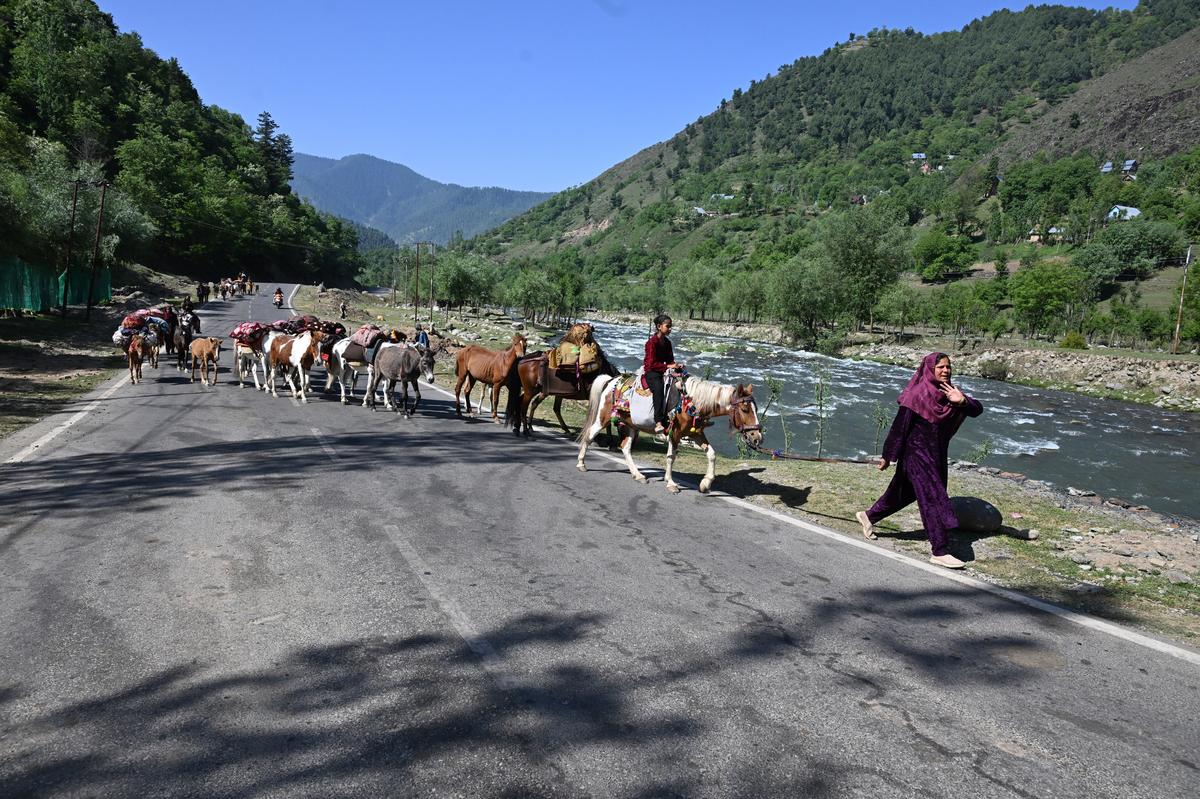
The Gujjar and Bakerwal communities, with a combined population of roughly 2.3 million, have historically been key collaborators for the Army. Their intimate knowledge of the rugged Pir Panjal terrain and steadfast loyalty have been instrumental in counter-insurgency operations.
This longstanding partnership has been forged through shared sacrifices. The tribes have repeatedly faced terrorist attacks, displaying remarkable courage. Notable examples include Rukhsana Kausar, who killed a Lashkar-e-Taiba militant in 2009, and Rifleman Aurangzeb, posthumously awarded the Shaurya Chakra after being kidnapped and killed in 2018.
However, a series of incidents has strained this relationship, undermining decades of trust. These include the 2018 Kathua rape case and the 2020 Amshipura fake encounter, in which three Gujjar youths were killed. While the Army took disciplinary action, including the dismissal of an officer in the Amshipura case, the communities argue such incidents should never have occurred.
The latest blow came in December 2023, when three civilians were killed in Topa Pir, Poonch, after being tortured in Army custody following a fatal ambush on soldiers. According to officials, such events have alienated Gujjar and Bakerwal youths, creating a dangerous intelligence vacuum on the ground.
Systemic issues have compounded the problem. Restrictive policies have pushed many community members away from their traditional nomadic lifestyle, reducing their presence in remote areas and threatening livelihoods. Poor communication infrastructure further limits their ability to provide timely intelligence, weakening a partnership that has been critical to regional security for decades.
Expressing concern over the “trust deficit,” Shahnawaz Choudhary, senior Gujjar leader and Congress AICC secretary, said the communities have not been properly recognised. He highlighted unresolved claims over forest lands long used for grazing and described the Topa Pir incident as a manipulative attempt by Pakistan’s Inter-Services Intelligence (ISI) to erode local trust. Choudhary warned of a “widening void” and criticised the administration’s inaction on the ground.
Retired Lt. Gen. D.S. Hooda, former Northern Command chief, regretted the situation, stating, “Somewhere, I don’t think we’ve done justice to their role.” He recalled the contribution of Gujjar and Bakerwal women in the Village Defence Committees (VDCs), particularly during the 2003 ‘Sarp Vinash’ operation, which neutralised nearly 78 terrorists in the Poonch-Surankote sector.
Gen. Hooda stressed that the tribes remain the “first line of defence” and warned against sidelining them due to the perceived return of peace. Similarly, retired Lt. Gen. Paramjit Singh Sangha, ex-deputy Army chief, emphasised the need for community cooperation and cautioned against any actions that could alienate these tribes.
Tribal researcher Javed Rahi acknowledged the communication gap but stressed that trust is a two-way street. He commended the Army’s efforts but called for a uniform policy across units along the Line of Control to maintain consistent engagement. Rahi recommended measures such as honoring brave Gujjar figures, securing community neighborhoods, and creating a museum to celebrate their history and sacrifices.
Dr. Zamarrud Mughal, a Chenab Valley-based analyst, noted that while there is no inherent rift between the tribes and the Army, dissatisfaction over reservations and declining contact with the general populace has created tension.
Experts highlight the challenging terrain—like the ridges through Peer Gali and Surankote Jhadanwali Gali—which underscores the urgency of reconciliation. Swift restoration of trust, they argue, is essential not only for operational effectiveness but also to ensure the continued safety and security of the region.