







Google’s AI rollout may have been slow, but the company now boasts a wide range of Gemini AI tools and features available to users worldwide.
When OpenAI launched ChatGPT in December 2022, it transformed the tech industry overnight—making artificial intelligence a household term and pushing companies to accelerate their own AI efforts. While many expected Google to lead the charge into the AI era, that distinction ultimately went to OpenAI.
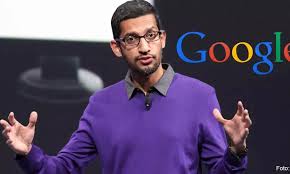
However, according to Google CEO Sundar Pichai, the company was far from unprepared. In fact, Google had been quietly developing its Gemini AI models long before ChatGPT made its debut.
“Google Was Ready, But…”
Pichai revealed in an interview with Business Insider that the launch of ChatGPT set off a “red alert” within Google’s headquarters in California, spurring the company to fast-track its public AI strategy. “When ChatGPT launched, contrary to what people outside felt, I was excited because I knew the window had shifted,” he said.
He explained that Google chose patience over speed—preferring to perfect its technology rather than rush an unfinished product to market. Still, the company’s early AI releases were not without flaws, prompting Google to publicly acknowledge and apologise for several missteps.
Since then, Google has refined its approach, steadily expanding Gemini’s capabilities and accessibility. The platform now powers a growing suite of features across Google’s ecosystem, from productivity tools to creative AI.
The company has also rolled out student-focused offers to encourage wider adoption of Gemini, while the viral success of the Nano Banana AI image editor—used to create billions of images globally—highlights the growing enthusiasm for Google’s AI products.
It’s clear that Google’s AI strategy has been years in the making, with a calculated rollout designed for long-term impact. In contrast, Apple appears to be lagging behind, reportedly losing key engineers to OpenAI and Meta. Its much-anticipated Siri AI upgrade has been delayed, and the company even had to retract ads promoting unreleased AI features.
The difference between the two tech giants is striking—but as Apple refines its own AI strategy, it may yet prove that being last to the race doesn’t necessarily mean losing it.