






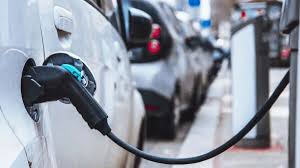
NEW DELHI: The Centre has released operational guidelines for the rollout of around 72,300 public EV charging stations across India, under the Rs 10,900-crore PM E-DRIVE scheme, with a dedicated outlay of Rs 2,000 crore. The guidelines outline a tiered subsidy framework to promote EV charging infrastructure across varied locations.
Government premises—including offices, residential complexes, hospitals, and educational institutions—will be eligible for a 100% subsidy on both upstream infrastructure and EV charging equipment, provided the chargers are accessible to the public free of charge.
For locations such as railway stations, airports managed by the Airports Authority of India, retail outlets of public sector OMCs, bus stations operated by STUs, metro stations, municipal parking lots, public sector ports, and toll plazas or wayside amenities on highways managed by NHAI or state governments, the subsidy will cover 80% of upstream infrastructure and 70% of EV supply equipment costs.
Additionally, for city streets, shopping malls, market complexes, as well as highways and expressways, 80% of upstream infrastructure costs will be subsidized. Similarly, Battery Swapping or Battery Charging Stations at any location will receive an 80% subsidy on upstream infrastructure.
Eligible entities, including central ministries and state/UT governments, are required to appoint nodal agencies to aggregate EV public charging station (PCS) demand and submit proposals to the Ministry of Heavy Industries. These nodal bodies will identify high-priority locations and submit consolidated proposals via a dedicated online portal.
Bharat Heavy Electricals Limited (BHEL) has been designated as the Project Implementation Agency (PIA) for deploying the EV public charging stations. Subsidy disbursement will follow a two-tranche system, with funds released after meeting compliance and performance benchmarks.
The scheme will prioritize urban centers with populations exceeding one million, smart cities, metro-connected satellite towns, state capitals, and high-density national and state highways, along with public transport hubs such as railway stations, airports, and fuel retail outlets.