






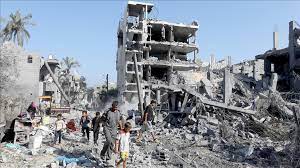
Rafah: Hamas announced Monday that it has accepted a new ceasefire proposal from Arab mediators for Gaza, even as Israel maintained that its stance remains unchanged. Meanwhile, Gaza’s Health Ministry reported that the Palestinian death toll from nearly two years of war has surpassed 62,000.
Former U.S. President Donald Trump voiced skepticism about the ongoing negotiations mediated by Washington, writing on social media: “We will only see the return of the remaining hostages when Hamas is confronted and destroyed. The sooner this takes place, the better the chances of success will be.”
The announcement came as Israel outlined plans to reoccupy Gaza City and other densely populated areas following last month’s breakdown in ceasefire talks, raising fears of a worsening humanitarian crisis. Experts warn Gaza is already on the brink of famine. Plans to expand the offensive—intended in part to pressure Hamas—have sparked global criticism and fueled anger within Israel, where hundreds of thousands protested on Sunday demanding the safe return of hostages abducted during the October 7, 2023, attack that triggered the war.
Egypt pushes for renewed talks
Egyptian Foreign Minister Badr Abdelatty said mediators are working to revive a U.S.-backed proposal for a 60-day ceasefire. Under the plan, some of the remaining 50 hostages would be released while both sides negotiate a permanent truce and the release of the rest. Abdelatty said U.S. envoy Steve Witkoff has been invited to join the talks.
Speaking at Egypt’s Rafah crossing with Gaza—closed since Israel seized the Palestinian side in May 2024—Abdelatty was joined by Palestinian Authority Prime Minister Mohammad Mustafa. He added that Qatari Prime Minister Sheikh Mohammed bin Abdulrahman Al Thani and senior Hamas leader Khalil al-Hayya are also participating in the talks.
Bassem Naim, a senior Hamas official, confirmed the group had accepted the mediators’ proposal without providing details. An Egyptian official told the Associated Press that the plan involves modifications to Israel’s troop withdrawals and guarantees of negotiations on a long-term ceasefire during the truce. He described it as nearly identical to an earlier deal accepted by Israel, which has yet to rejoin the latest round of talks.
Egypt and Qatar have since passed the Hamas-approved plan to Israel. However, an Israeli official said the country’s demands—including the release of all hostages—remain unchanged. Prime Minister Benjamin Netanyahu reiterated that Israel will continue its campaign until all hostages are freed, Hamas is disarmed, and lasting security control is established over Gaza.
In a video address, Netanyahu said Hamas’ acceptance of the deal reflected the group being “under massive pressure.”
Civilian toll mounts
Hamas-led militants abducted 251 people and killed around 1,200, mostly civilians, during the October 7 attack. Israel believes about 20 of the hostages still in Gaza remain alive, after others were released during earlier ceasefires or exchanges.
Gaza’s Health Ministry reported 62,004 dead and more than 156,000 wounded since the war began. It does not distinguish between civilians and combatants but says women and children account for about half of the casualties. The U.N. and independent experts regard the ministry’s figures as the most reliable available, though Israel disputes them and has not released alternative numbers.
The ministry also said 1,965 Palestinians have been killed while seeking humanitarian aid since May, either during chaos at U.N. convoys or while heading to distribution points run by the Gaza Humanitarian Foundation, an Israeli-backed U.S. contractor. Witnesses, aid workers, and the U.N. accuse Israeli forces of firing toward crowds. Israel denies this, saying it only fired warning shots.
Hunger and starvation deaths rise
Gaza’s worsening humanitarian situation has led to a growing number of starvation-related deaths. The Health Ministry reported that five more people, including two children, died from malnutrition on Monday. Since the conflict began, at least 112 children and 151 adults have died from malnutrition-related causes.
Amnesty International accused Israel of waging a “deliberate campaign of starvation,” while Israel rejected the charge, saying it permits sufficient food shipments and blaming the U.N. for distribution failures. U.N. agencies counter that Israeli restrictions and the collapse of order inside Gaza prevent adequate aid delivery.
The U.N. World Food Program said community kitchens in northern and southern Gaza produced 380,000 meals daily last week—down sharply from more than 1 million daily meals in April.