






Mumbai: Hyundai Motor India Limited (HMIL) has unveiled an ambitious ₹45,000 crore investment plan through FY2030 to fuel its next phase of growth, boost localisation, and enhance manufacturing capabilities in India. Marking its 29th year in the country, the company outlined its long-term strategy at its first-ever Investor Day on Wednesday.
Announcing the plan, Hyundai Motor Company President & CEO Jose Munoz said India is set to become the automaker’s second-largest global region by 2030, in alignment with Prime Minister Narendra Modi’s Make in India initiative. “Following our landmark IPO last year and nearly three decades of success in India, Hyundai Motor India is entering a new era of growth. By 2030, we aim for India to become our second-largest global region and a key export hub, contributing up to 30% of total exports,” Munoz stated.
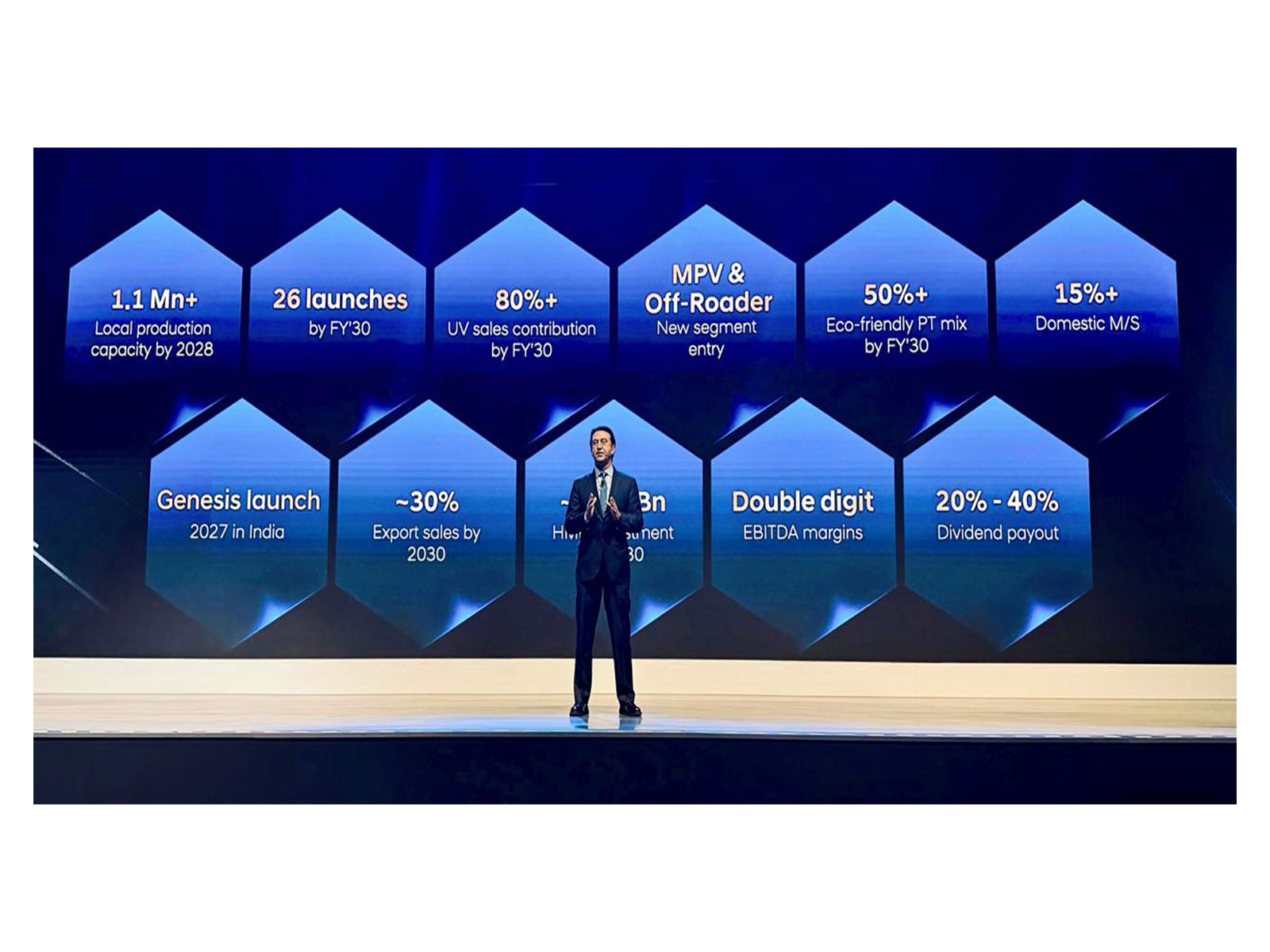
Under its 2030 roadmap, Hyundai plans to launch 26 new models — including seven brand-new nameplates — marking its debut in the multi-purpose vehicle (MPV) and off-road SUV segments. The company also announced that India’s first locally manufactured dedicated electric SUV will roll out by 2027, alongside the debut of its luxury brand Genesis in the same year.
Hyundai is targeting a domestic market share of over 15% by FY2030, with utility vehicles (UVs) accounting for more than 80% of its sales. Eco-friendly powertrains — including CNG, hybrid, and electric models — are projected to make up over half of its portfolio by the end of the decade.
HMIL Managing Director Unsoo Kim said the investment reflects Hyundai’s deep commitment to India’s growing mobility ecosystem. “We are aiming for ₹1 lakh crore in revenue by FY2030 while maintaining strong double-digit EBITDA margins. Our focus is on long-term shareholder value with a healthy dividend payout ratio of 20%–40%,” he said.
Tarun Garg, Whole-time Director and COO, added that Hyundai’s growth will hinge on India-centric innovations and customer-driven strategies. “Our 2030 roadmap is designed to redefine HMIL’s growth trajectory and solidify leadership in the SUV segment. We’re expanding our sales and service reach to 85% of Indian districts, with rural markets expected to contribute nearly 30% of total sales,” Garg noted.
The automaker is also advancing toward a Software Defined Factory model to enhance operational efficiency and localisation. Hyundai reaffirmed India’s pivotal role as its global export hub, underscoring the country’s strategic importance within its worldwide operations.
With this roadmap, Hyundai Motor India aims to achieve 1.5x revenue growth by FY2030 and further cement its position among the nation’s leading automotive manufacturers.