






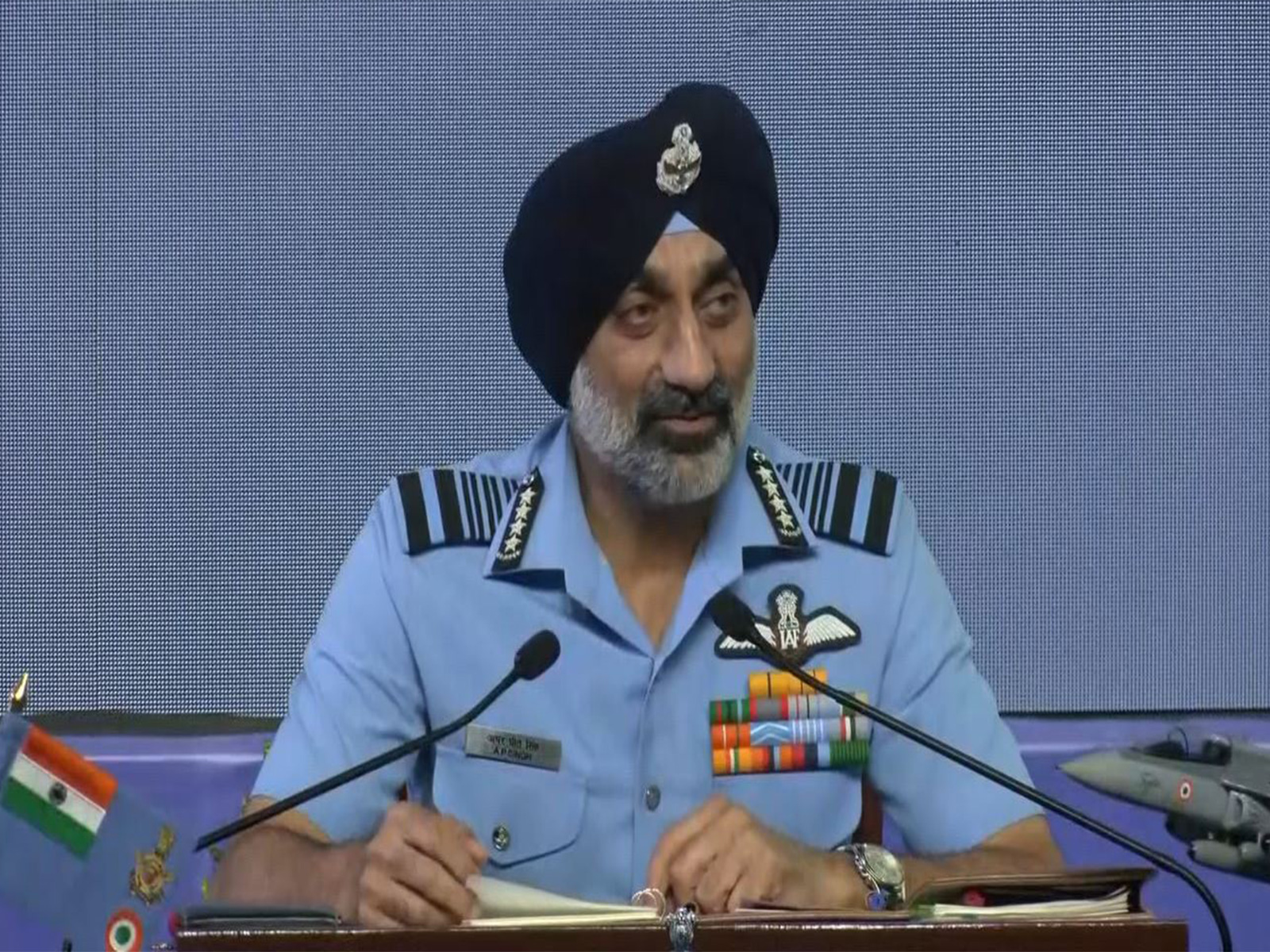
New Delhi: Indian Air Force Chief Air Chief Marshal Amar Preet Singh on Friday announced that 4 to 5 Pakistani fighter jets, most likely F-16s, were destroyed on the ground during air strikes conducted as part of Operation Sindoor.
Singh stated that the IAF targeted multiple Pakistani airbases, damaging radars, command centers, runways, hangars, and a surface-to-air missile (SAM) system. A C-130-class aircraft and possibly a high-value surveillance aircraft were also hit during the operation.
Addressing a press conference in New Delhi, Air Chief Marshal Singh said,
“Regarding Pakistan’s losses, we struck several of their airfields and key installations. Radars at four locations and command-and-control centers at two sites were damaged. Runways were impaired at two bases, and three hangars across different stations were hit. We have signs of one C-130-class aircraft being affected, along with at least 4 to 5 fighter aircraft, most likely F-16s, which were under maintenance at that time.”
He added,
“One SAM system was destroyed, and we have clear evidence of a long-range strike exceeding 300 km, targeting either an AEW&C or another high-value aircraft. Additionally, five advanced fighters—between F-16 and JF-17 class—were hit, according to our systems.”
Singh highlighted the strategic impact of the operation, noting that the IAF’s advanced long-range SAMs prevented Pakistan from operating within parts of its own territory. He called the operation a historic achievement, marking the longest successful missile strike of over 300 kilometers.
“Our newly operational long-range SAMs allowed us to strike deep inside enemy territory, seriously curtailing their activities. This is the longest strike of over 300 km, and it will go down in history,” he said.
The IAF chief emphasized that India approached the conflict with a clear objective and concluded it swiftly after achieving its goals. He suggested this approach offers lessons for global conflicts, where wars often drag on indefinitely.
“A clear directive and mandate were given to the Indian Armed Forces. This conflict demonstrates how a war with defined objectives can be concluded quickly, without unnecessary prolongation. While ongoing global conflicts show no signs of ending, we were able to reach a stage where the other side sought a ceasefire. We terminated hostilities once our objectives were met, and this is a lesson the world can learn from us,” Singh said.