






India Plans ₹65,400 Crore Push to Build Fighter Jet Engines by 2035
New Delhi: India is set to make a major leap in its aerospace capabilities with a ₹65,400 crore ($7.44 billion) programme to develop and manufacture indigenous fighter jet engines by 2035.
The ambitious plan, reported by Times of Oman, seeks to make India self-reliant in aircraft propulsion — one of the most critical and complex areas of defence technology. The project represents a significant step toward reducing dependence on imports and powering the next generation of Indian fighter jets.
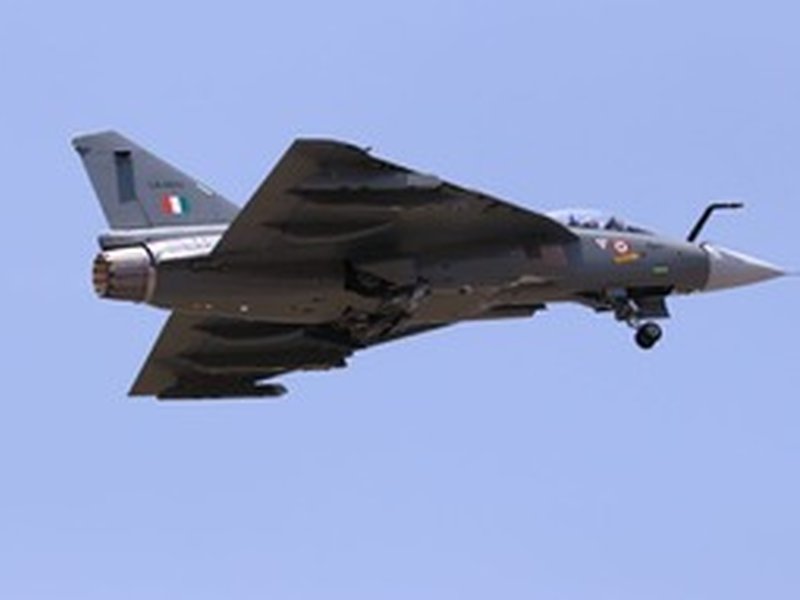
Over the next decade, India plans to produce around 1,100 engines to equip aircraft such as the advanced Tejas Mk2, the stealth Advanced Medium Combat Aircraft (AMCA), upgraded fighter jets, and unmanned aerial systems.
Leading the initiative is S. V. Ramana Murthy, Director of the Gas Turbine Research Establishment (GTRE), who emphasized building a robust ecosystem involving government R&D, private industry, and international partnerships.
The Indian Air Force (IAF) is aligning with this transformation, targeting a fleet strength of 42 squadrons by 2035 with around 450 new fighter jets — many expected to be powered by homegrown engines.
A key part of this roadmap is the Tejas Mk2 programme, following the success of the Tejas Mk1. Ongoing talks with US-based General Electric (GE) for the F414 engine and technology transfer are expected to accelerate India’s engine development capabilities.
Meanwhile, the indigenous Kaveri engine project, long delayed, is being revived with renewed focus. Its advanced variants could soon power unmanned combat aircraft, a crucial component of India’s future defence strategy.
Global collaboration will play an important role, with France’s Safran, Britain’s Rolls-Royce, and GE exploring joint development of a fifth-generation engine for the AMCA, whose first prototype is expected by 2028.
For the first time, private companies will join India’s fighter jet engine development efforts, signaling a major policy shift. Hindustan Aeronautics Limited (HAL) will collaborate with domestic and global players to share production and accelerate timelines.
Aligned with Prime Minister Narendra Modi’s “Atmanirbhar Bharat” vision, the initiative aims to transform India from a defence technology importer into a co-developer and global manufacturing hub.
Experts say the massive engine programme will enhance India’s defence readiness, create thousands of jobs, boost exports, and position the nation as a key player in the global aerospace industry.