






India Tells UNSC It Has Suffered From Cross-Border Terrorism Fueled by Illicit Arms Trafficking
United Nations: India has been a victim of cross-border terrorism enabled by illicit weapons trafficked across its borders, India’s envoy to the United Nations said, in a veiled reference to Pakistan.
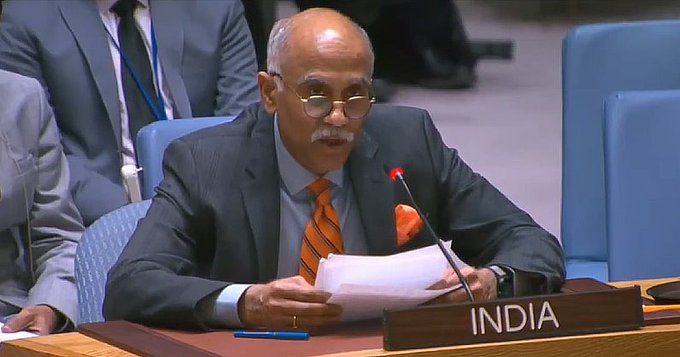
Addressing a UN Security Council open debate on small arms on Monday, India’s Permanent Representative to the UN, Ambassador Parvathaneni Harish, urged the Council to adopt a “zero-tolerance” stance toward those who sponsor, enable, or facilitate the movement and use of such weapons.
“India has fought the scourge of terrorism for several decades and is therefore aware of the dangers posed by the diversion and illicit transfer of small arms and ammunition to armed non-State actors and terrorist groups,” Harish said.
His remarks came just hours after a deadly explosion near Delhi’s Red Fort killed at least nine people and injured several others. The blast ripped through a car at a traffic signal close to the Red Fort metro station on Monday evening.
“India has suffered due to cross-border terrorism carried out using illicit weapons trafficked across our borders — including now through the use of drones,” Harish said, referring indirectly to Pakistan. He added that the growing volume and sophistication of such arms underscore that these groups “cannot sustain themselves without being enabled, financed or supported.”
India told the Security Council that the illicit trafficking of small arms and ammunition remains a key factor sustaining terrorist organisations and armed groups. “The consistent access of such entities to weapons highlights the need for coordinated action to prevent their acquisition,” Harish said. “The Security Council must uphold a zero-tolerance approach to terrorism in all its forms and to those who facilitate or finance the movement of such weapons.”
India also called for consistent and objective implementation of arms embargoes authorised by the Council, stressing that they are vital to restricting the flow of weapons into conflict zones.
Harish highlighted that the illicit trade and diversion of small arms and light weapons continue to pose a serious threat to international peace and security, with wide-ranging implications for development, humanitarian efforts, and socio-economic stability.
Reaffirming India’s commitment to combating the illicit arms trade, he outlined several key measures for effective control — including strong national legislation, coordinated action, real-time data management, risk mitigation, stricter border security, and stockpile management.
Citing the UN Secretary-General’s report on small arms, Harish noted that porous borders, weak stockpile security, and transnational trafficking networks facilitate the steady flow of weapons, while improvised and craft-produced arms make tracing even more difficult.
India underscored the need for enhanced international cooperation to prevent diversion, disrupt trafficking networks, strengthen customs coordination, and enable timely intelligence sharing.
Harish reiterated India’s strong support for the global implementation of the UN Programme of Action (PoA) and the International Tracing Instrument (ITI) through legislative reforms, export controls, and capacity building.
“India remains firmly committed to preventing the misuse of small arms and light weapons by terrorist groups and will continue to contribute to the global fight against terrorism,” he concluded.