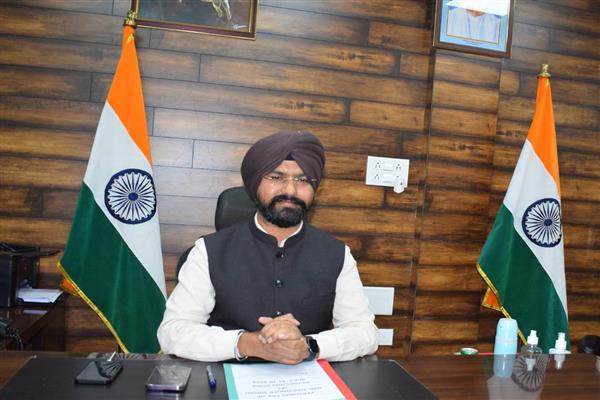








New Delhi: Union Science and Technology Minister Dr. Jitendra Singh on Monday urged scientists to adopt global standards and strategies to achieve the vision of a Viksit Bharat (Developed India) by 2047.
Speaking at the Emerging Science, Technology and Innovation Conclave (ESTIC) in the national capital, Singh said that while India has always had immense talent, it needed an enabling environment—something that, he said, was provided after Narendra Modi became Prime Minister in 2014.
“India is no longer a follower. Today, the world looks to us for leadership. India is emerging as a global protagonist and is future-ready — this is Modi’s India of the 21st century,” Singh asserted.
He highlighted that the era of working in isolation was over, adding that collaboration between the public and private sectors, under the “whole-of-government” and “whole-of-nation” approach, was driving progress.
The minister pointed out that the Modi government has prioritized sectors that were previously underexplored, citing successful initiatives like Start-up India, the Gaganyaan Mission, Bio-E3, and the Deep Ocean Mission.
He noted that India’s bio-economy had expanded from USD 10 billion in 2014 to USD 200 billion within a decade, reflecting the country’s rapid growth in innovation and entrepreneurship.
Referring to India’s space achievements, Singh remarked, “The US may have been the first to land on the Moon, but it was India’s Chandrayaan that discovered water there, giving new hope for human habitation.”
“Today, the world views India with respect and admiration,” he added, expressing that historians will one day reflect on why it took seven decades after Independence for India to reach this point.
Dr. Singh concluded that Prime Minister Modi had placed science and innovation at the heart of India’s development model, proving that progress in the 21st century is driven by advancements in these fields.