






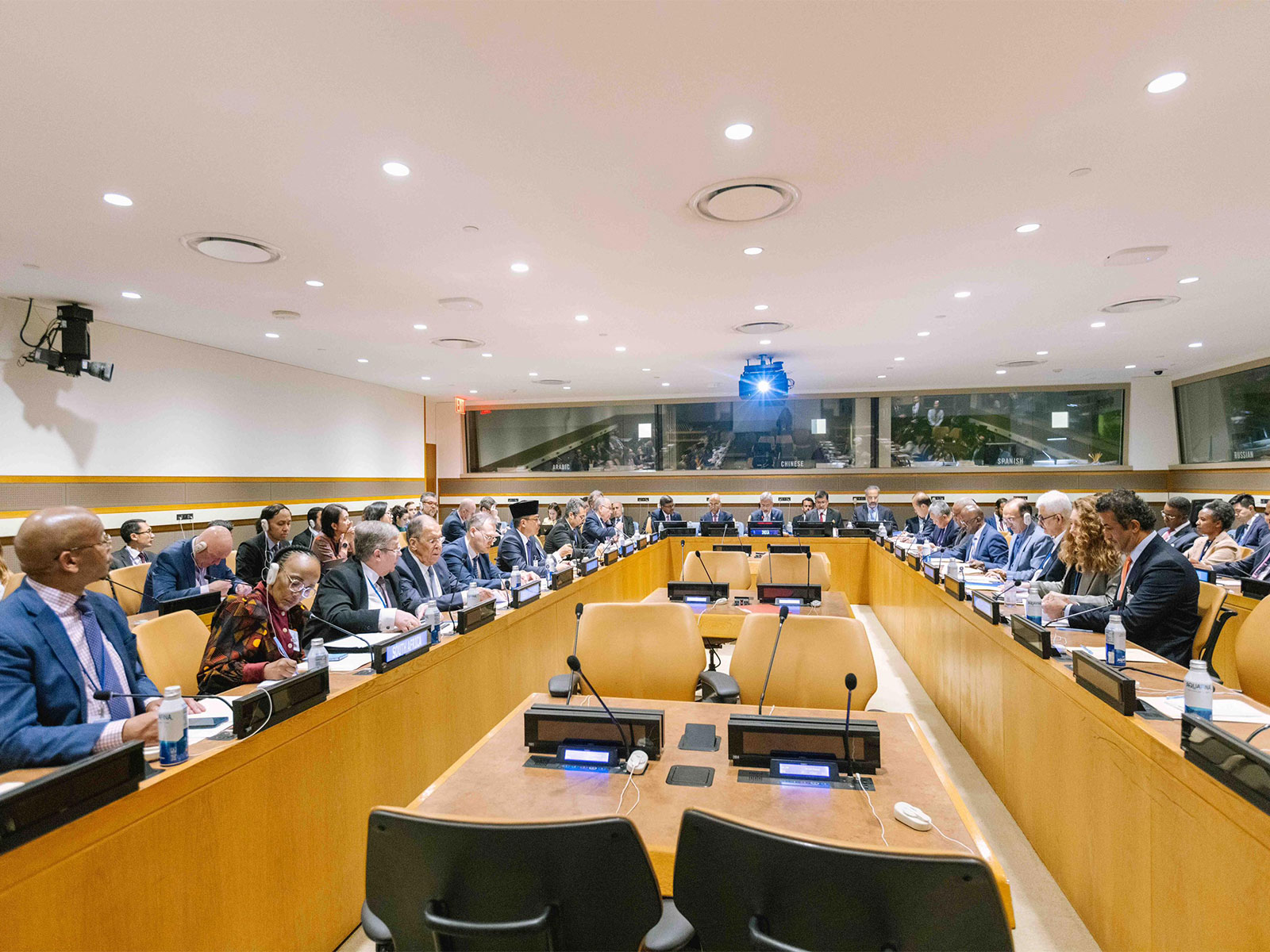
New York: India’s upcoming BRICS Chairship in 2026, a firm stance against terrorism, renewed calls for UN Security Council (UNSC) reforms, and concerns over trade-restrictive measures were at the forefront of discussions during the BRICS Foreign Ministers’ meeting held on the sidelines of the 80th United Nations General Assembly (UNGA80).
Chaired by India on Friday, the session was led by External Affairs Minister S. Jaishankar as the country prepares to assume the BRICS presidency next year. The ministers unanimously supported India’s role in hosting the annual meeting and shaping the group’s agenda, according to a Joint Statement issued after the session.
“The Ministers expressed appreciation to India for convening the BRICS Foreign Ministers/International Relations meeting on the margins of UNGA 80 and extended full support for India’s BRICS Chairship in 2026 and the XVIII BRICS Summit in India,” the statement said.
Jaishankar, in a post on X, highlighted BRICS’ role as a “voice of reason,” emphasizing priorities such as food and energy security, digital transformation, and UN reforms during India’s upcoming tenure. The ministers also strongly condemned terrorism, specifically the April 22 attack in Pahalgam, Jammu and Kashmir, which claimed 26 lives.
“They condemned in the strongest terms the terrorist attack in Jammu and Kashmir on 22 April 2025, during which 26 people were killed and many more injured. They reaffirmed their commitment to combating terrorism in all its forms, including cross-border movements, financing, and safe havens,” the statement noted, calling for zero tolerance and rejecting double standards.
The reference to the attack, attributed to Pakistan-backed terrorist groups, aligns with India’s recent criticism of Pakistan Prime Minister Shehbaz Sharif for glorifying terrorism at the UNGA.
On UNSC reforms, the ministers reiterated support for the 2023 Johannesburg-II Leaders’ Declaration, advocating a comprehensive overhaul to make the Council “more democratic, representative, effective and efficient.” They explicitly backed the aspirations of Brazil and India to play a greater role in the UN, including a permanent seat on the Security Council.
“Recalling the 2022 Beijing and 2023 Johannesburg II Leaders’ Declarations, China and Russia, as permanent UNSC members, reiterated support for Brazil and India’s aspirations to play a greater role in the United Nations, including its Security Council,” the statement added.
Jaishankar also highlighted BRICS’ call to amplify the Global South’s voice—a theme expected to feature in his UNGA address.
The ministers expressed concern over rising trade barriers, including indiscriminate tariffs and non-tariff measures, warning that protectionist policies could disrupt global trade, supply chains, and economic stability. The statement implicitly criticized measures such as the US’s 50% tariffs on Indian goods linked to Russian oil imports, which India has condemned as coercive.
They reaffirmed commitment to a “non-discriminatory, open, equitable, transparent, fair, inclusive, and rules-based multilateral trading system” centered on the WTO.
“The Ministers voiced concern over the proliferation of trade-restrictive actions, whether through indiscriminate tariffs, non-tariff measures, or coercive protectionism, which threaten global trade, disrupt supply chains, and create uncertainty, potentially worsening economic disparities and impacting global development. They cautioned against unilateral measures that fragment trade and marginalize the Global South,” the statement said.
The meeting, attended by foreign ministers from Brazil, Russia, China, South Africa, and new members including Iran, Indonesia, UAE, Ethiopia, and Egypt, underscores BRICS’ growing influence as a platform representing the Global South.