






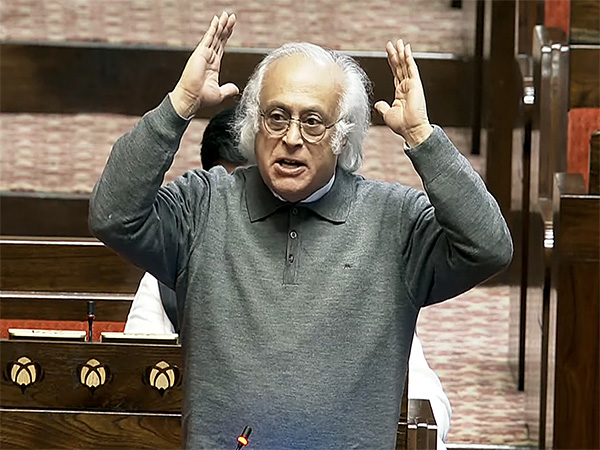
New Delhi: Congress MP Jairam Ramesh on Thursday questioned the role of the GST Council, asking if it has been reduced to a mere “formality,” pointing out that Prime Minister Narendra Modi had already announced key tax reforms during his August 15 Independence Day speech.
Ramesh noted that while the Union Finance Minister made major announcements following the GST Council meeting, the substance of those decisions had already been outlined by PM Modi.
“The Union Finance Minister made significant announcements last evening after the meeting of the GST Council, a constitutional body. However, even before the meeting, the Prime Minister had already disclosed the substance of its decisions in his Independence Day speech on August 15, 2025. Is the GST Council now reduced to a formality?” Ramesh wrote on X.
He emphasized that the Congress has long advocated reforms to simplify GST, reduce tax rates on mass-consumption items, and ease compliance for MSMEs, while also expanding GST coverage.
“The Indian National Congress has consistently pushed for GST 2.0, which would simplify the rate structure, lower taxes on a large number of everyday items, minimize evasion and disputes, eliminate inverted duty structures, ease MSME compliance, and broaden GST coverage,” Ramesh said.
Ramesh also criticized the original GST implementation in 2017, saying that even the Finance Minister has acknowledged its limitations. What was intended to be a “Good and Simple Tax” has instead become a “Growth-Suppressing Tax,” he said.
“Faced with weak private consumption, subdued private investment, and ongoing classification disputes, the Union Finance Minister has recognized that GST 1.0 has reached a dead end. The INC had flagged the flaws in GST’s design back in July 2017, when it was introduced by the PM. GST was meant to be a Good and Simple Tax, but it turned into a Growth-Suppressing Tax,” he added.
Ramesh also stressed that while the recent reforms will benefit consumers, a full-fledged GST 2.0 reform is still awaited. He highlighted the need to extend compensation to states for the next five years to protect their revenues.
“Last evening’s announcements have made headlines, as the PM had already set pre-Diwali deadlines. Presumably, rate-cut benefits will reach consumers. However, the wait for a true GST 2.0 continues. Whether this GST 1.5, if it can be called that, will stimulate private investment—especially in manufacturing—or ease MSME burdens, only time will tell. Meanwhile, a key demand from states for extending compensation for another five years, in the spirit of cooperative federalism, remains unaddressed,” Ramesh wrote on X.
In a major simplification aimed at boosting affordability, Finance Minister Nirmala Sitharaman on Wednesday announced a consolidation of the 12% and 18% GST slabs into a dual rate structure of 5% and 18%, along with a 40% rate for sin goods. This is part of the “Next-Generation GST” reforms to enhance consumption and economic efficiency.
Items now taxed at 5% include hair oil, toilet soap, soap bars, shampoos, toothbrushes, toothpaste, bicycles, tableware, kitchenware, and other household goods.
Certain items have been reduced from 5% to zero, including ultra-high temperature milk, chena, paneer, and all Indian breads—whether roti, paratha, or otherwise.
GST on various food items—including namkeen, bujhiya, sauces, pasta, instant noodles, chocolates, coffee, preserved meat, cornflakes, butter, and ghee—has been reduced from 12% or 18% to 5%.