






Pallanwala/Jammu: Jammu’s border villages, long haunted by cross-border shelling, now face a graver threat as flash floods from unprecedented monsoon rains devastate homes, farmlands, and livelihoods. Residents of the Pallanwala sector and R S Pura live in constant fear, pleading for relief, relocation, and a future where their children can grow safely.
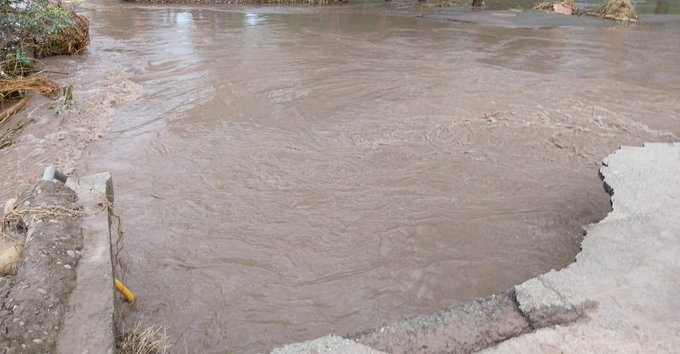
In the Pallanwala sector along the Line of Control (LoC), flash floods triggered by the swollen Chenab on August 26 submerged villages up to the first floor of houses, destroyed roads and livestock, and displaced 3,000–4,000 people.
“We face floods every year, but this was the worst I’ve ever seen. It submerged every area along the LoC. Thank God we are alive,” said 71-year-old Santok Singh of Gigrial, whose family was rescued by the Army. “Everything is damaged—homes, livelihoods, farmlands. It feels like a second life.”
These communities have also endured mortar shelling and machine gun fire across the border in 1999, 2001, 2009, 2011, 2016, 2019, and most recently in 2023, often taking refuge in camps at Devigarh and Paranwala schools. They have survived major floods in 1984, 1992, 1998, 2003, 2014, and now, again requiring evacuation and shelter by the armed forces. The Pallanwala-Khour belt, home to over 5,000 people, lies in a depression between the Chenab and Munawar Tawi rivers.
Tehsildar Khour, Ranjeet Singh, reported that more than 300 homes were damaged, with 20 villages, including Gigrial, Hamipur, Naibasti Naraina, Pallanwala, Dhar Channi, Palatan, Mollu, Sajwal Kulle, Chani, Nai Basti, Rangpur, and Pindi, affected. Three to four shelter camps have been set up in schools to provide food and relief.
“The situation here is like being trapped between the devil and the deep sea. On one side, we face Pakistani aggression; on the other, the Chenab destroys our homes,” said villager Surender Kumar, evacuated with his family of nine.
Locals recall only the 1984 and 1992 floods matched this intensity, with waters submerging houses up to the first floor, washing away roads, bridges, livestock, and farmlands. “Within minutes, our village turned into a lake. If not for the Army, we feared being washed away,” Kumar added.
Villagers are now pressing for permanent relocation to safer areas. “For years, we’ve demanded relocation, but successive governments ignored our plight and the annual trauma,” said Yudhvir, who lost family members in 1999 shelling. Teacher Bhishan Chand, rescued from a rooftop by Army boats, called for plots of 5–10 marlas in safer zones for rehabilitation, appealing directly to Prime Minister Narendra Modi and Lieutenant Governor Manoj Sinha.
Flood-hit areas remain cut off, with roads washed away and residents relying on boats. Power and water supply are disrupted due to extensive infrastructure damage, according to villager Garima Devi. Farmers, like Kulwant Singh, report total destruction of paddy fields and urge government aid.
In Nandwal village of R S Pura, known for Basmati rice, the August floods turned fertile fields into wastelands, with devastation surpassing the 2010 and 2014 floods, according to 65-year-old Naresh Kumar. Locals demand government assistance, stronger embankments along the Tawi river, and guidance from agricultural experts.
In response, BJP MLA Narinder Raina announced that 28 party MLAs will contribute Rs 1 crore and two MPs Rs 2.5 crore from their constituency development funds to the State Disaster Relief Fund (SDRF) to assist the flood-affected population.