






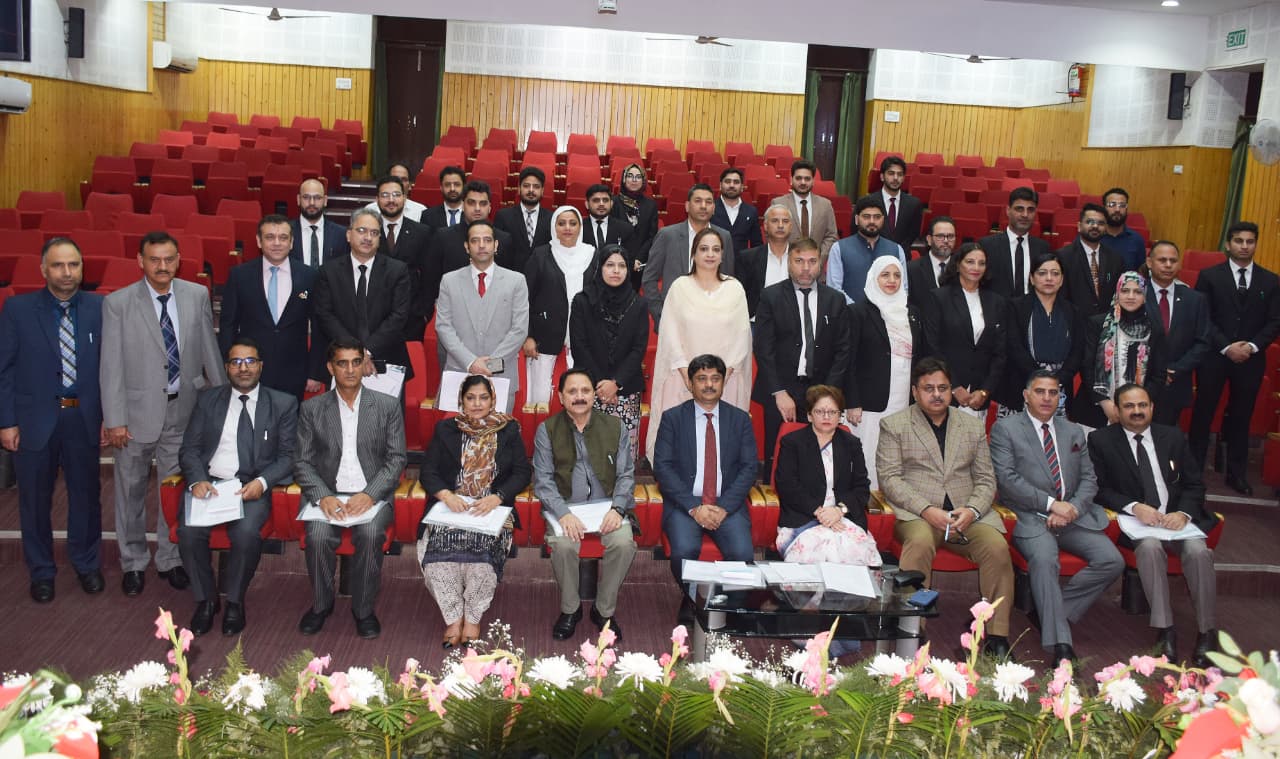
SRINAGAR: Under the patronage of Justice Arun Palli, Chief Justice of the High Court of Jammu & Kashmir and Ladakh (Patron-in-Chief, J&K Judicial Academy), and with the guidance of the Chairperson and Members of the Governing Committee, the Jammu & Kashmir Judicial Academy organized a one-day training programme on “Cyber Laws & Appreciation and Handling of Digital Evidence” for Judicial Officers of Kashmir Province and the Union Territory of Ladakh.
The inaugural session, conducted by Sonia Gupta, Director of the Judicial Academy, highlighted the programme’s aim: to equip Judicial Officers with updated knowledge and practical insights into the evolving field of cyber laws and the effective management of digital evidence in judicial proceedings.
Technical sessions were led by Dr. Nisheeth Dixit, a prominent cyber expert from Delhi, who underscored the increasing significance of judicial awareness in the digital era, where cybercrime and electronic evidence play a pivotal role in litigation. Dr. Dixit discussed recent developments in case law affecting judicial interpretation of digital evidence and elaborated on the legal framework governing cyber offenses. He also explained procedures for authentication, preservation, and admissibility of electronic records, addressing the challenges involved in evaluating digital evidence.
A key focus of the training was landmark case law analysis, including Sanjaysinh Ramrao Chavan vs. Dattatray Gulabrao Phalke [MANU/SC/0040/2015], where the Supreme Court ruled that translated transcriptions of recorded conversations lack authenticity unless the original recording is analyzed. Dr. Dixit emphasized that the source and authenticity of electronic records are crucial in determining their evidentiary value.
The programme featured interactive discussions, case analyses, and practical demonstrations, providing participants with hands-on experience in digital forensics and evidence assessment. Real-world insights and best practices for preserving, analyzing, and presenting digital evidence in court were shared, making the sessions both theoretically and practically enriching. Participants engaged actively and expressed appreciation for the comprehensive approach of the programme.
The event concluded with a vote of thanks by Sonia Gupta, who acknowledged Dr. Dixit for his expertise, the Judicial Officers for their participation, and the Academy staff for their efforts in ensuring the successful organization of the training. The session was widely recognized as a significant step in strengthening judicial capacity to address challenges related to cyber laws and digital evidence.