






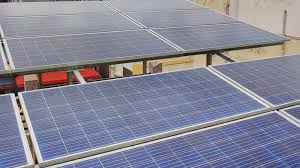
Jammu: Over 13,600 rooftop solar systems have been installed across Jammu and Kashmir, with more than 5,400 households now receiving ‘zero electricity bills’, officials said on Wednesday. The Union Territory aims to extend the initiative to 83,500 households under the PM Surya Ghar Muft Bijli Yojana.
The progress was reviewed during a high-level meeting chaired by Chief Secretary Atal Dulloo, who assessed the implementation status of the scheme across the UT.
A senior official said that 5,413 consumers have already begun receiving zero bills, marking substantial on-ground progress.
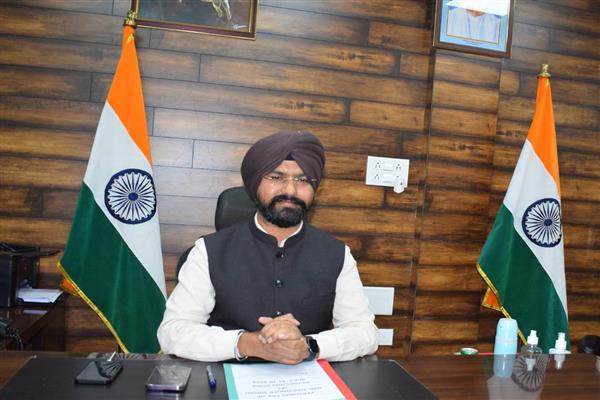
According to Gurpal Singh, Managing Director of the Jammu Power Development Corporation Limited (JPDCL), the UT has received 76,000 applications, with 37,500 consumers selecting vendors and 17,151 signing agreements. “So far, 13,615 rooftop systems have been installed, and Central Financial Assistance (CFA) worth ₹96.68 crore has been disbursed to 11,297 beneficiaries,” he said.
Shahid Iqbal Choudhary, Secretary of the Science and Technology Department, informed that the UT has also made major progress in solarising government buildings — 6,716 of the targeted 22,494 structures are already solarised, generating a combined 64.67 MW.
Under the 70 MW rooftop solar project, work orders for 47.45 MW capacity covering 4,338 buildings have been issued. Material has been delivered at 2,806 sites (35.88 MW), installations completed at 1,987 sites (25.50 MW), and an additional 5 MW is in transit and expected by November 30.
Highlighting the scheme’s transformative potential, Dulloo said solar power could significantly reduce the region’s dependence on conventional energy sources. He urged divisional and district administrations to ensure timely and efficient implementation across all districts.
He also directed JPDCL and KPDCL to intensify public outreach, assist consumers in vendor selection, and facilitate faster installations. Additionally, he emphasised the need for robust monitoring and regular evaluation of district-level progress to achieve the set targets.