






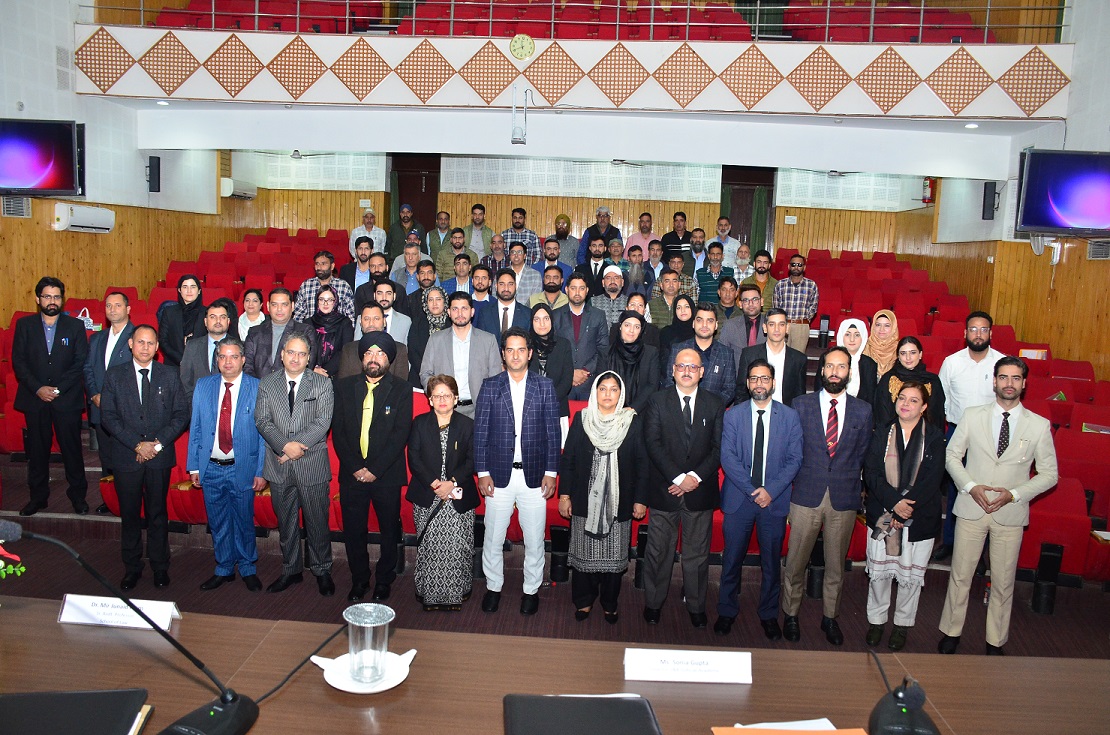
SRINAGAR: The Jammu & Kashmir Judicial Academy, Srinagar, on Friday organized a One-Day Special Orientation Programme on “Medical Forensics & Medico-Legal Aspects in Trial; Different Dimensions of Cyber Crimes and Electronic Evidence.”
The programme was held under the patronage of Chief Justice Arun Palli, High Court of Jammu & Kashmir and Ladakh (Patron-in-Chief, J&K Judicial Academy), and under the guidance of the Chairperson and Members of the Governing Committee of the Academy. It was attended by Judicial Officers of the District Judiciary of Kashmir Province including UT of Ladakh, as well as Public Prosecutors, Additional and Assistant Public Prosecutors, and Investigating Officers from across Kashmir.
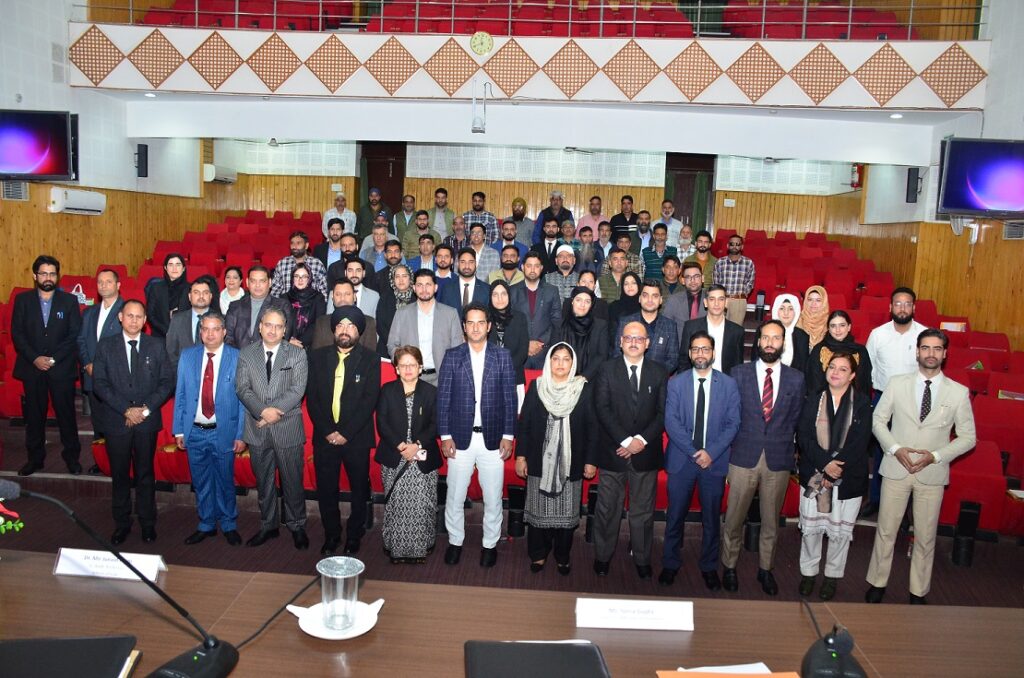
The event began with introductory remarks by Sonia Gupta, Director, J&K Judicial Academy, who highlighted the objectives of the programme. She emphasized that in an era of rapid digital transformation and forensic innovation, the judiciary and prosecution must stay abreast of evolving scientific, medical, and technological advancements that influence the administration of criminal justice.
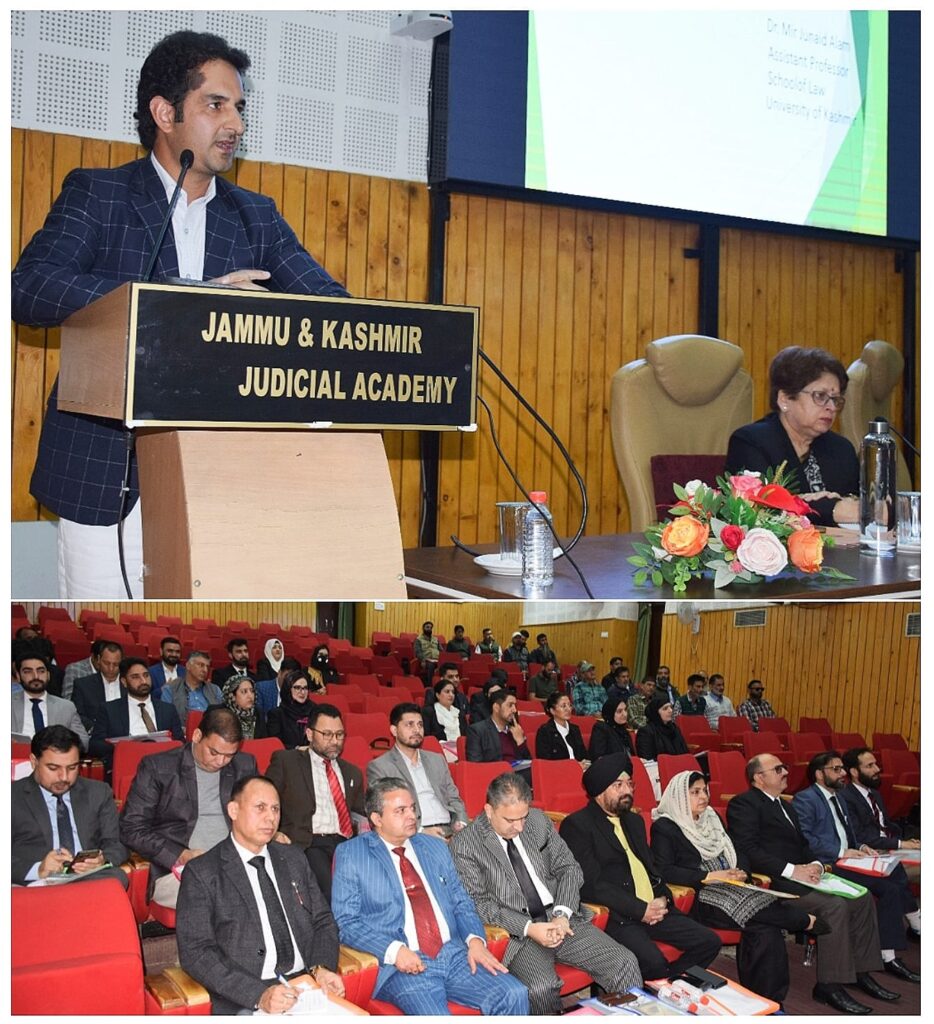
Dr. Mir Junaid Alam, Senior Assistant Professor, School of Law, University of Kashmir, delivered a session on “Demystifying the Information Technology Act, 2000 with Reference to Cyber Crimes: Issues, Challenges and Way Forward.” He discussed the legal and procedural complexities of cyber offences, data breaches, and online frauds, pointing out the gap between technological progress and enforcement mechanisms. Dr. Alam stressed the need for enhanced judicial and investigative understanding of digital footprints, data preservation, and the admissibility of electronic records, while also underlining the importance of safeguarding privacy, digital rights, and due process in cybercrime cases.
Dr. Aneeda Jan, Senior Assistant Professor, Centre for Distance and Online Education, University of Kashmir, spoke on “Medical Forensic Law: Constitutional Perspective and Role of Judiciary” and “Impact of Technology on Forensic Evidence.” She elaborated on the vital link between law and forensic medicine, emphasizing the judiciary’s role in ensuring the authenticity and admissibility of medical evidence. She also discussed the constitutional and ethical dimensions of forensic investigation and highlighted how technological advancements such as digital imaging, DNA analysis, and AI-driven diagnostics are transforming medico-legal practices and judicial evaluation of evidence.
Rajeev Gupta, Registrar Vigilance, High Court of J&K and Ladakh, addressed the gathering on “Electronic Evidence: Definitions and Characteristics.” He explained the legal framework for the admissibility of electronic evidence, discussed relevant judicial precedents, and examined challenges related to verifying metadata, digital signatures, and data chain integrity. Gupta underscored that in the digital era, a sound understanding of technological processes is essential to prevent miscarriages of justice arising from procedural lapses.
The programme concluded with an interactive session and feedback exchange, where participants shared practical experiences and discussed challenges encountered in medico-legal and cybercrime trials.
The deliberations reaffirmed the need for continuous judicial and prosecutorial training to ensure that the justice system keeps pace with emerging developments in forensic science and technology. The event underscored the Academy’s commitment to fostering interdisciplinary expertise, strengthening scientific accuracy, and promoting technological competence in the pursuit of fair and effective justice delivery.