






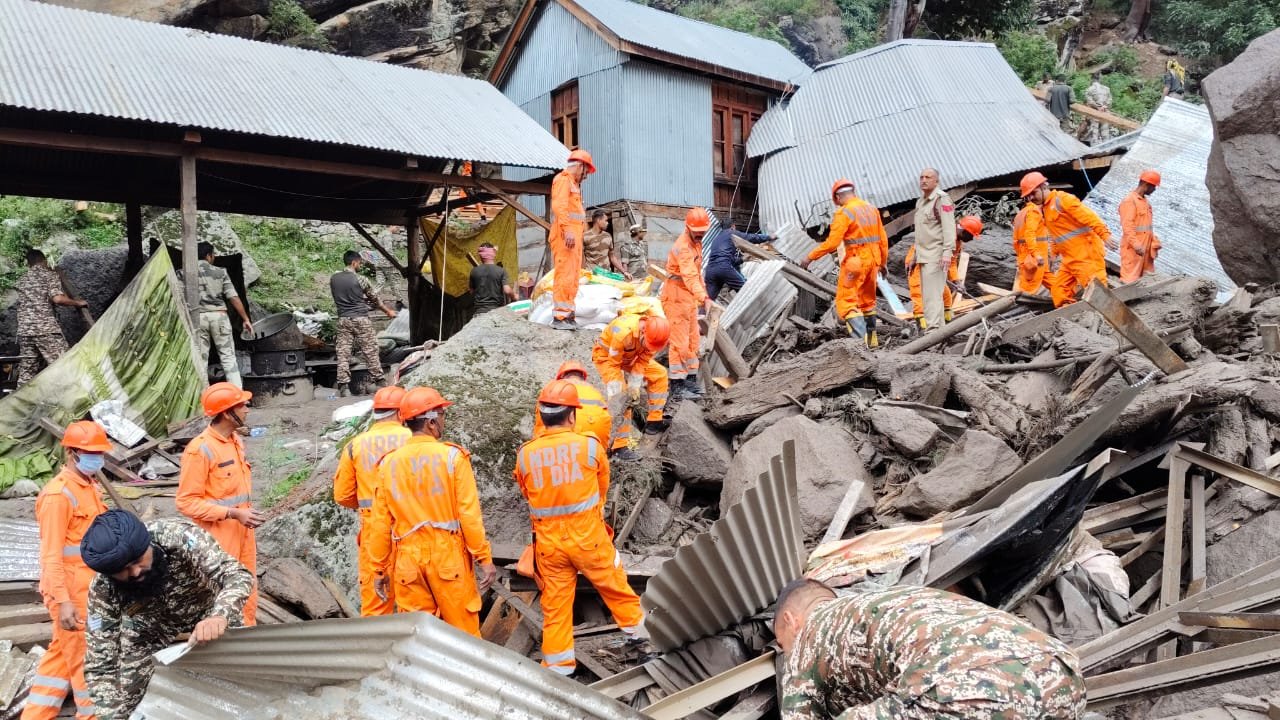
Jammu: Following the massive cloudburst in Kishtwar district, 75 patients were admitted to the Government Medical College (GMC) Hospital here, with one succumbing to injuries during treatment. Four others remain in critical condition.
In addition, 11 bodies and one body part from the cloudburst-hit Chisoti village were brought to the hospital mortuary and later handed over to their families after medical formalities, hospital officials said on Sunday.
The cloudburst struck Chisoti—the last motorable village en route to the Machail Mata temple—on August 14, leaving 61 people, mostly devotees, dead, over 100 injured, and 50 missing.
GMC records show that 24 of the 75 patients underwent surgery. One of them, Ashok Kumar (35) from Vijaypur, Samba district, died on August 16. Among the 47 patients still admitted, four are in critical condition. Twenty patients have been discharged, three absconded, and four left against medical advice.
Of the patients, 54 were adults and 21 minors. The largest number, 50, were from Jammu, followed by six each from Samba, Kishtwar, and Udhampur; three from Reasi; one from Doda; two from Uttar Pradesh; and one from Chandigarh.
The 11 bodies received included seven from Jammu, and one each from Samba, Rajouri, Jharkhand, and Odisha.
GMC Principal Ashutosh Gupta lauded the hospital staff for their rapid response. “As ambulances started arriving on Thursday night, porters and helpers immediately moved patients to the triage room, where medical teams began treatment without losing a minute. Split-second decisions saved lives,” he said.
He praised the nursing staff for not only providing expert care but also emotional support, acting as “sisters, mothers, and friends” to victims traumatized physically and mentally. Gupta added that no patient required referral to another institute for medical expertise.
The principal emphasized the hospital’s focus on hygiene, patient comfort, and emotional care. “Many patients arrived covered in dust and mud. The nursing staff cleaned them, provided fresh clothes, treated wounds, and offered emotional support. They comforted children, cared for those who lost loved ones, and even personally fed and sponged patients overwhelmed by debris,” Gupta said.