






Four Dead, 80 Injured in Ladakh as Statehood Protests Turn Violent; Sonam Wangchuk Ends Fast
Leh: Protests demanding statehood for Ladakh turned violent on Wednesday, resulting in four deaths and at least 80 injuries, including 40 police personnel, officials said.
As the region witnessed what is being described as the worst violence since 1989, climate activist Sonam Wangchuk ended his fortnight-long hunger strike calling for Ladakh’s statehood and inclusion under the Sixth Schedule. Authorities imposed curfew in Leh district to restore order.
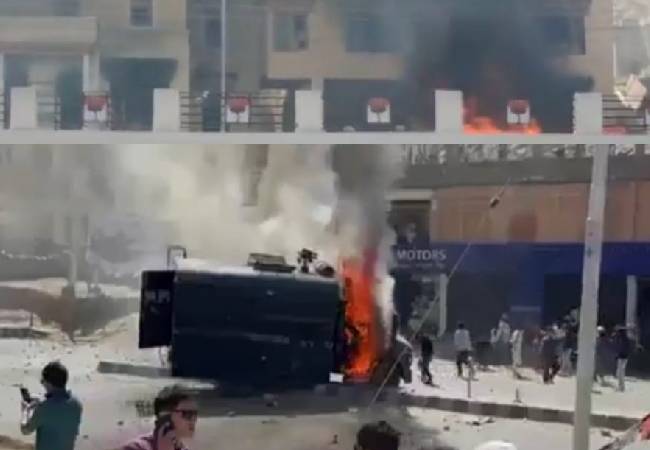
Groups of youths engaged in arson and vandalism, targeting the BJP headquarters and the Hill Council office, while setting vehicles on fire. Police and paramilitary forces deployed across the town resorted to teargas to control the unrest. Officials expressed concern as at least six injured protesters remain in critical condition, raising fears the death toll could rise.
The Centre alleged that the unrest was fueled by “provocative statements” from Wangchuk and actions of certain politically motivated individuals dissatisfied with ongoing government-Ladakh group talks. The Union Home Ministry stated that except for some early incidents, the situation was largely under control by 4 pm and warned against spreading old or provocative content on social media.
“The government remains committed to fulfilling the aspirations of the people of Ladakh with adequate constitutional safeguards,” the Ministry said. It noted that Wangchuk began his hunger strike on September 10 to press for Sixth Schedule inclusion and statehood.
The Ministry added that the Government of India has been actively engaging with the Leh Apex Body (LAB) and Kargil Democratic Alliance (KDA) through the High Powered Committee (HPC) and multiple informal meetings. However, certain individuals have attempted to sabotage the dialogue process. The next HPC meeting is scheduled for October 6, with additional talks on September 25-26.
Calling the violence “heart-wrenching,” Lt Governor Kavinder Gupta condemned the unrest, stating that while citizens have the right to peaceful protest, the day’s events were neither spontaneous nor justified. He urged the youth to help restore peace, recalling that the last major violence in Leh occurred on August 27, 1989, during agitation for Union Territory status, which left three people dead.
Wednesday began with a complete shutdown in Leh, with hundreds taking to the streets. As the day progressed, fires and smoke clouds were visible across the town. Police fired teargas to control protesters involved in widespread violence.
The LAB youth wing had called the protest after two of the 15 hunger strikers—who had been fasting since September 10—were hospitalized due to deteriorating health. Congress leader and councillor Phuntsog Stanzin Tsepag was booked for allegedly giving a provocative speech at the hunger strike venue on Tuesday.
The BJP alleged the violence was orchestrated by Congress to destabilize the region. “What was portrayed as a Gen Z protest was actually led by Congress,” said BJP MP Sambit Patra.
Wangchuk, speaking online, said the hospitalization of Tsering Angchuk (72) and Tashi Dolma (60) likely triggered the unrest. He appealed to protesters to stop violence and announced the end of his fast, emphasizing that peaceful dialogue should continue.
“This is the saddest day for Ladakh and for me personally,” Wangchuk said, noting that their previous hunger strikes and Leh-to-Delhi marches were peaceful. He urged the administration to cease teargas use and encouraged a non-violent continuation of negotiations.
The Sixth Schedule of the Constitution provides special governance and financial powers to tribal populations in four northeastern states—Tripura, Meghalaya, Mizoram, and Assam—through autonomous councils. The LAB and KDA have led the agitation over the past four years, engaging in multiple rounds of talks with the government.
Tensions had been rising since Tuesday evening. Leh town shut down on Wednesday morning as crowds gathered at the NDS memorial ground before marching through the streets, chanting slogans for statehood and Sixth Schedule inclusion.
Congress spokesperson Manish Tewari called for a sensitive, forensic examination of how a peaceful protest turned violent, while Jammu and Kashmir Chief Minister Omar Abdullah said the events in Leh reflected broader frustrations in the region over the denial of statehood. The Left criticized the Modi government for the escalation.
After nearly four months without dialogue, the Centre invited the LAB and KDA for talks on September 20, ten days after Wangchuk began his hunger strike. Former MP and LAB chairperson Thupstan Chhewang, who resigned after the last talks in May, has returned and is expected to lead the delegation. The Congress withdrew from the LAB to maintain a non-political stance ahead of the Leh Hill Council elections next month.